
Queer refugees find community in Peterborough, as Canada tightens rules that helped them arrive
“My family, my government, my religion, and the whole country is against me for being gay.”
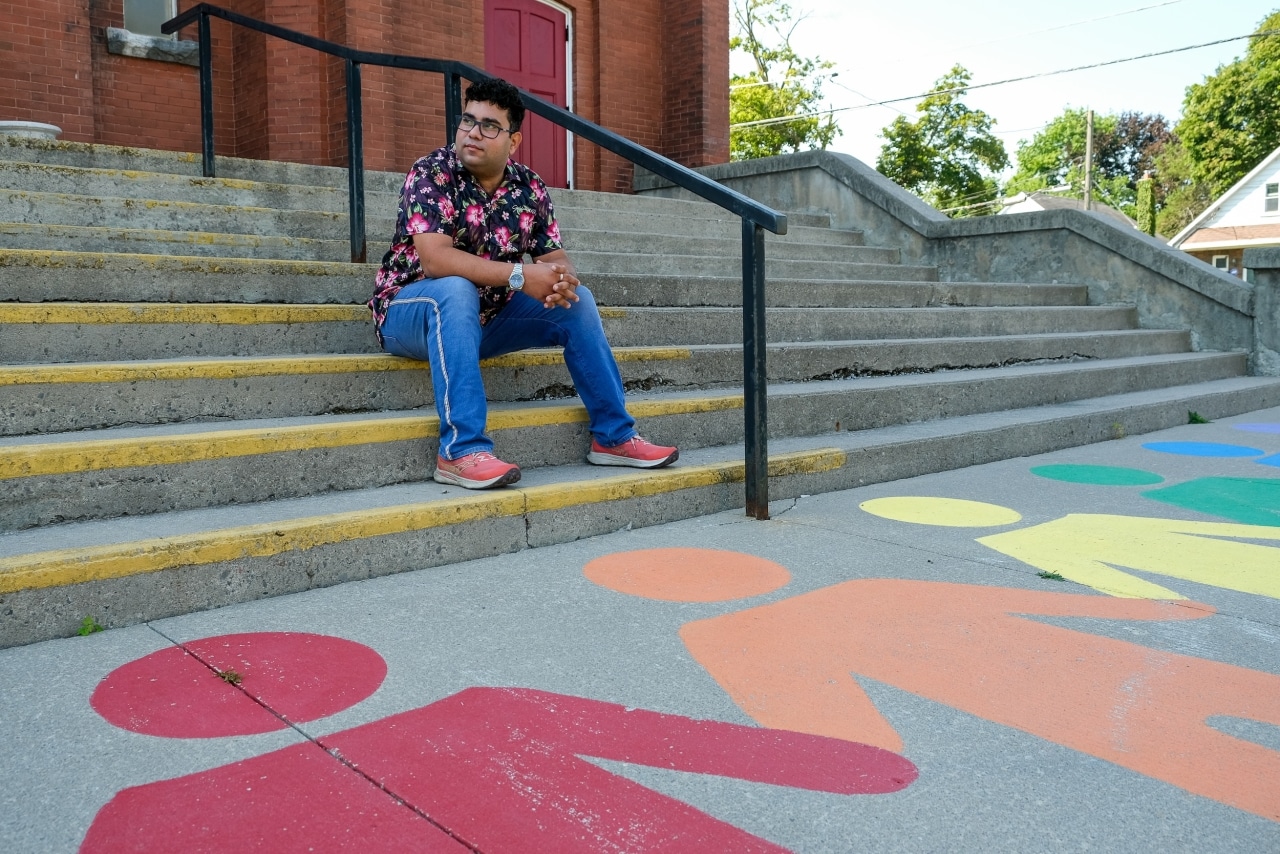
“I went to prison for wearing a bracelet with the 2S-LGBTQIA+ flag,” says Mooner Alejjah, who arrived in Canada six months ago. He was born in Saudi Arabia, and then migrated to Iraq and later to Syria, where he faced the consequences of being who he is.
According to the United Nations High Commissioner for Refugees, more than 730,400 refugees came to Canada in 2025 looking for protection given the circumstances in their home countries. One of them is the danger of being part of the 2S-LGBTQIA+ (Two-Spirit, Lesbian, Gay, Bisexual, Trans, Queer, Intersex, and Asexual) community, which can be a reason for shame, violence, or prison.
In March of this year, Canada passed Bill C-12, Strengthening Canada’s Immigration System and Borders Act. The bill overhauls Canada’s asylum processing system, adding new time limits on refugee claims, new restrictions for claimants, and new powers for the government to unilaterally block or terminate refugee applications, if it’s in the broadly defined “public interest.”
This comes after major budget cuts to Immigration, Refugees and Citizenship Canada earlier in the year, and 2024’s announcement that Canada would be dramatically reducing the number of immigrants it accepted in the coming years.
Now, the Canadian Council for Refugees is raising the alarm about the impacts that these changes will have for people like Mooner.
“The purpose of this bill was to reduce the access to the asylum system, not to ensure that the system works better,” says Gauri Sreenivasan, co-executive director of policy and advocacy at the Canadian Council for Refugees. “Now there are new ineligibilities, which means new kinds of populations can’t even ask for formal refugee status through the Immigration and Refugee Board of Canada.”
Today, following the changes to the policies for asylum and refugee seekers, “66% fewer people submitted an asylum claim between January and May 2026 compared to the same period in 2024,” according to Immigration Canada.
Yvonne Lai, Director of Community Development of the New Canadians Centre (NCC) in Peterborough, emphasizes the importance of keeping in mind that these are people, not just numbers. “It’s real. People who have faced challenges to their life, whose families continue to live in fear because of their identities. I would encourage decision makers to listen, to open their hearts, and to acknowledge the fact that we really do enjoy so much here, so many freedoms here in Peterborough, in Canada, that it’s a real privilege,” says Lai.
About the latest changes on policies Lai says, “The long-term impact of reduced migration hasn’t been felt yet.” She also highlights that “it’s important for us to consider the gifts that we have and to be able to share them with the people who don’t have them. There’s always more that we can do to support people who don’t enjoy the same freedoms that we do.”
In Peterborough, the NCC has started the Rainbow Connections Group for 2S-LGBTQIA+ migrants, to support newcomers who face the consequences of coming from difficult realities. “I have been so privileged when people open their hearts to tell us about what they have faced and what they’re continuing to face,” says Lai. “These people are living in Peterborough. This is part of our community.”
The situation back home
“One of my family members reported me to the authorities and I went to jail for six months,” says Mooner. “It was a hard time. My family visited me just to mock and gloat me.” His voice breaks, but as soon as he thinks about his future in Canada, the hope appears again in his eyes. “My dream is to find a partner here and have my own family.”
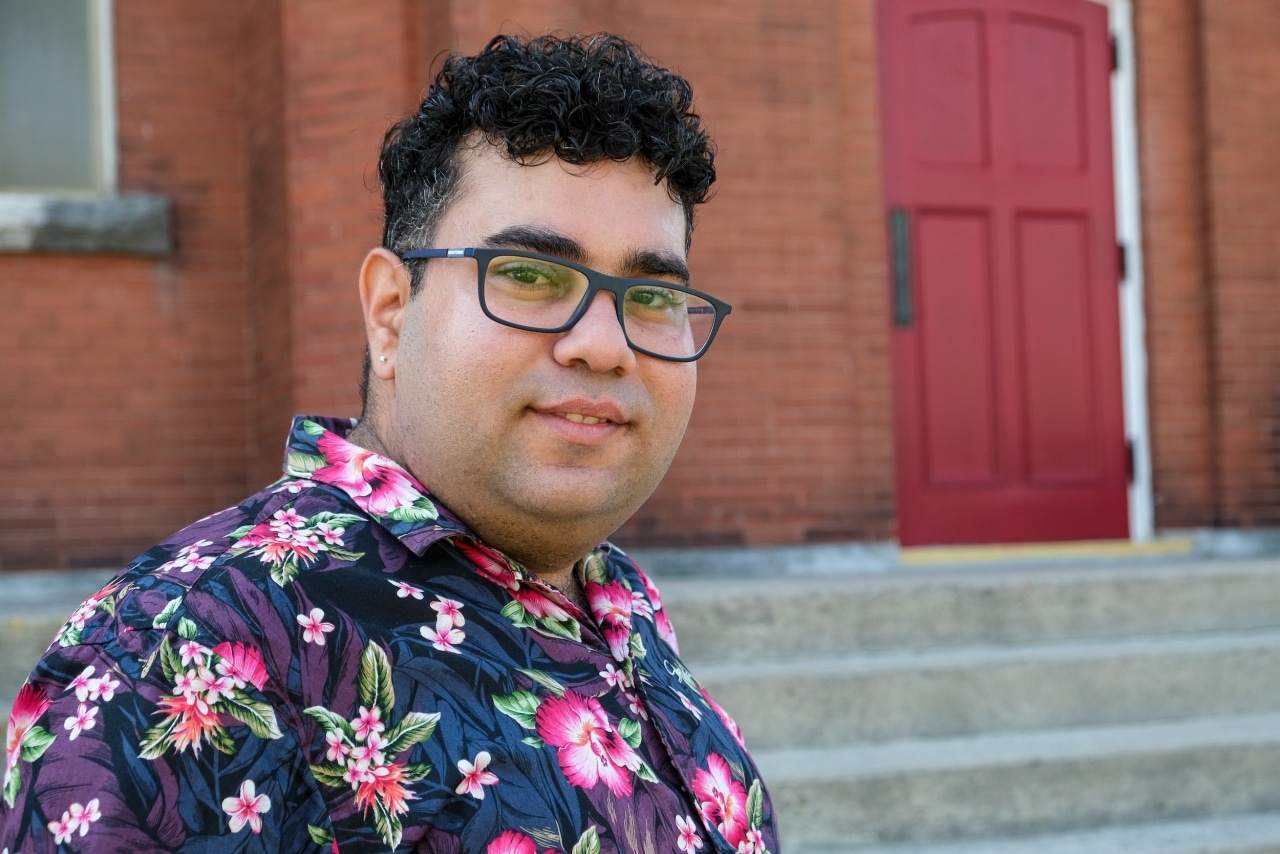
For these refugees, despite leaving the countries that criminalize them, it does not necessarily mean freedom. In the Rainbow Connections Group at the NCC, Mooner is joined by ‘Angela’ from Nigeria and ‘Manuel’ from Syria, both of whom are using assumed names in this story, due to fear of repercussions back home.
“I still cannot be myself, because if my family knows I am gay, they will stop talking to me,” says Manuel, who is originally from Syria and has spent the last year in Peterborough, after being in Lebanon escaping from the war. “But also my sisters and brother will not be able to get married in the future. They will have the shame of having a relative who is gay.”
For Manuel, “not living as a gay publicly is a way to take care of my family, even if they do not accept me. Because if people in Syria know through social media that I am gay, the punishment will be against my family. I live in conflict and guilt. It is so complex.”
According to data from the International Lesbian, Gay, Bisexual, Trans and Intersex Association (IGLA World), Syria’s penal code criminalizes “unnatural sexual intercourse” with a potential imprisonment of up to three years. “The causes of this belief are religion,” says Manuel. “In the Muslim belief, being gay is seen as subnormal and antinatural and the social punishment is also very high.”
In Angela’s case, the punishment started from her own home. “I had a journal and I wrote how I was more attracted to women than men,” she recalls. “I was 12 years old and my uncle, who was my guardian because my father died when I was a child, found that diary. He beat me up that day. I think I still have the mark on my hand. He beat me so much that the iron buckle on his belt tore my skin.”
“It is very unsafe and very insecure in Nigeria,” she says. “I’ve seen people stabbed to death, thrown from buildings, shot just because they identify differently. Since the government is against it, they practically do nothing about it.” According to IGLA World, Nigeria criminalizes same-sex sexual acts with the penalty being imprisonment for 14 years, and death sentences exist.
And in the case of Mooner, in Saudi Arabia, ILGA reports that the Saudi Newspaper Okaz informed in 2012 “the government had arrested over 260 people for homosexuality.”
The path to come to Canada: from violence and war to Peterborough
The process to come to Canada is not easy for people like Manuel, Angela, and Mooner. “I wanted to leave before the war,” remembers Manuel, “but then the war started. I did not have money or my family supporting me. I had no option at some point, because I needed to join the military service, or leave the country.
“I was resistant to register myself as a refugee,” he says, “because I fear the government knowing my status, or that I am gay. Organizations there are slow and their workers are also homophobic. Rainbow Railroad was the organization that supported me to come to Canada.”
The Canadian government historically supports organizations like Rainbow Railroad that help people who are being persecuted for their identities to find a safe passage to come to Peterborough or Canada, but that’s changing. “This year funding to the government-assisted refugee program through organizations like Rainbow Railroad has been cut, just like overall funding to support immigration,” says Yvonne Lai from the NCC.
According to the organization’s website, “In April 2026, Rainbow Railroad was notified of critical funding cuts from the Canadian and UK governments, creating a 2026 funding gap of about [$1 million] CAD.”
“The new law has failed to create an exception for 2S-LGBTQIA+ refugees, given the violence they experience in their home countries,” says Sreenivasan. ”We basically have a system currently in Canada which has become much more closed to the 2S-LGBTQIA+ community, even for the private sponsorship pathways.”
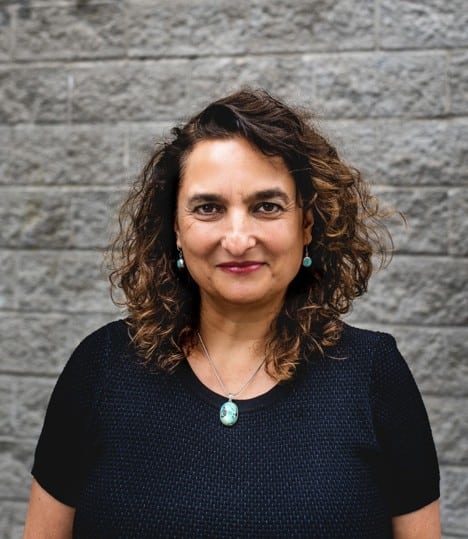
As multilateralism changes and the global response to issues like safe migration, wars, and human rights starts to shift, there are people living daily under severe insecurity for being who they are. “Canada is not immune to this global tide of xenophobia, fear, and control, and to the scapegoating of immigrants and refugees for longstanding social and policy problems,” says Sreenivasan.
“Canada means hope to be alive for many people,” says Angela. “Cutting the help would mean that you are sending people to their deaths.”
Canada the place to recover hope
Mooner, Manuel, and Angela arrived in Canada at different times, from different places, but all of them have something in common: this country means an opportunity to feel safe for the first time in their lives.
“In Nigeria I was always looking over my shoulders,” says Angela, “thinking somebody’s gonna strike me from behind just because I’m a lesbian. Being here is a huge relief. Walking on the street, holding hands with my partner and somebody not splashing me [with] water or anything.”
“For me, being here changes everything,” says Manuel, “I know now I am safe. After a war, after not being accepted. I started to feel safe for the first time in my life at 38 years old here in Canada. The law supports you. The government supports me. I am starting a new life here. It is not easy either, but at least it is safe. It is hard to connect and to see how to do it, to understand how the city and the community work.”
For Mooner, “being in a safe country is new for me. I try to not care about how my family feels about me being openly gay. Even if they refuse me, it is ok. I am safe starting a new life in Canada, hoping to build my own family and contribute here.”
Author
Related Articles
Circles of Support and Accountability – restorative justice at work in Peterborough
Local community members supporting people who have committed sexual offences to safely return to community life.
TandemEyes gives cyclists with vision loss a way back onto two wheels
Local cyclists celebrate their final group tandem ride of the season.
Local event organizers navigate rising costs and red tape
Local event organizers share their struggles as costs and requirements accumulate.
