
Circles of Support and Accountability – restorative justice at work in Peterborough
Local community members supporting people who have committed sexual offences to safely return to community life.
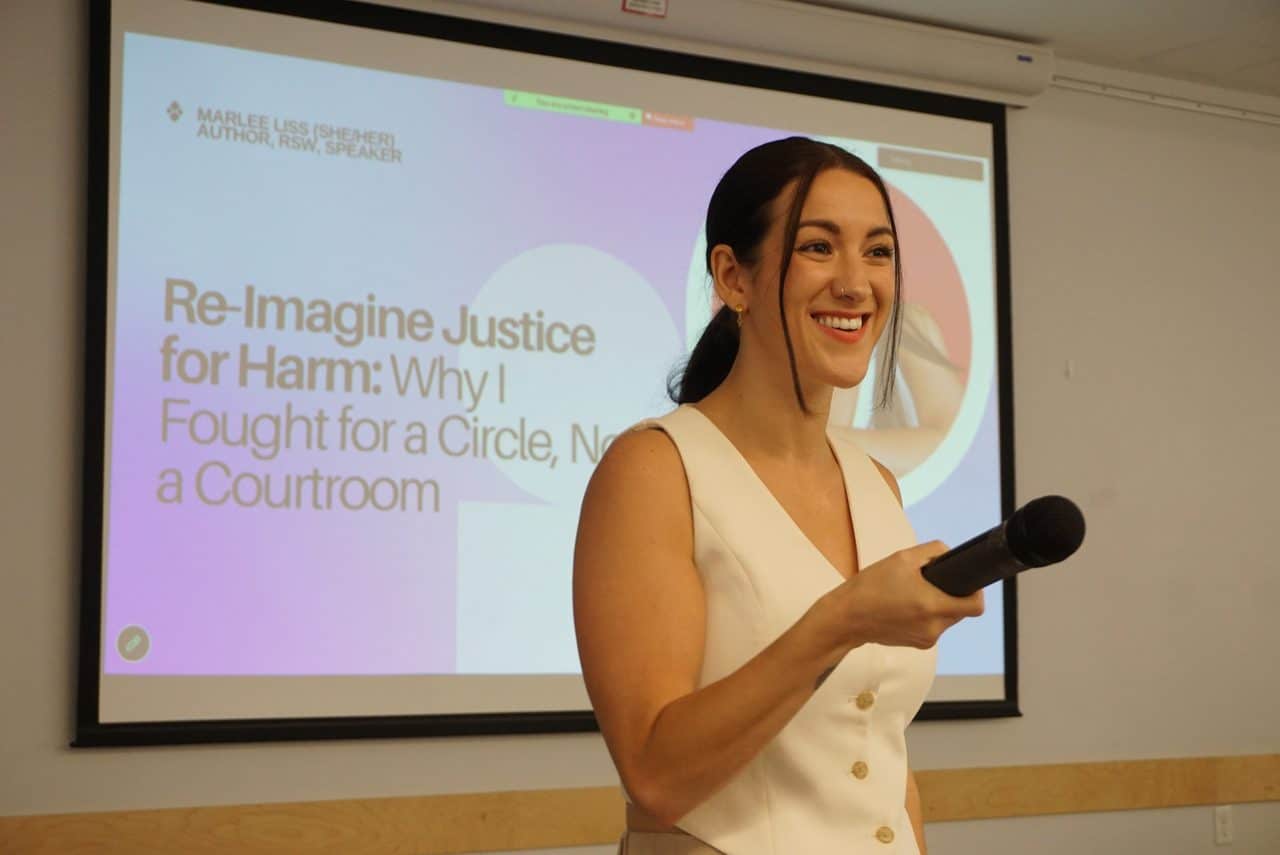
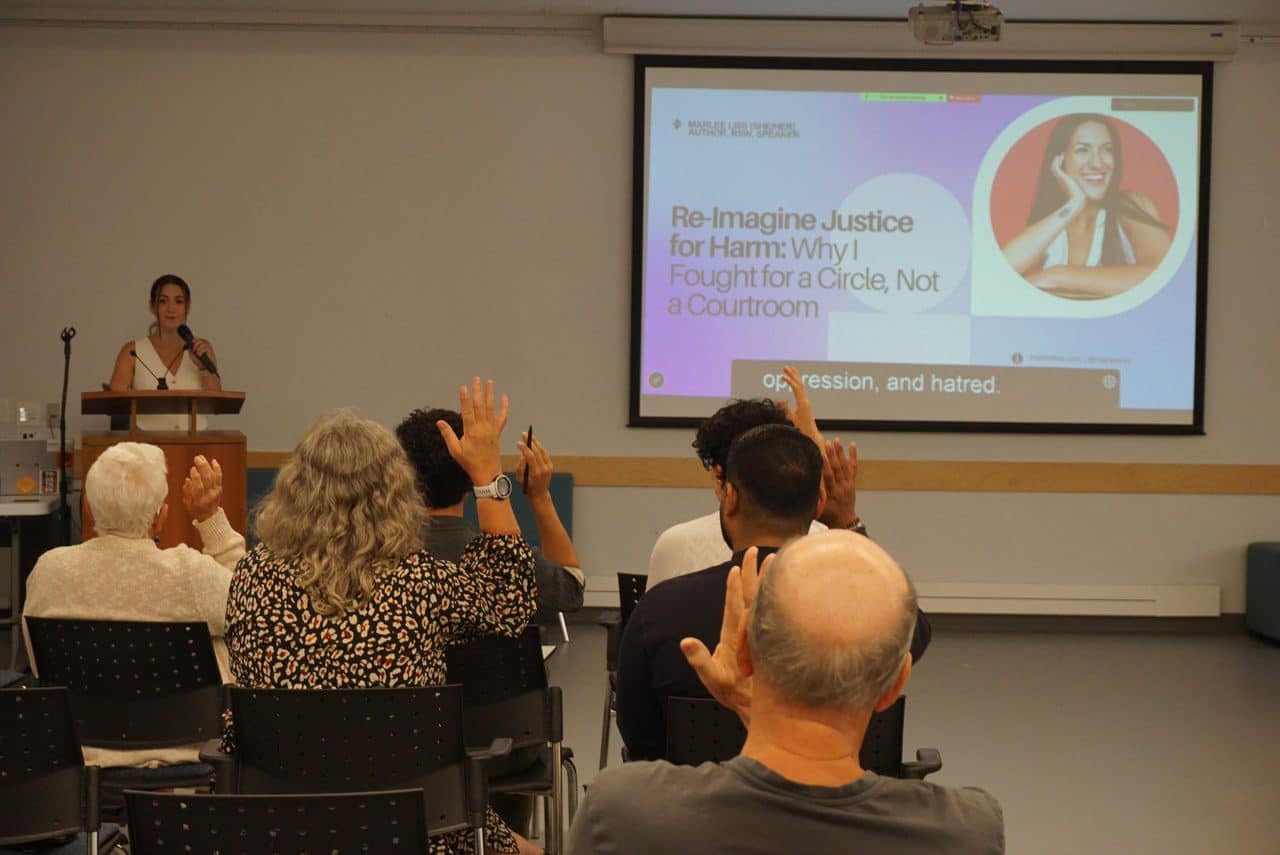
Earlier this month at the Peterborough Public Library, Toronto-based author and educator Marlee Liss addressed a room full of social workers, mental health professionals, and community volunteers. She began her keynote speech by asking the audience to raise a hand if they wanted a world where people were less quick to give up on one another. Hands quickly went up around the room.
Liss then shared her own story of sexual assault, and how she was later retraumatized by the court system she had once thought was there to help her move forward and protect others from future harm.
Following a gruelling trial where she was questioned at length about the assault she still struggled to speak the details of aloud, a close friend asked her a question that gave her permission to consider a different way forward. What would justice look like to her if anything were possible?
Liss realized at that moment that she wanted the person who harmed her to access therapy and dig deep to find the root of the problem that led him to assault her. She wanted to meet him and ask him questions, describe the impact of the assault, and see him take responsibility. She wanted him to be fully seen and held accountable by people close to him, so that he would work to avoid causing similar harm again.
And so she began to pursue restorative justice. She described being able to speak to her assailant for eight hours with the support of her mother and sister. She asked questions and got to decide when the conversation was finished. In the end, she shared crying tears of relief.
Elsewhere in the city, volunteers with Circles of Support and Accountability, or CoSA, have been meeting with people who have committed sexual offences and are returning to community life. Their circles serve a different purpose from the one Liss described: they do not bring survivors together with the people who harmed them. They offer a place for people leaving custody to find support while being asked to face the harm they’ve caused.
A participant, known as a core member, chooses whether to join. Two to four volunteers generally meet with them for an hour each week, often for at least a year. They may talk about finding work, getting identification, making appointments, and managing day-to-day life struggles. They also talk about the offence, its effects, and what the core member will do to avoid causing further harm.
There is evidence that this combination of support and accountability can reduce reoffending. In a Minnesota study that followed 100 people, researchers found that 1 of the 50 people working with CoSA was rearrested for a new sexual offence, compared with 7 of the 50 who did not participate. After accounting for other factors, the researchers estimated an 88 per cent lower risk of rearrest for a new sexual offence among CoSA participants.
Ann Barrett described how the relationship volunteers have with the core members changes over time. She has volunteered with CoSA for almost 20 years, first in Toronto and now in Peterborough. A core member arrives knowing the volunteers have been told about the offence, she said, but has no way of knowing how they will respond.
Barrett said it is important for volunteers to build a sense of comfort, listening to the person and learning what they find difficult and how they communicate best. Volunteers make clear even at the first meeting that they will not set aside what happened. If a core member minimizes an offence or shifts responsibility, she said, volunteers stop and question it.
Barrett remembers a Peterborough core member who seemed unable to believe anything good about himself. When volunteers pointed out that he had held a job or arrived dependably at their meetings, he dismissed it. They kept recognizing those things while continuing to address the harm he had caused.
Eventually, the group suggested he visit a job fair. He came back to tell them he had gone, spoken with someone, and been invited to continue the conversation. Barrett recalled how significant that was for a man who had doubted there was any point in looking for work.
“I want them to succeed,” she said. “I want to do what I can in my small way to help move them in a positive direction.”
Over months of meetings, circles also make room for ordinary conversation. Barrett described celebrating birthdays, sharing food, and talking about sports. A volunteer might bring doughnuts. Someone has good news, or a difficult week. Those moments help build the relationships in which harder questions can be asked.
Richard Abbott and his wife have been part of Peterborough circles for six years. They had been involved with CoSA in Winnipeg before moving here. Abbott said he has watched a core member work to accept responsibility and reach a point where he hopes to mentor others.
For Abbott, one of the most meaningful parts has been “developing trust over time.” It takes patience, he said, to reach a place where people can be open with one another about the work still ahead.
Former core members have described what that connection meant to them. In a public presentation shared by One City Peterborough, one participant wrote, “CoSA isn’t about perfection. It’s about growth, accountability, and connection. It helped me feel like part of a community again outside of my family, and taught me the importance of trust, honesty, and meaningful relationships.”
Another offered a more painful reflection: “If only I had this support the first time I offended.”
Sheila van den Heuvel-Collins, CoSA coordinator at One City, said people can arrive unsure whom to trust or speak with. Over time, she has seen core members become more open and build fuller lives. She has also seen the difficult moment when someone speaks without making excuses for their actions.
“When the core member is fully accountable, it’s very emotional,” she said. “It’s very hard to watch as they take full responsibility, but it’s also inspiring in a way, because they are being fully accountable for their behavior.”
CoSA volunteers are not therapists. Van den Heuvel-Collins said they can help a core member reach a therapist or report to police if the person says they are at risk of offending or discloses new harm. Their role is to provide social support while remaining willing to have conversations others might avoid.
The Peterborough program is now moving from One City to the John Howard Society of the Kawarthas, effective September 2026. CoSA has passed through several local organizations since it began as a grassroots initiative. According to a joint announcement, staff and volunteers have been sharing knowledge and resources as the program changes hands.
Van den Heuvel-Collins said there have been 12 circles during her year as co-ordinator. Eleven volunteers were active as One City wound down its part of the program. Some circles have ended earlier than they otherwise would have because of the transition, she said, and the length of future circles will depend in part on the resources available.
Barrett intends to continue volunteering after the move to the John Howard Society. She knows that Circles of Support and Accountability ask both its core members and its volunteers to keep showing up, to speak honestly about harm, to listen, and to return the following week for the conversation that comes next.
Author
Related Articles
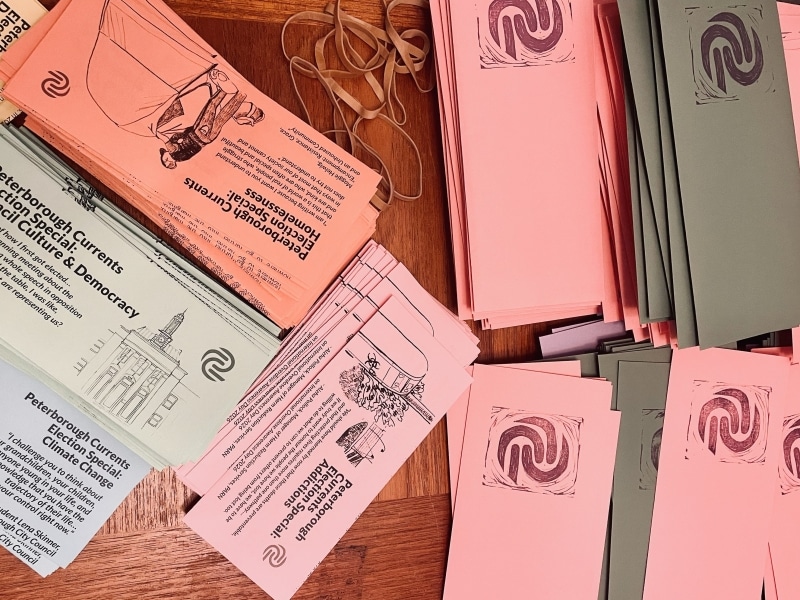
Peterborough Currents Election Special zines
New series of five print zines explore the essential issues this municipal election
Walking with Bhante Bodhicitta
Local monk leads visitors on free walking tours of Wutai Shan Buddhist Garden, and shares journey to monastic life.
TandemEyes gives cyclists with vision loss a way back onto two wheels
Local cyclists celebrate their final group tandem ride of the season.
