So long, Jethro’s
The live venue with an expiry date
You’re reading the March 27, 2026 edition of the Peterborough Currents email newsletter. To receive our email newsletters straight to your inbox, sign up here.
Hi, I’m Currents co-editor David Tough. Welcome to your weekly Peterborough Currents email newsletter!
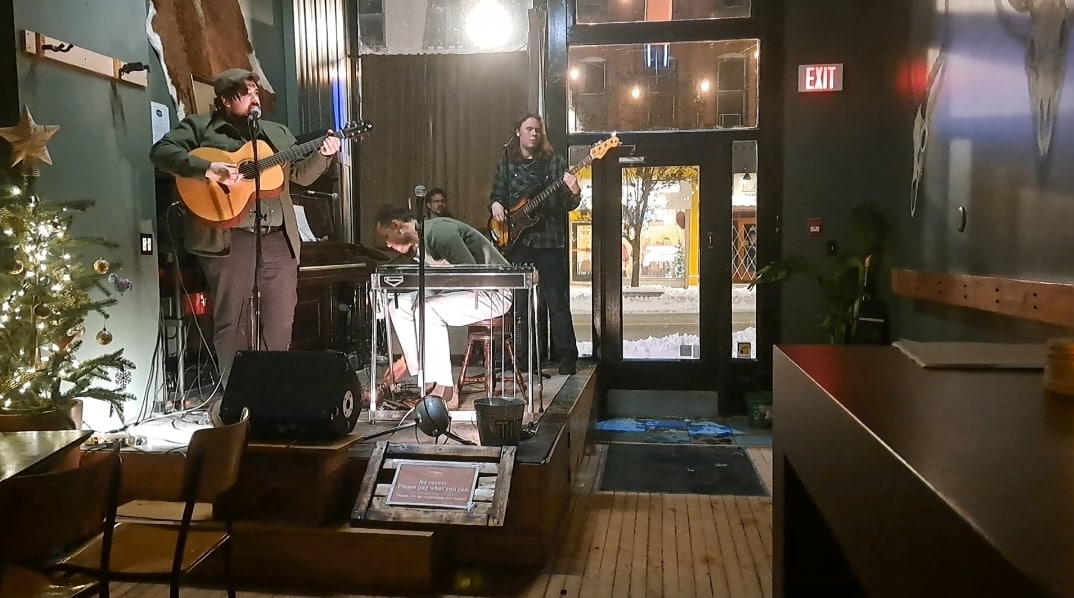
This week I had some thoughts about the closing of Jethro’s, a Hunter Street bar that made live music its main focus. I’ve played there a few times, and I’ve seen a lot of shows over its short lifetime. What does it bode for the future that venues like this Jethro’s can’t stay open?
Let’s get right to it!
So long, Jethro’s
by David Tough
It started with a few musicians on Facebook posting short, cryptic expressions of sadness, remarking on the end of an era – what the millennials call “vague-booking.” Within a few hours, some were writing long and heartfelt tributes, and then it was officially announced: Jethro’s, the Hunter Street live music venue, was closing.
The question is never why a tiny bar in a medium-sized city closes; the mystery is how they ever stayed open in the first place. They exist because someone wants them to exist, and is willing to carry that burden for a few years, try to pay some bills, and make it happen for a while. Like the Spill ten years ago, Jethro’s had an expiry date. It just happens to be now.
What makes the loss of Jethro’s so hard, and made the closing of the Spill a decade ago so hard, is that these are music-first venues. At Jethro’s, when there isn’t live music booked, it’s closed. If someone walks into Jethro’s, it’s because they like music. As of April 13, all those verbs will be past tense.
Other places downtown have live music, but they are first and foremost places where people drink. The Pig’s Ear does a good job of balancing culture and commerce, but a lot of bars limit live music to covers of familiar songs or recognizable genres. There’s nothing wrong with those requirements per se, but they’re not going to be the basis of a great music scene.
A healthy local music scene will include experienced performers who can draw crowds, but it absolutely needs places where new artists, whose music is original or performed strangely, can work out their craft, and build an audience. It needs venues that can take chances every once in a while.
This is a topic on which it’s easy to get mired in nostalgia. When the Spill closed, the Red Dog and the Garnet were still in action; both have since closed. Go back a few years to the heyday of the Montreal House, and the Red Dog was also a hot spot. A few years before that, popular bands could play the Red Dog or the Underdog, and bands with no fans at all could play the Union Theatre, or Artspace – also known as the Market Hall. That’s a lot of venues.
What has changed since then? For one thing, young people drink less, and go out less. The numbers aren’t that dramatic, but it’s possible that’s because most of the 20-year-olds who do drink are going clubbing. Students who would love live music in small venues, don’t seem to know it exists. Something of a broken tradition, maybe?
Without that critical mass of young people drinking, it’s much harder to make money as a live venue, when your whole business model is based on enticing people in to listen to music, and then selling those people alcohol. Most bars now offer non-alcoholic drinks, but going out and paying for several of these inert drinks might not have the appeal it does to people who have spent years in bars, and later stopped drinking.
It’s also possible that people’s relationship to music itself has changed. The fact that everyone’s favourite music – in fact, any music you could possibly have heard of – is available to stream for free makes being patient and encouraging, going to see a band out of curiosity knowing they might not be that good, a comparatively tough sell.
It’s probably no accident that the venues that outlive Jethro’s cater to an older demographic, one with fond memories of listening to live music, and that can be relied on to buy drinks. The Black Horse and Crook and Coffer seem to have had success with that model. The Jethro’s blues jam, while more intergenerational, also drew a mature crowd, and maybe points to a way forward for some future doomed live music burden.
What I take from Jethro’s, both as a performer and as a patron, is admiration and appreciation of Kayla Howran and the staff, and gratitude to all the musicians and all the audiences, the ones who went there one night and the ones who made Jethro’s a habit

Thanks for reading!
If you value our journalism and want to see it continue, please sign up to support us.
David Tough
Co-Editor
Peterborough Currents
Thanks for reading the Peterborough Currents email newsletter! Here’s where you can sign up to have these sent straight to your inbox.
Author