
High-speed rail is coming to Peterborough… but where, exactly?
A deeper look at the blue blob
You’re reading the March 6, 2026 edition of the Peterborough Currents email newsletter. To receive our email newsletters straight to your inbox, sign up here.
Greetings, it’s Currents co-editor Gabe Pollock, here with your weekly Peterborough Currents email newsletter!
Discussion is heating up around Alto, the high-speed rail network that may actually be coming to Peterborough within (some of) our lifetimes.
Alto was in town for a consultation session last week, and the current question on many people’s minds is where, exactly, the new Peterborough train station will go. Meanwhile, others are debating Peterborough as a location for a train stop, and some are questioning the wisdom of building high-speed rail at all.
High-speed rail is coming to Peterborough… but where, exactly?
by Gabe Pollock
Peterborough is starting to get a look at what the new high-speed rail line will look like in our city, but there remain a lot of open questions.
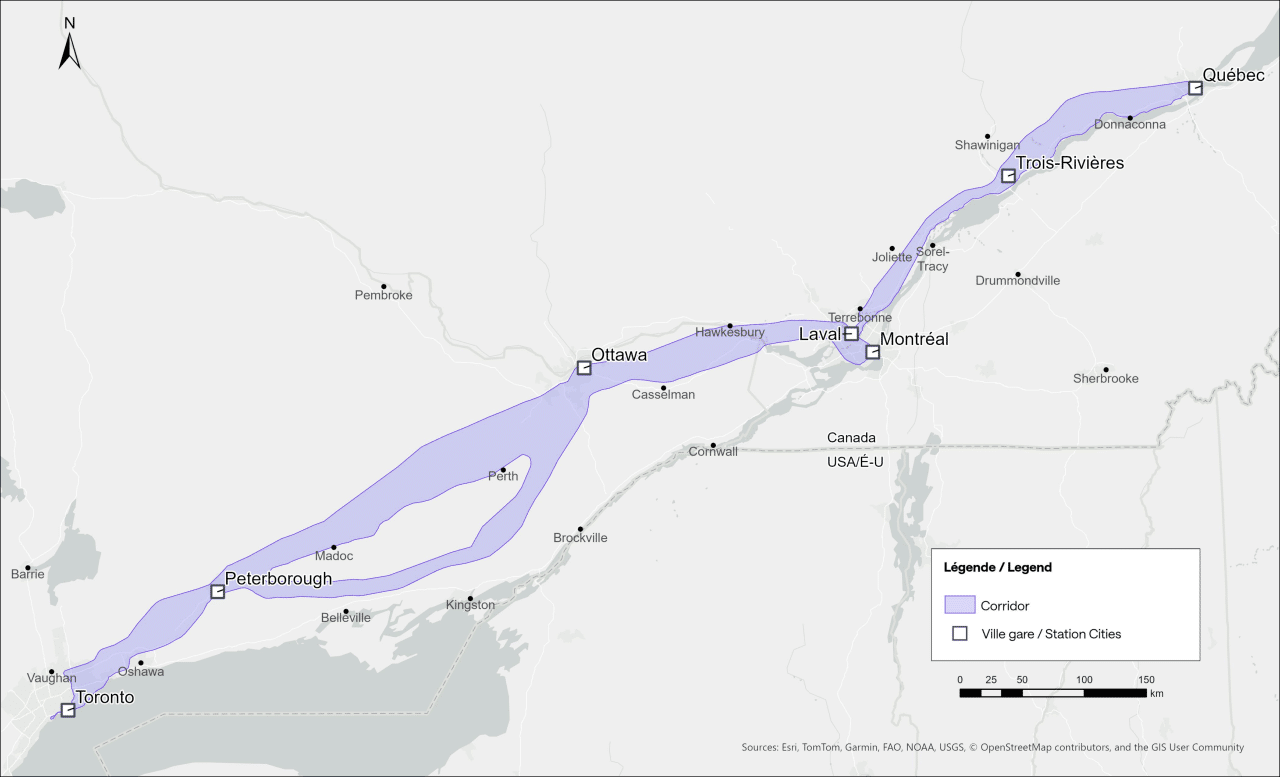
The Alto high-speed rail corridor will eventually connect Toronto and Quebec City, and one of the seven planned stops along the line is marked for Peterborough, bringing rail service back to the city for the first time in 35 years.
Last week, at a local consultation meeting at the McDonnel Street Activity Centre that was attended by over 800 people, Alto showed off their proposed route. Currently looking like an amorphous blue blob on a map, the proposal leaves a lot of wiggle room for where, exactly, the new Peterborough train station will be.
City council, for its part, is pushing for a station at the southern edge of the city, in the Coldsprings subdivision, a wedge of under-developed land bounded by the Otonabee River and Highway 7/115.
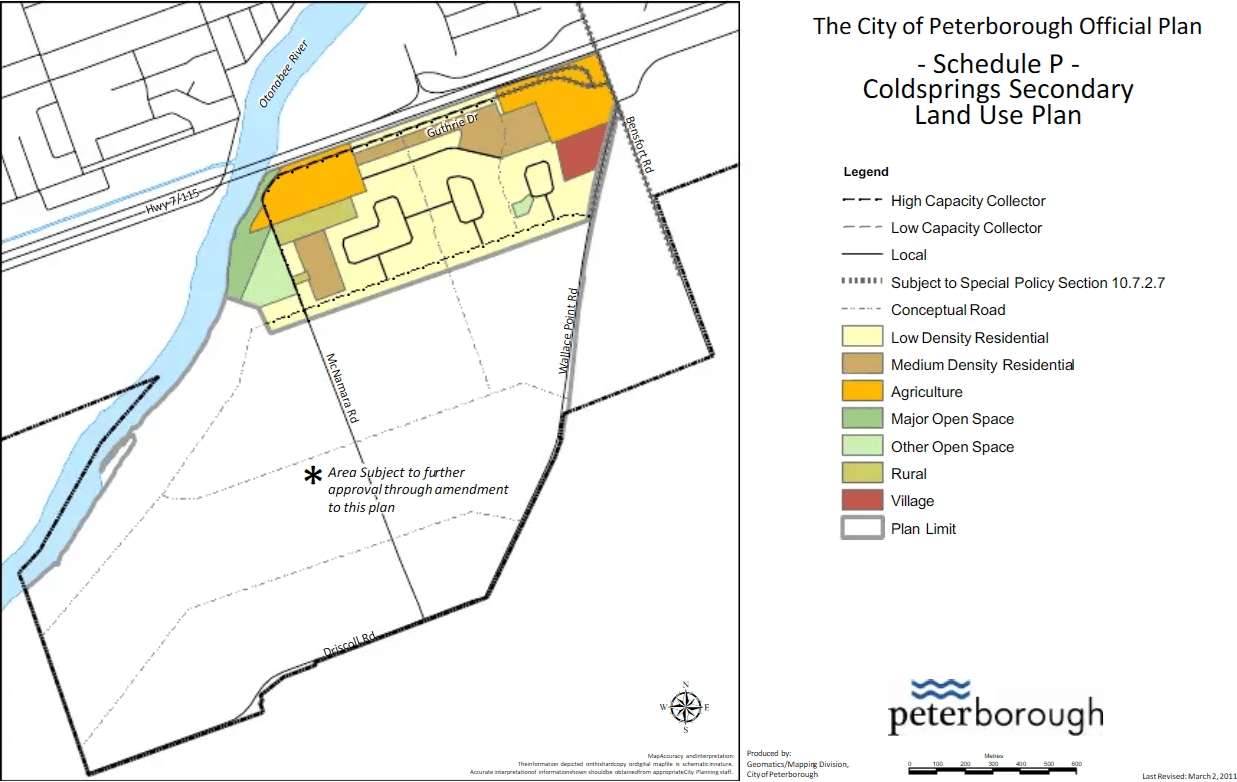
The property, which is owned by AON Inc, has been slated for development ever since 2006. The latest Official Plan update recommends future studies to assess its possible uses in development, but there’s been little progress thus far.
That changed at a city council meeting that took place just one week before the Alto consultation, where council voted unanimously to pre-commit $375,000 over the next two years to create a plan for the area. The discussion at council focused almost entirely on a potential rail station in the area.
“We want to position the City of Peterborough before anyone else in the region might want to get into the game to plan for the station,” said Mayor Jeff Leal. “This is an example of a community being proactive, a city ready to meet future demands.”
The area has wide-open space ready for development and infrastructure, and Leal also noted that the rail line will need to cross the Otonabee River at some point, and the river is at its narrowest right around Coldsprings.
However, some in the city object to a rail station so far from downtown, where Peterborough’s old train station was located.
Placing the station at the edge of town creates ‘last-mile’ concerns, referring to the difficulty of traveling between the station and the rider’s home, particularly for those without a vehicle.
While the rail station is expected to bring general economic prosperity to the city, there will be concentrated economic growth right around the station itself, with housing, hotels, and retail popping up to service train passengers. Peterborough’s Official Plan promotes a “downtown-first philosophy,” and calls the downtown the “civic, cultural, entertainment, arts and economic heart of the City.”
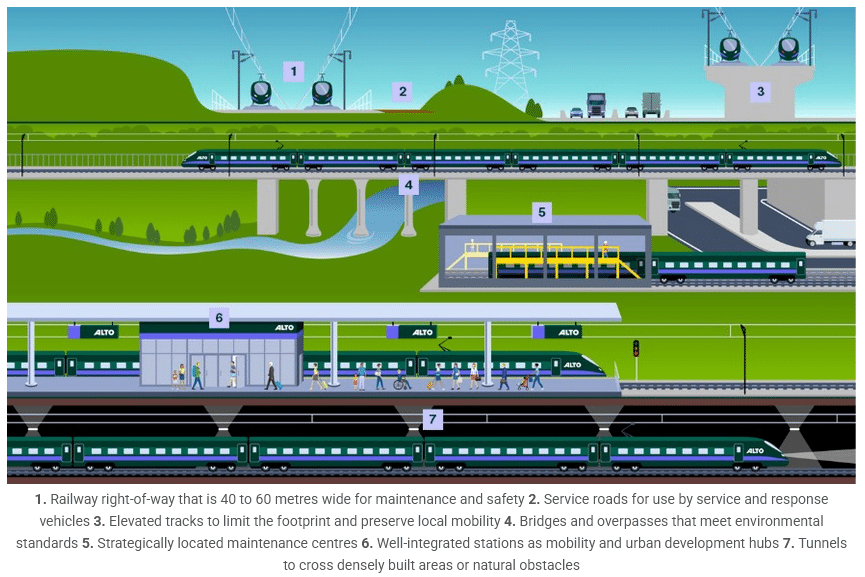
However, high-speed rail requires a dedicated pathway, meaning a brand-new network of tracks must be built, at least 40 to 60 metres in width. The tracks cannot cross city streets or other rail lines, for safety reasons. Within urban centres, this generally means building elevated tracks that travel over city infrastructure or tunnels that travel underneath.
Building through the Peterborough downtown core would likely result in significant disruption to the city and significant expense, though as of yet, there have been no studies or plans for what this would look like.
The ‘no’ side
Others are questioning the need for a Peterborough stop. Speaking to CBC Radio’s Ontario Morning, transportation researcher Stephen Wickens suggested that perhaps the stop should be in Kingston, rather than Peterborough. (One version of Alto’s proposed route passes near Kingston, but doesn’t stop there.)
Wickens agreed that Peterborough would greatly benefit from the return of rail service, but said the city would be “much better suited” to GO or VIA Rail service. Kingston, on the other hand, already has the fifth busiest passenger rail station in Canada, meaning more seamless integration between Alto and other rail networks.
“There’s an opportunity here for Kingston to become a real boom town,” said Wickens, “in a way that Peterborough would never be, with just a stop on the system.”
Mayor Leal objected to these comments, bringing them up at this past Monday’s city council meeting. He said Alto identified Peterborough as one of “the great centres where economic growth and housing development is going to take place,” and suggested Wickens “come to Peterborough and see what we have to offer.”
And finally, there are those who question the creation of a new line entirely.
Rural residents in Peterborough County and across the Alto corridor, who will not be getting a brand-new train station in their towns, are worried about the possibility of their farmlands being cut in half and their lands being expropriated. Environmental groups have raised concerns about the loss of wildlife habitats and the ecological impacts of this major construction project.
The fast-tracking of Prime Minister Carney’s ‘nation-building’ projects, including Alto, have also led to objections from Indigenous groups, who are concerned about a lack of meaningful consultation on projects that may cross their lands and impact their ways of life.
Alto has said they plan to have a “more refined corridor” laid out by the end of the year, and will return for a second phase of consultation in 2027.

Thanks for reading!
If you value our journalism and want to see it continue, please sign up to support us.
Gabe Pollcok
Co-Editor
Peterborough Currents
Thanks for reading the Peterborough Currents email newsletter! Here’s where you can sign up to have these sent straight to your inbox.
Author

Related Articles
Tension, uncertainty at Hilliard St
Planned $47.2 million redevelopment on Hilliard Street leaves current residents with questions about what happens to them
OSAP user experiences
Listening to low-income students

Doug Ford and the pedagogy of debt
And why basket weaving?
