
Who’s fighting food insecurity in Peterborough?
Food insecurity is increasing in Peterborough as social assistance rates stagnate. Meet the community members stepping up to feed people.
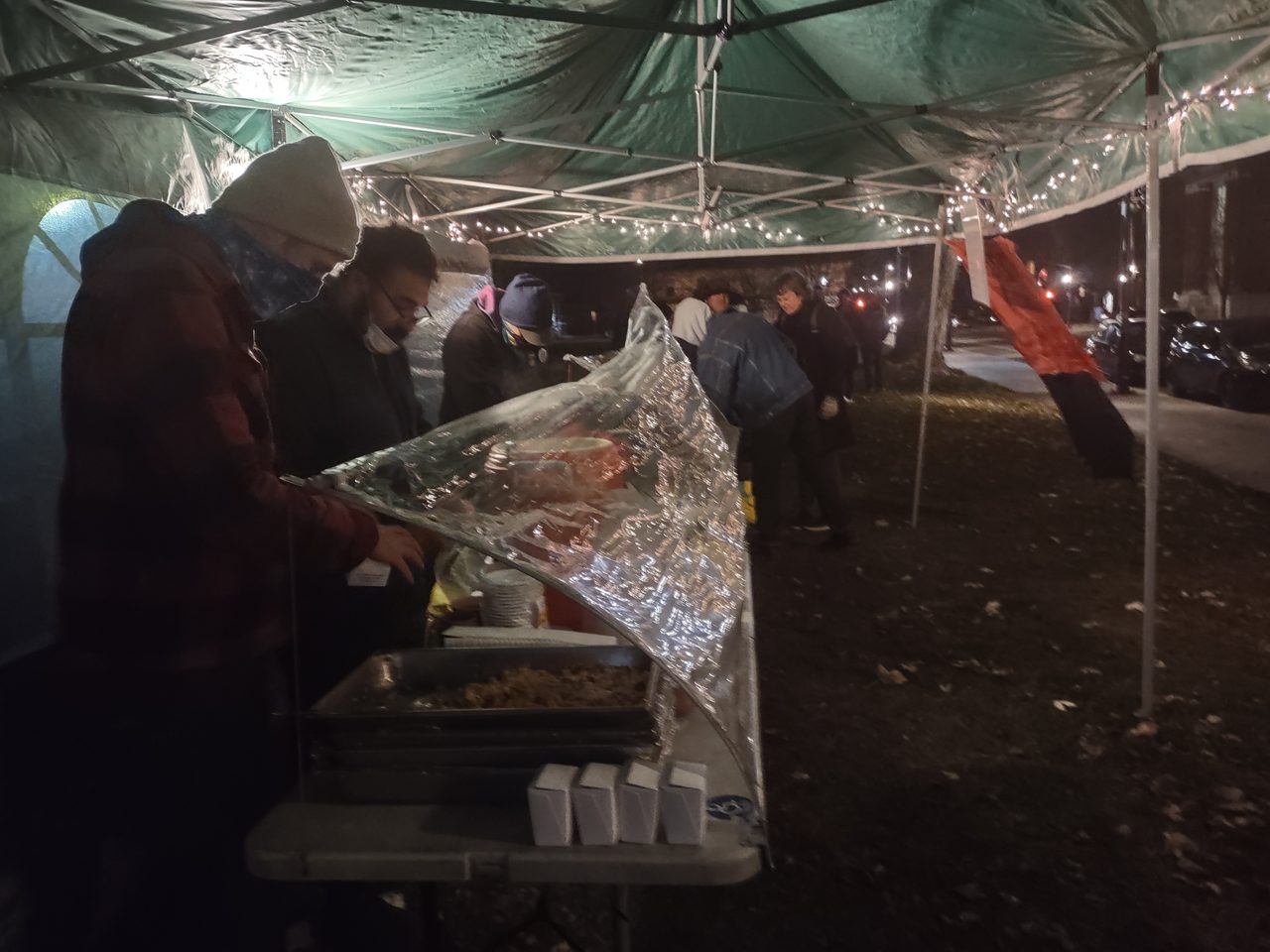
By 6:30 p.m. on Nov. 23, the warmth of the afternoon had given way to a cutting wind. Across from Peterborough City Hall, Food Not Bombs volunteers set up tables on the grass in Confederation Park. They piled bags of bread to one side and set out trays of steaming vegan food and thermoses of hot drinks. People chatted as the line grew toward McDonnel Street.
Near the front, bundled up against the cold, was Swati Banerjee. She and her partner had stumbled across the free supper while looking for something to eat downtown early this summer. Coming back had become part of their Monday routine.
As an undergraduate student at Trent University, Banerjee learned to feed herself while paying rent off-campus and putting money toward school. She grew up eating a lot of fish. When she saw what it would cost to keep that up, she looked into supplements and found those expensive too. Pizza pockets were cheap and quick. Some weeks, a single meal’s worth of prepared salad would fit her budget more easily than buying lettuce, tomatoes and cucumbers separately.
Lakelands Public Health reports that about 22 per cent of households across the region experienced food insecurity between 2022 and 2024. Last year, the health unit estimated that a nutritious basket of groceries cost $1,250 a month for a family of four. Meanwhile, in 2026, a family of four living on Ontario Works receives a maximum basic needs allowance of about $500 a month, intended to cover groceries as well as any other monthly necessities outside of housing expenses.
Jeff Chislett, who was also in line that evening, said a bag of chicken breasts he used to buy for a little more than $5 now costs him roughly twice as much. Between Food Not Bombs’ free Monday suppers, he looks for the least expensive groceries he can find.
“I find myself having to routinely beg and borrow from friends and family to be able to make it through the month with regards to staples like milk, sugar, and flour, and I’m so sick of it,” Chislett said.
He’d like to see governments consider price controls and city-run grocery stores as ways to bring down the cost of food.
Myles Conner, who co-founded the Peterborough Food Not Bombs group, said turnout has stayed high since the pandemic. Volunteers collect surplus food from farmers’ markets and Trent’s vegetable gardens, along with donations from community members’ gardens and local fruit trees. In the fall, they can make four trays of apple crisp alongside the rest of supper. Any leftovers are taken to One City Peterborough or Community Fridge Peterborough. Lately, Conner said, there often hasn’t been much left to pass along.
Conner imagines a volunteer-run cafeteria open daily, where people could contribute in different ways and get a good meal in return. For now, there’s a supper to put on every Monday, and volunteers have their hands full picking up ingredients, cooking, portioning, and delivering food, and cleaning the kitchen. Conner has been doing the work since 2005, and he’s thought about what makes him want to come back week after week.
“We all have to find some sort of reward in it. And if we can make a pasta sauce that we can feel is a strike back against the violence of the system, that’s what we’ve got,” he said.
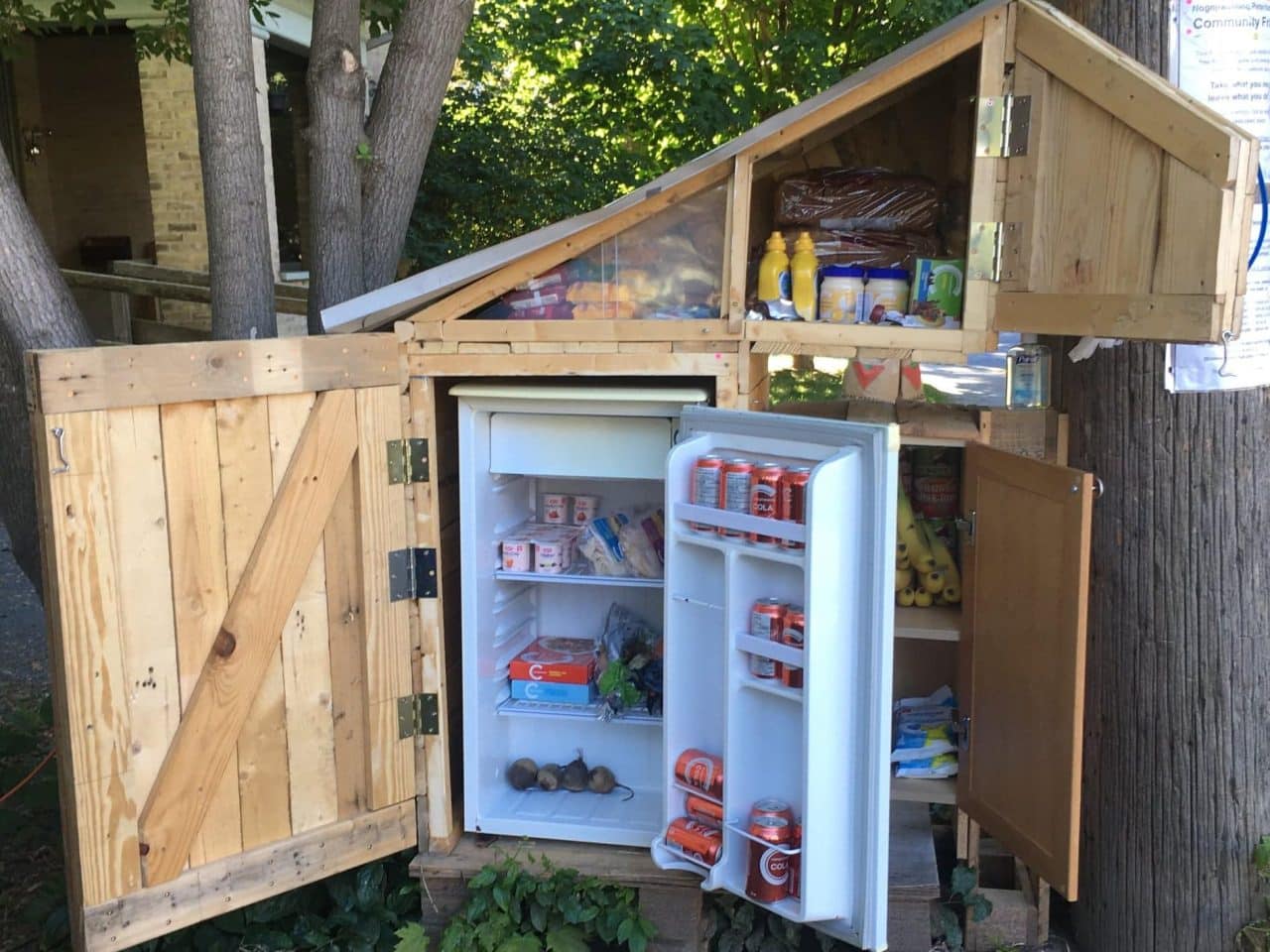
At Community Fridge Peterborough, near Dublin and Aylmer streets, anyone can drop off food or take what they need. Co-founder Sunny Malik said a few regular donors and weekly bread pickups from COBS Bread help keep it stocked, along with surplus from Food Not Bombs when there’s some to spare. Some days the fridge and pantry are empty. Regular drop-offs by community members help fill those gaps.
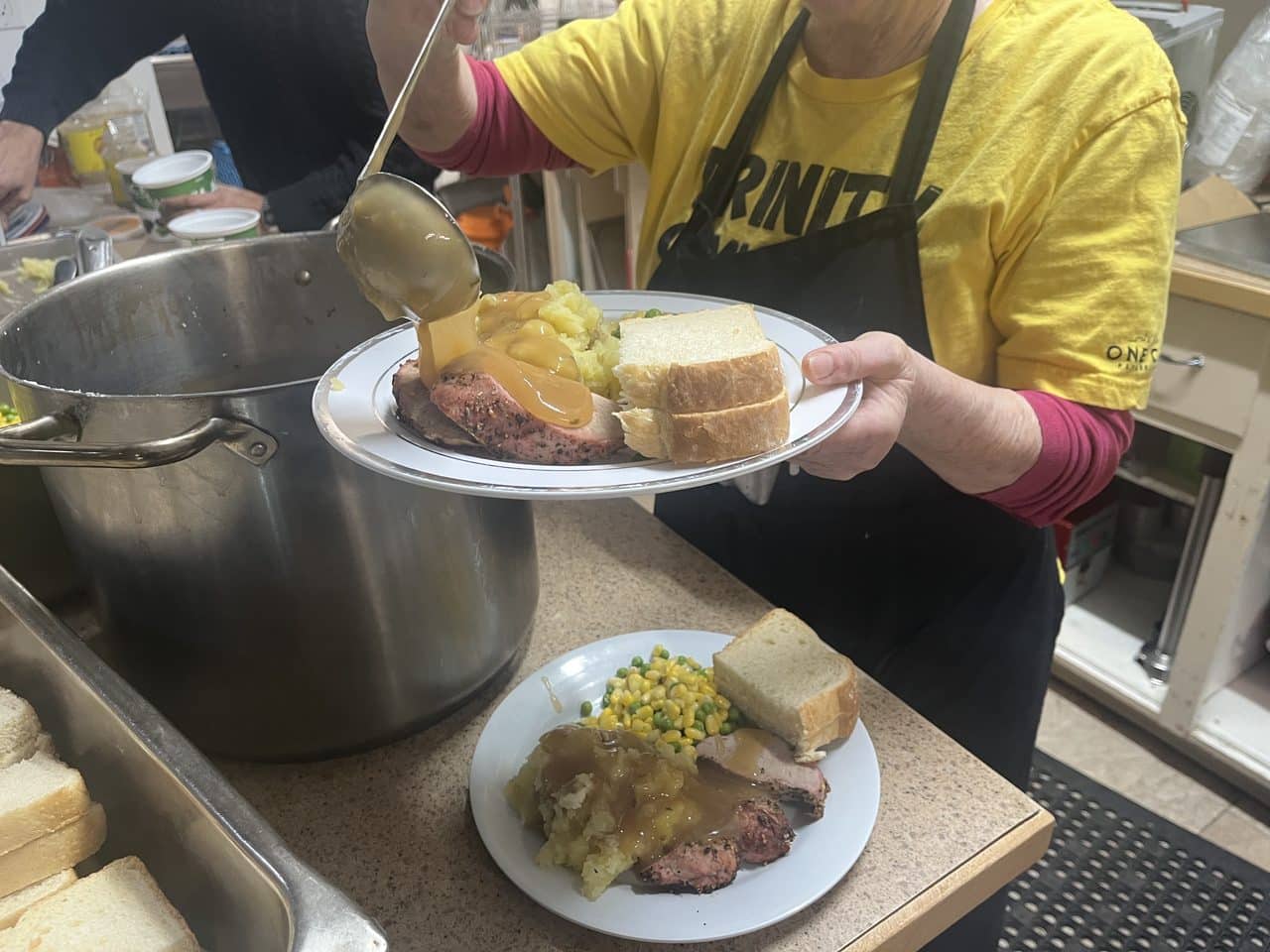
One City serves a free meal every day at its Trinity Community Hub. Mackenzie Clark-Smith, the organization’s fundraising coordinator, said some people come often enough that others ask after them if they miss a day. She noted that the hub served more than 30,000 meals between Jan. 1 and Oct. 1, 2026.
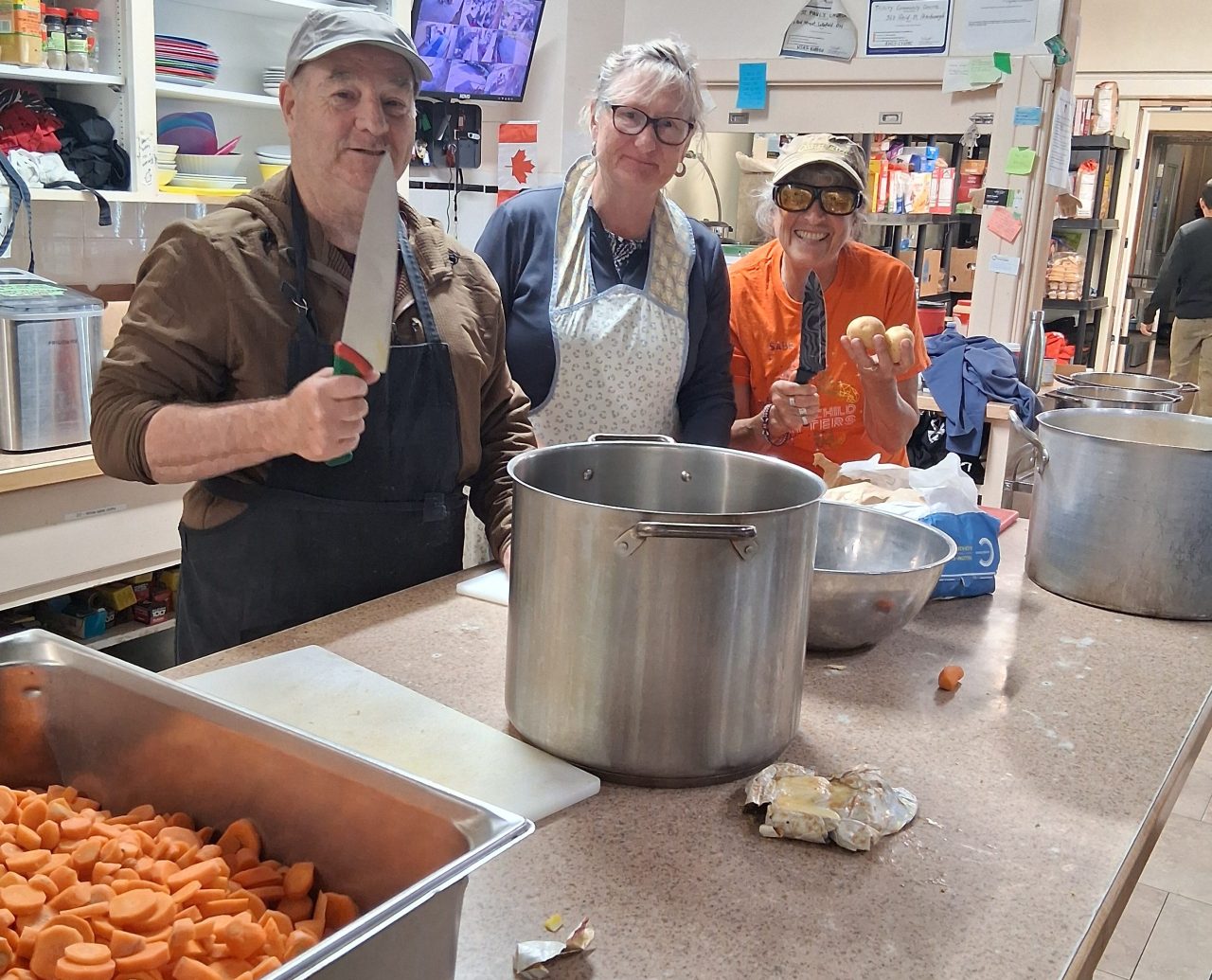
While the City of Peterborough funds shelter operations at Trinity, the community hub’s kitchen relies entirely on fundraising, grants, and donations for expenses like staff time and ingredients. Kawartha Food Share supplies some of the food, and volunteers put in about 100 hours of cooking time every month, Clark-Smith said. People can sign up to help in the kitchen, donate to the meal program, or check out the hub’s wish list for needed supplies, such as cooking oil and spices.
Clark-Smith would like to see more ongoing funding so that more local organizations can offer meals. The pressure on people’s budgets also comes up elsewhere in One City’s work. A participant in its Clean Team street-cleaning employment program told Clark-Smith how hard it was to get by on social assistance while facing barriers to employment. His experience echoed what Clark-Smith sees across One City’s programs, where “social assistance does not cover all of your basic needs.”
As of July 2026, a single person on social assistance receives a total of $733 per month from Ontario Works to cover all expenses from housing to food and other necessities. The provincial government last set the rates for social assistance in 2018, and they have remained frozen ever since, despite the steadily increasing cost of living.
Kawartha Food Share interim general manager Mackenzie McIlwain said food banks in Peterborough city and county averaged about 12,000 visits per month in 2024, and about 14,000 in 2025. The organization also supports more than 240,000 school meals each month through breakfast and nutrition programs at 51 schools in Peterborough city and county, feeding about 17,000 children every day.
Individual donations have dipped over the past two years, McIlwain said, even as the organization continues to plan for the growing demand.
In many of the cases McIlwain sees every day, food insecurity can be as simple as “I ran out of groceries tonight, and I don’t get paid till Friday.”
She explained that Kawartha Food Share works with Feed Ontario to push for changes to social assistance in order to address hunger here in Peterborough and across the province. One recommendation the groups have put forward would allow people receiving Ontario Works to keep more of what they earn from a job. In March, Peterborough city council backed a guaranteed basic income for all Canadians. Both proposals address how much money people have to work with when rent, groceries, and other bills come due.
Banerjee said sharing bills with her partner helps her afford groceries now. She also has friends and family she can turn to. She shared that she knows how much those relationships have helped her get by, and she worries about others in the community who don’t have that safety net.
As Banerjee put it, “food insecurity might sound similar on paper, but looks very different person to person.”
Author

Related Articles
To be of service
From PARN to Volunteer Peterborough and beyond, what motivates people to volunteer their time?
Peterborough Currents Election Special zines
New series of five print zines explore the essential issues this municipal election

Walking with Bhante Bodhicitta
Local monk leads visitors on free walking tours of Wutai Shan Buddhist Garden, and shares journey to monastic life.
