How to fight food insecurity
Almost 1 in 4 families in Peterborough are food insecure
You’re reading the June 1, 2026 edition of the Peterborough Currents email newsletter. To receive our email newsletters straight to your inbox, sign up here.
Hi there, it’s Currents co-editor Gabe Pollock, here with your weekly Peterborough Currents email newsletter.
Food is such a fundamental part of our lives.
That may be an obvious thing to say, but as soon as I started reading up on the new report from Lakelands Public Health, detailing just how many people in our community can’t afford enough nutritious food, I couldn’t help but start drawing galaxy-brain connections. There’s a direct line from your grocery bill at the downtown No Frills to decisions being made in Queen’s Park and on Parliament Hill, to global events like climate change, COVID-19, and the War in Iran.
Food is tied into our culture, our bodies, our history, our families, and every part of us. There’s a much, much bigger story to be written about food insecurity in Peterborough (maybe in the future?), but the simple fact remains: Almost 1 in 4 families in Peterborough are food insecure, and those numbers are on the rise. What’s causing this, and what do we do about it?
Let’s get into it.
Major change needed to fight rising food insecurity, says Public Health
by Gabe Pollock
Food insecurity is on the rise, in Peterborough and across the neighbouring counties, and food banks aren’t going to be enough to fix it, according to new data from Lakelands Public Health.
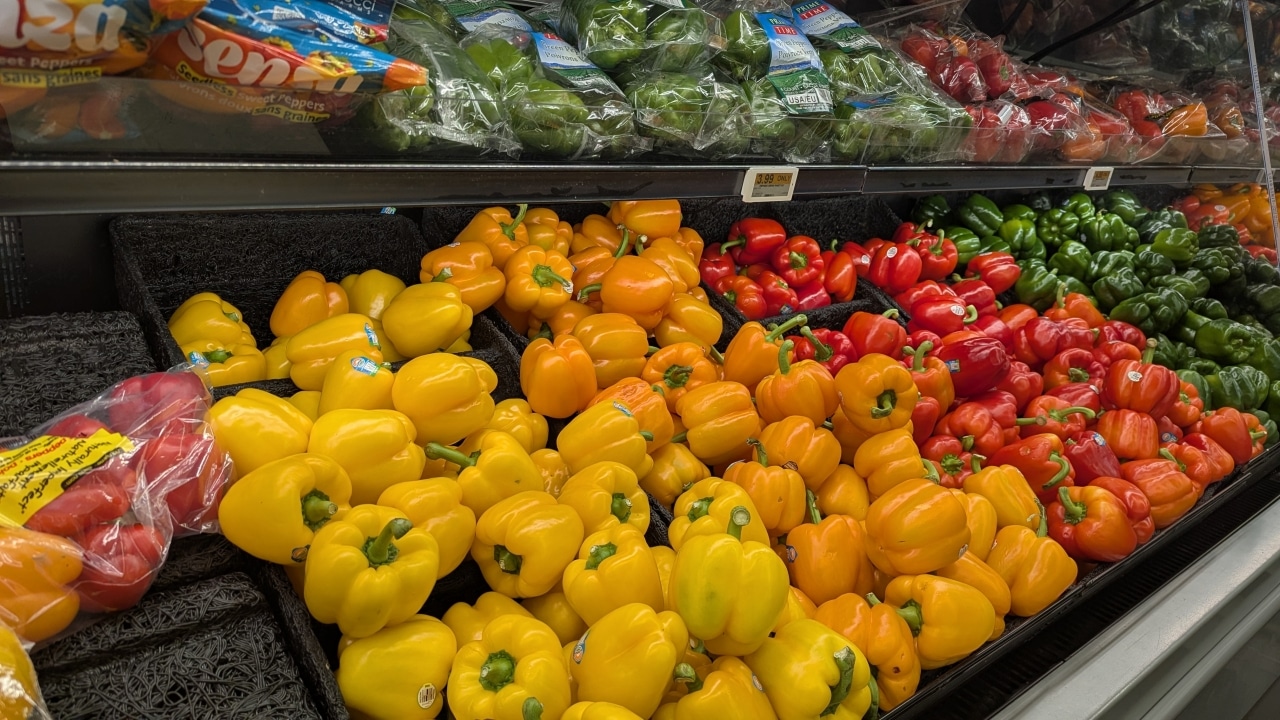
Every year, public health authorities across Ontario head out into local grocery stores to survey how much it costs to buy enough food to meet recommended nutritional guidelines. They can then compare this figure, called the Nutritious Food Basket, to the funds that are available to low-income individuals and families, including minimum-wage employment and social assistance programs like Ontario Works (OW) and Ontario Disability Support Program (ODSP).
“The income numbers come from the actual incomes of folks in our communities,” explains Lauren Kennedy, public health nutritionist at Lakelands Public Health, who co-authored the report with health equity coordinator Sarah Tsang. Their data is available on Lakelands’ online Food Insecurity Dashboard.
For instance, in 2025, a family of four living in Peterborough on OW received $2,994 per month. With an average rent for a three-bedroom ($2,410) and the average local cost of a Nutritious Food Basket ($1,250), the family would already be at a deficit of $666 each and every month – and that’s without considering any other expenses.
“Families are having to make hard decisions,” says Kennedy. “Do I pay rent, or buy food, or send my kids on that school trip, or pay the heating bill? All of these are basic essentials for living and for participating in community.”
The data shows that almost 1 in 4 houses in the Lakelands region (which includes Peterborough city and county, as well as the City of Kawartha Lakes and Haliburton and Northumberland counties) are food insecure, and the numbers are trending upwards.
This is a public health crisis, with clear connections between a lack of food and people’s mental and physical health, but it’s also a system-wide problem, and system-wide problems require system-wide solutions. While emergency food solutions like food banks and community meals “may meet some immediate needs that folks have, it’s a band-aid solution,” says Kennedy. “What is the root cause? And how do we address it, versus the symptom?”
Following several years of rising inflation, driven by external factors like climate change and global conflicts, paired with minimal increases to government assistance programs and average incomes, food is getting more expensive, and wages aren’t keeping up.
“If it’s an income problem, it requires an income solution,” says Kennedy.
She cites research demonstrating that a basic income guarantee could reduce food insecurity, by ensuring that everyone has enough money to access nutritious food. She also emphasizes the need for improved government benefits, including child benefits, OW, and ODSP. “If those policies match the cost of living, they’re less likely to trap people in the cycle of poverty and allow people to have their basic needs met, so that they can actively participate in their community.”

Thanks for reading!
If you value our journalism and want to see it continue, please sign up to support us.
Gabe Pollock
Co-Editor
Peterborough Currents
Thanks for reading the Peterborough Currents email newsletter! Here’s where you can sign up to have these sent straight to your inbox.
Author