
Social assistance rates deemed “wildly insufficient” as United Way releases income inadequacy report
Living wage for Peterborough now pegged at $20.60 an hour
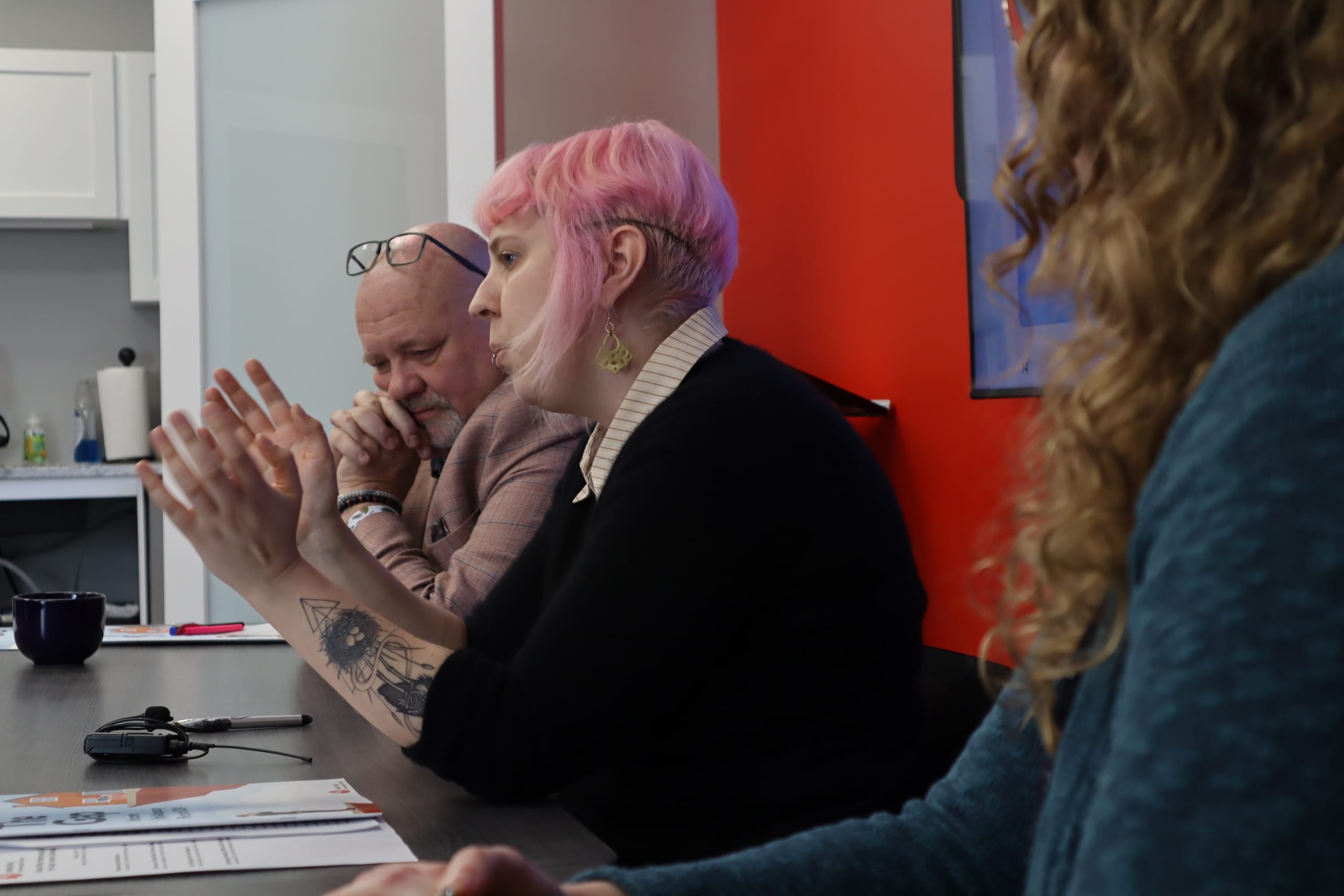
When Elisha Rubacha was studying at Trent University, she didn’t expect she would have to rely on social assistance after earning her degree.
But as a new graduate, she found herself stringing together minimum wage jobs that didn’t pay enough to cover rent and other essentials. So she applied for Ontario Works, as well.
“There’s not really a choice when you just can’t afford to make rent. You have to do what you have to do,” Rubacha said.
The only place she could afford to live was the second floor of someone’s home, with just a hot plate to cook on.
“There was someone who lived on the third floor and they had to walk through my space to get to their space,” she said. “My only sink was in the bathroom. So I was doing dishes in my bathroom.”
A single person can receive up to $733 a month on OW, or less than $9,000 a year. That is “wildly insufficient,” according to Rubacha, who now works for the United Way Peterborough and District.
She is one of the authors of a new United Way report that says social assistance rates are well below what’s needed to meet people’s basic needs, as the cost of living soars.
The Ontario Living Wage Network says the living wage for the Peterborough region is now $20.60 an hour, or almost $37,500 a year.
But people on OW are surviving on about 25 percent of that, according to the United Way report.
The maximum amount a single person can receive on ODSP is $1,308 per month, amounting to almost $15,700 a year. That’s about 45 percent of what someone would make on a living wage, the report states.
But it’s not only people on social assistance who are struggling, according to the report.
Ontario’s minimum wage, at $16.55 an hour, is also insufficient, the report argues, with many minimum wage workers finding it difficult to put enough food on the table.
“When even working people can no longer afford to eat properly, that illustrates a serious problem,” Rubacha told reporters at an event to announce the report on Tuesday.
She cited a University of Toronto study that found that the working poor made up 60 percent of Canadian households that experienced food insecurity in 2022.
All people deserve to have a minimum standard of living, but attaining that has become increasingly difficult for many, according to United Way Peterborough and District CEO Jim Russell.
“There’s a growing gap between those that have and those that have not,” he said. “And we need to be painfully aware of it.”
The report points to a guaranteed basic income as one way to ensure everyone can meet their basic needs. Under a basic income, people would receive cash transfers if their income falls under a certain threshold. As a person’s income rises, their payments would be gradually reduced.
Ontario had a short-lived basic income pilot project that was cancelled by the Ford government after winning power in 2018. A similar pilot is now being considered for P.E.I.

Russell said that while some worry about the cost of bringing in a basic income, what’s not always obvious is that having poverty in our communities already comes with huge costs.
“Poverty is expensive,” he said, pointing to health care costs as one example. “If you’re poor, you’re sicker. If you’re sicker, you need more health care resources.”
The report points to research showing the health consequences of living in poverty. People in Ontario who face severe food insecurity incur almost $4,000 a year in health care costs, according to Statistics Canada data cited in the report. For people who are food secure, that amount is only about $1,600 a year.
The United Way is organizing a symposium in June to discuss ways to improve incomes, Russell said.
“Our current system is inadequate. That’s pretty clear,” he said.
Currents asked the Ministry of Children, Community and Social Services if social assistance rates are enough for people to live on, but did not receive a response by publication time.
The Ford government has increased ODSD rates by almost 12 percent since 2022 and has tied rates to inflation, according to the government website. However, OW rates have been frozen since 2018.
Premier Doug Ford sparked controversy last summer for comments he made about people on OW.
Speaking at a conference, he said he would “support” people on ODSP “for life.” But what “drives me crazy” is healthy people who are collecting OW, he said.
“It really bothers me that we have healthy people sitting at home, collecting your hard-earned dollars,” he said.
Rubacha said it’s “a huge misconception” to think that people on OW are “just sitting around.”
“Most people are working very hard. And it’s just not enough to make ends meet,” she said.
She said she hopes Ford “can someday understand that and we can transition away from the style of support that we’re offering now, which is insufficient.”
Author

Related Articles

After a year under an Ontario-appointed supervisor, Peterborough’s Children’s Aid Society won’t say if its budget is balanced
The Ford government appointed a supervisor last year to “reinstate good governance and fiscal sustainability” at the society
Two short stories about strong mayor powers in Peterborough
A legal challenge against the City of Peterborough is dropped and “the mayor’s budget” is passed

What happened to the social service workers at the Peterborough Public Library?
Former CEO’s reports suggest the idea was a qualified success
