Staff cuts on the table as local public school board faces $16.6 million deficit
Union representatives fear teacher layoffs, bigger class sizes
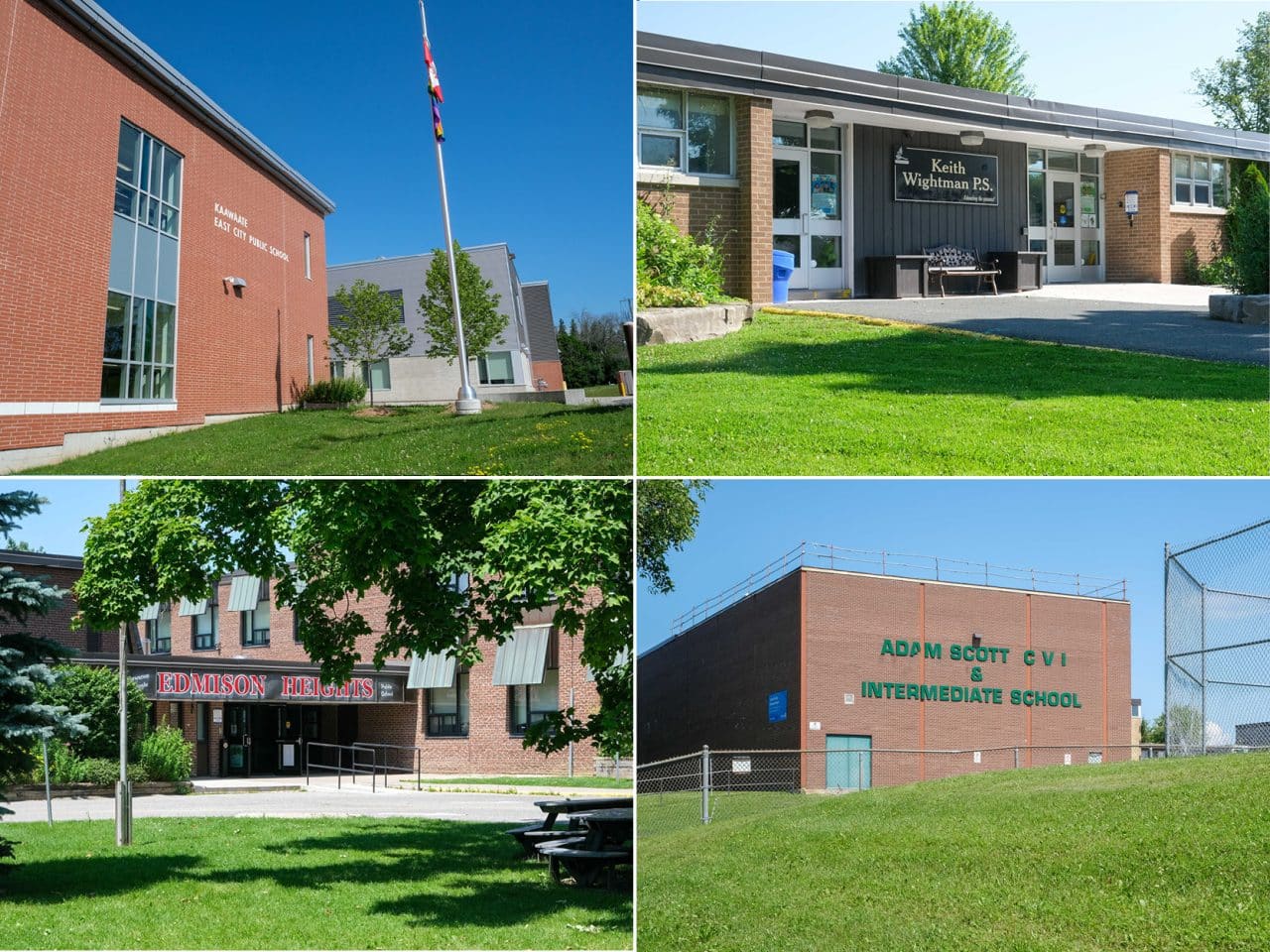
The Kawartha Pine Ridge District School Board (KPRDSB) is looking to shrink the size of its workforce as it considers making millions of dollars of budget cuts to eliminate a projected deficit of nearly $16.6 million.
Potential staffing cuts are on the table for “all employee groups,” including teachers, principals, school support staff and board administrative staff, according to Greg Kidd, executive officer of corporate affairs.
Kidd said in an email that a “substantial portion” of any staffing reductions would come through attrition, meaning that when people retire, resign or get promoted, they wouldn’t be replaced. But he did not rule out the possibility of layoffs.
“Any staffing adjustments would aim to minimize the need for layoffs,” he said.
The school board is still waiting to find out how much funding it will receive from the provincial government for the 2025-2026 fiscal year. But board staff anticipate needing to reduce spending by nearly $12.2 million in order to balance the books, according to slides presented to school board trustees at an April 28 budget meeting.
Most of those savings would come from nearly $7.5 million in proposed “staffing adjustments,”
though Kidd said nothing has been finalized yet. The board is also considering slashing spending on student bussing by $1.5 million next school year, according to the slides.
“Gaps” in provincial funding for things like student transportation and special education are partly to blame for the deficit, according to a board staff report.
High use of employee sick leave is also placing “significant financial pressures” on the board, according to a recent budget committee report. There were 130 employees who took more than 100 days of sick leave in 2023/2024. For the current school year, 35 employees had taken over 100 days of sick leave as of March 20.
Despite facing budget deficits for the last two fiscal years, the school board has staved off cuts by dipping into its reserve funds up until now. But the province doesn’t allow school boards to do that for three years in a row, so this year the budget has to be balanced, according to the report.
The finances of Ontario’s school boards have faced increased scrutiny from the province in recent weeks. Education Minister Paul Calandra announced investigations into three school boards in Toronto and Ottawa last month over multi-year financial deficits and spending concerns.
Elementary teachers’ union president fears layoffs

The president of the Kawartha Pine Ridge local of the Elementary Teachers’ Federation of Ontario said he’s worried some of his members could lose their jobs, if cuts go ahead.
“For the first time in about 15 years, we are looking at the possibility of layoffs for [local elementary school] teachers,” said David Berger. “What it’s fundamentally going to mean is bigger classes and fewer teachers in the system.”
A local representative of the Ontario Secondary School Teachers’ Federation (OSSTF) said he isn’t worried that any of his members will be laid off at this point. But Dave Warda, bargaining unit president for OSSTF District 14, said about 30 high school teachers are set to retire from KPRDSB this summer. He said he’s concerned they won’t be replaced and that will put a strain on local schools.
Although there are caps on class sizes, he said he fears schools will be under pressure to run all classes at maximum capacity and to cancel any that aren’t fully enrolled, giving students fewer course options.
Kidd denied that class sizes would grow, saying student-teacher ratios “are provincially mandated” and “will be unaffected by any possible staffing adjustments.”
Warda also said the proposed cuts to transportation spending will make it harder for some students to take part in specialized programs, such as the integrated arts program at Thomas A. Stewart Secondary School. Right now students can get bused to a different school than the one closest to their home in order to enrol in specialized programs. But Warda said he’s concerned that service will be dropped next school year because of funding constraints.
“So now it’s on the parents to get that kid to school every day if they want that program and that presents all sorts of other issues around equity,” he said.
Trustees already voted earlier this year to increase maximum walking distances for kindergarten students in order to save money on bussing, according to the Peterborough Examiner. Starting in September, kindergarten students will be denied bussing if they live within 1.6 kilometres of their school, whereas previously the cut-off was one kilometre. Trustees also approved longer bus commute times for students up to grade six. The maximum allowed bus commute time for those students will now be 75 minutes, up from 60 minutes.
Province to blame for school board’s budget troubles: unions
Berger said provincial underfunding is to blame for the financial crunch facing local schools, not the school board, which he said is “actually doing a fantastic job of advocating on behalf of public education.”
“The issue is 100 percent with the province and the funding formula,” he said.
Warda agreed the school board is “doing the very best they can with what they’ve got.”
He accused the Ford government of trying to “quietly cut education” funding, by not providing school boards with enough money to keep up with rising costs.
“We’ve been under the pinch for a while,” he said. “Not everyone is really paying attention, unless you’re in the school and you see some of the things that are sliding.”
Despite increases to total education spending under the Ford government, a 2024 analysis by the Ontario Public School Board Association found that, when adjusted for inflation, per-student funding had decreased by $776 since the Progressive Conservatives took office in 2018.
Last summer, school board chair Jaine Klassen Jeninga wrote to then-education minister Todd Smith asking for additional funding to ease pressure on KPRDSB’s budget. Board staff said at the time KPRDSB was facing a nearly $9.3 million provincial funding gap for special education and transportation.
“We couldn’t be quiet this time around,” Klassen Jeninga said at the time about her decision to speak out about the board’s budget woes. “It was time for us to say… what we believe in for public education, and where we are short.”
Education Minister Paul Calandra’s press secretary defended the Ford government’s education spending.
“Our government is making record investments in education to ensure school boards like Kawartha Pine Ridge have the tools they need to deliver high-quality programs and services for students,” Emma Testani wrote in an email. “This includes targeted funding for student transportation, special education, and mental health supports.”
“Boards are responsible for managing their budgets and making decisions that reflect local priorities,” the email continued. “With the increased flexibility and funding provided, we expect boards to use their resources effectively to support students while maintaining long-term financial sustainability.”
Kidd said the school board’s draft budget is expected to be tabled later in May so that trustees can review it during upcoming budget committee meetings scheduled for May 26 and 28.
KPRDSB serves more than 35,000 students in Peterborough city and county, Clarington, Northumberland County and the City of Quinte West.
This story has been updated to include comments from Education Minister Paul Calandra’s press secretary.
Author

Related Articles

Alderville First Nation grants legal personhood to Rice Lake
Exploring an alternate solution to climate change, and a growing international movement
Promoting preparedness in East City
A grassroots movement aims to help neighbours out in the next big storm