
Peterborough, like the rest of Ontario, has a dire need for foster parents. Why are fewer people signing up?
The number of local foster homes has dropped by more than half since 2020, according to the Kawartha Haliburton Children’s Aid Society
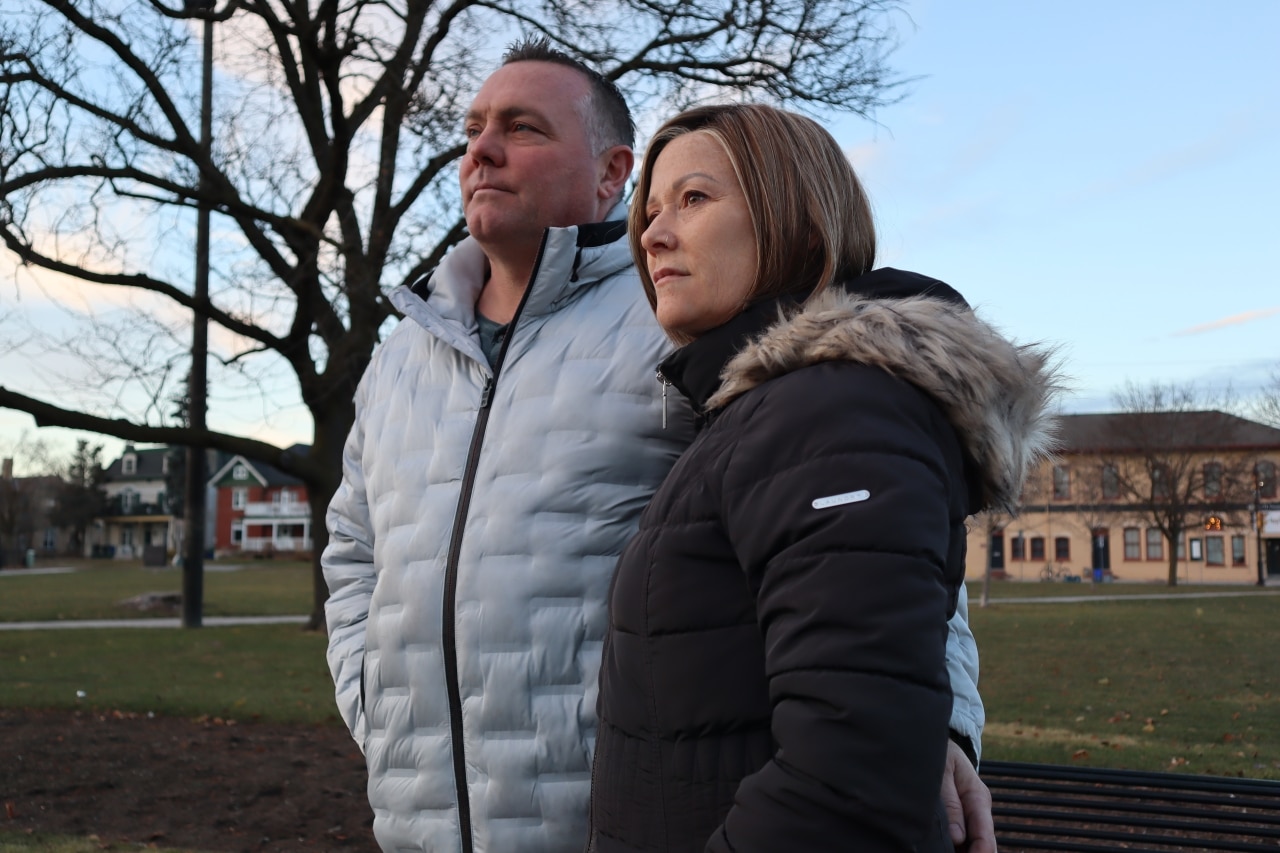
With four kids of his own, Calum Yule never expected to become a foster parent. But then in 2007 the single dad met his future wife, Rebecca White, who was fostering two children at the time.
“That’s just where her heart is… always helping kids,” Yule said.
After moving in together, the couple went on to foster many more children, driven by knowing how great the need was.
“There’s still so many kids out there that need help and don’t have it,” Yule said.
The Selwyn Township couple said they fostered 38 children between them in total. Yule found it rewarding to take the kids on activities – like four-wheeling, camping and a trip to Disney World – that they may not have experienced otherwise, he said.
But in recent years the satisfaction they got from caring for kids became outweighed by the frustration of working within a child welfare system that they felt didn’t have their backs, the couple said.
“It just got to the point where we were feeling like we weren’t appreciated,” White said.
The couple’s concerns had piled up over the years. In one case, child protection workers didn’t tell them about the extensive trauma, including sexual abuse, that a teenage boy they fostered had gone through. They said they pushed to get him counselling after he started becoming violent and getting in trouble at school, but they believe they could have helped him more if they had been told he needed therapy earlier.
“Had we known that we could have advocated more for him in the beginning,” Yule said. “Sadly, we didn’t have enough help for him.” The boy ended up having to go to a group home in Brampton after it got to a point where they couldn’t care for him anymore, Yule said.
The couple also said they often needed relief workers to come into their home to look after a teenage boy with autism who lived with them for many years. They said the boy needed a high degree of care and could be violent, so they frequently needed time off, but initially the Kawartha Haliburton Children’s Aid Society (KHCAS) would only pay for relief workers to take care of the boy one weekend a month. Not until “things got bad” at home did the agency agree to grant extra funding so the couple could take more time off, White said. That boy eventually had to be placed in a group home, too, the couple said.
Yule said by last spring he was feeling so burnt out that he and White came to the conclusion that they could no longer continue fostering.
“It was the hardest decision Rebecca and I’ve ever had to make as a couple,” he said.
Child welfare agency says it’s struggling to replace long-time foster parents who’ve retired in recent years
Many local foster parents who had been doing it for decades have retired since the COVID-19 pandemic, and it’s become more difficult to recruit and retain people to replace them, according to KHCAS. The child welfare agency said in a statement that it had 73 available foster homes in 2020. Now, according to the statement, there are only 31 available foster homes in the region the society serves, which includes Peterborough city and county, the City of Kawartha Lakes and Haliburton County.
Misconceptions about fostering have impacted recruitment, KHCAS’ statement said. For example, the agency said it’s not true that single parents and adults who work outside the home cannot be foster parents.
“The Agency provides financial support, ongoing training and staff support [to foster families],” the statement said. “Our focus is to ensure foster care providers experience that they are not alone in providing care to children and youth in their homes.”
The drop in the number of local foster homes is part of a provincewide trend that the Ontario Association of Children’s Aid Societies (OACAS) has called a “crisis.” Ontario has seen a nearly 34 percent decrease in available foster homes since the pandemic began in 2020, according to OACAS. In a press release issued last June, the organization urged more people to step up to provide homes for vulnerable kids and teens. “The safety and well-being of children, youth, and families is at risk,” the release said.
The lack of foster parents is one factor that has forced children’s aid societies across the province to place children in unlicensed settings, such as hotels, offices and trailers, according to Michelle Gingrich, a senior manager with OACAS. The Ford government launched an audit of children’s aid societies in September after child welfare advocates raised concerns about the placement of kids in unlicensed settings. Ontario’s ombudsman is also investigating the practice.

KHCAS said it will launch a campaign to enlist more foster parents sometime this month, with a focus on finding homes for sibling groups, older kids and teens, infants, and children identified as having “complex needs.” The agency’s statement stressed that it only places children in foster care after first working with families to try to keep children in their own homes and, if that fails, seeking extended family members and community members that already know a child to take them in.
High cost of living, housing crisis making it more difficult for people to become foster parents
Gingrich said the high cost of living and soaring housing prices are partly to blame for the declining number of foster parents. Many families cannot afford to buy or rent a home big enough to accommodate an extra child right now, she said.
The problem is being compounded by new rules around out-of-home placements for children in care brought in by the Ford government in recent years, Gingrich said. OACAS has urged the province to reconsider some of those changes, including a new regulation that came into effect on January 1, 2025, requiring that all bedrooms for children in care must have doors. While meant to ensure privacy, OACAS fears the change will further reduce the number of foster parents, and other caregivers like extended family members, because many people simply don’t have a spare bedroom in their home, according to a written submission the organization made to the provincial government.
Foster parents and extended family members who take in children in care often use spaces without doors, such as dens, as bedrooms, according to the submission. “This is becoming increasingly common amid the housing and cost of living crisis across Ontario,” it states. Indigenous child well-being agencies have raised concerns about the change, saying it will “undermine” efforts to provide “community-based care” for First Nation, Inuit and Métis children and youth, according to the submission.
While the regulation specifically says bedrooms are required to have doors, the Ministry of Children, Community and Social Services said in an emailed statement that a “visual barrier” for privacy will suffice. But Gingrich said there is still confusion over whether a visual barrier will be permitted in all cases, and whether children will be able to share bedrooms.
“We want a child to have privacy but it’s the black-and-whiteness of the way” the regulation is written that is a concern, she said.
Peterborough woman opening her home to kids in care so they won’t “be shipped far away” from their communities
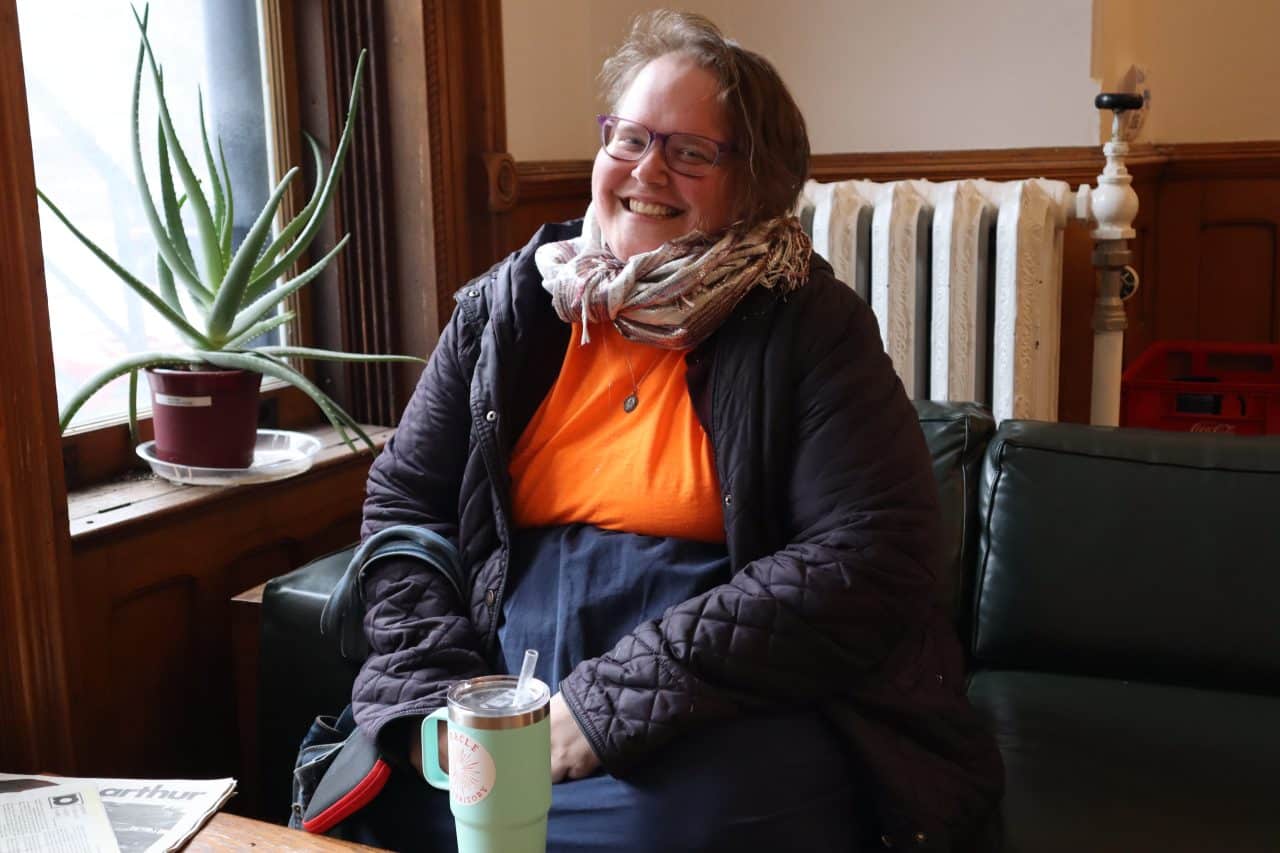
Shannon Culkeen said she has thought about opening her home to children in the child welfare system for years. Seeing the state of crisis the system has fallen into recently, with children being placed in hotels and group homes far from their communities, spurred her to take the next step, she said.
“I just really wanted to be able to become one more reason that kids could stay local, could stay close to their families, and wouldn’t need to be shipped far away,” she said.
She said she’s now in the final stages of approval to become an alternative caregiver with Dnaagdawenmag Binnoojiiyag Child & Family Services (DBCFS), an Indigenous child well-being agency based on Hiawatha First Nation. The agency uses the term alternative caregiver instead of foster parent to better reflect its “responsibility to keep families together,” according to its website.
Culkeen is coming on board at a time when DBCFS is struggling to find enough alternative caregivers. Sixty percent fewer people inquired about taking on the role in the 2023/2024 fiscal year, compared to the year before, according to a report by the agency.
“A rigorous application process, imposed regulations, rising costs of living, and increase of complex medical and behavioural needs of children and youth are contributing factors,” the report states.
Culkeen said she will share caregiving responsibilities with her sibling and his wife, who she shares a five-bedroom home with near downtown Peterborough. Culkeen’s 24-year-old daughter, who she adopted as an adult four years ago, also lives with them, she said.
Culkeen said they want to remain alternative caregivers for many years to come, so they have to be careful not to stretch themselves by taking in too many children at one time.
“We’ve had to be quite conservative about what we are able to take on,” she said. “It’s about making sure that we are really clearly defined within ourselves so that we can say a very enthusiastic ‘yes’.”
Some foster parents say compensation for the role hasn’t kept pace with rising costs
Yule said in his 17 years of fostering, he “never stopped” hearing that there was a need for more foster parents. But when he asked for more support “it was like pulling teeth to get it.” His message to the child welfare system: “If you looked after your foster parents a little better, maybe you’d have a little bit more.”
He said compensation is one thing that needs to change. Foster parents receive between $1,250 and $1,800 a month per child, according to KHCAS’ website. But the money Yule and White received often didn’t cover all the costs of caring for foster children, he said.
At one point, the couple had to spend their own money to buy a bigger vehicle that would fit Yule’s four kids plus their foster kids, he said. The demands of fostering also meant Yule often had to take time off from his job as a real estate agent, he said.
”I’d be at school dealing with police and runaway kids and all that stuff,” he said. “I literally put a lot of time and effort into what the kids needed when I could have been working… because you do whatever it takes for the kids, right?”
He said money wasn’t the couple’s motivation for fostering, but that compensation hasn’t kept pace with rising costs. “It’s not a cheap world. It’s not the ’80s anymore,” he said.
Culkeen said the compensation levels are enough for her family right now. But she said there are many other families who are qualified to take in children, but can’t for financial reasons.
“I think that for many families who aren’t as privileged as mine, [the level of compensation] would be the difference between being able to say yes [or] needing to say no,” she said. “I don’t think that becoming an alternative caregiver should be the province of the middle class and up, because that will only increase existing disparities.”
The money foster parents receive used to stretch further, Gingrich said. In the past, when the cost of living was lower, many foster families “had one fulltime carer at home to care for the children/youth,” she said. “The reality in today’s economy is that this isn’t feasible.”
Individual children’s aid societies decide how much to pay foster parents, using the funding they receive from the provincial government, according to OACAS.
KHCAS’ financial statements show the base funding it receives from the province has trended down in recent years, though it has received additional one-time funding to eliminate its deficit on three occasions since 2020.
The Ministry of Children, Community and Social Services said in an emailed statement that while it does not directly pay foster parents, it “has been undertaking targeted engagements to determine what supports caregivers need to provide high quality care.”
The statement also said the ministry is “actively working on ways to support” children’s aid societies to recruit and retain more foster parents, though it did not provide any specifics.
The ministry said it boosted spending on child welfare by $36.5 million this year, for a total of more than $1.7 billion. Funding for child protection services also increased by $14 million this year, following a $76.3 million increase last year, according to the ministry’s statement.
For-profit group homes paid huge sums, despite some being “disgusting” and “run down,” Yule says
Yule said for-profit group homes are paid vastly more than foster parents, which he called “a huge slap in the face.” KHCAS executive director Jennifer McLachlan previously told Currents unlicensed group homes can charge as much as $2,000 a day per child. (The Ford government appointed a temporary supervisor to take over control of KHCAS from McLachlan and the society’s board of directors last fall, after rejecting the society’s plan to manage its deficit.)
Yule has visited some group homes that were “disgusting” and “run down”, despite the high fees they charge, he said. White said some of the children they fostered were later placed in group homes where the kitchen cupboards and fridges were locked, the walls were full of holes and the bathrooms were dirty.
“We’ve actually had to advocate to get them moved out of these group homes, because they are treated horribly,” Yule said. “It’s just sad how broken the system’s got[ten].”
The province approves the rates for licensed group homes, but unlicensed homes set their own fees, McLachlan told Currents. KHCAS has blamed its deficits on the rising cost of placing children and youth in these residential facilities, combined with “years of funding reductions” by the province.
Although Yule and White have retired from fostering, they said some of the children they cared for are still a part of their lives. The couple said they see the autistic teen boy who had to move to a group home as their own son. He lived with them from when he was a toddler until age 14, when his care became too difficult to handle on their own, they said.
“He’s still our son, and we still want to see him,” White said.
White said he calls them Mom and Dad when they have video calls and visit him at his group home near Ottawa.
As difficult as it was to stop fostering, Yule said he takes comfort in knowing they did their best over the years.
“You feel good with the amount of kids that we did help,” he said.
Author

Related Articles

After a year under an Ontario-appointed supervisor, Peterborough’s Children’s Aid Society won’t say if its budget is balanced
The Ford government appointed a supervisor last year to “reinstate good governance and fiscal sustainability” at the society
Two short stories about strong mayor powers in Peterborough
A legal challenge against the City of Peterborough is dropped and “the mayor’s budget” is passed

What happened to the social service workers at the Peterborough Public Library?
Former CEO’s reports suggest the idea was a qualified success
