
“All about money”: Fleming College leaders face scrutiny over decision to axe 29 programs
Fleming professors and unions say decision was hurried and lacked transparency

When Fleming College announced sweeping program cuts this spring, it felt like a “gut punch” for Barbara Elliot.
Elliot has spent much of her career as a professor at Fleming’s Frost Campus in Lindsay. The small campus, home to many environmental programs, was hard hit by the cuts, losing about half of its full-time programs.
“Many of us, we put our heart and soul into that place,” said Elliot, who began teaching at the Frost Campus in 1995. “It’s an unforgivable decision.”
According to college president Maureen Adamson, the decision to cancel 29 Fleming programs was the result of “significant external events” outside the college’s control. In a letter to staff announcing the changes, she pointed the finger at the federal cap on international students and new restrictions on public-private college partnerships. Fleming has a campus in Toronto that operates through a public-private partnership.
“The related significant reduction to our budget has had a profound impact on college operations, and we are moving quickly to stabilize our institution and prepare for future years,” wrote Adamson, who declined an interview request from Peterborough Currents.
The long list of cuts includes numerous programs in business and environmental and natural resource sciences, as well as some in the trades, such as heavy equipment techniques.
Ontario’s Public Service Employees Union (OPSEU), which represents faculty and support staff at Fleming, has criticized the decision, as have some business and environmental groups who say it will lead to a shortage of graduates needed to fill gaps in the local labour market.
Many of the eliminated programs are one-year post-graduate and advanced diplomas that helped graduates get “better-than-entry-level” positions in the environmental sector, according to Elliot.
“I do feel that this decision is a reflection of [an] absolute lack of awareness of what our campus does, and the kinds of graduates that it produces,” said Elliot, who retired as a full-time professor in ecosystem management in 2023 but still teaches part-time. “These are the graduates that the industry needs so desperately… and as the climate crisis worsens, we need more and more of these people.”
Elliot said the college should have worked with faculty and staff to find solutions to declining enrolment caused by the student visa cap.
“In earlier times at the college, we solved problems together,” she said. But now staff fear facing reprisal from the college’s “senior leadership” for voicing any concerns, according to Elliot.
Currents reached out to Fleming for this story, but an official said the college could not comment, citing confidential negotiations with its employee unions.
“We are currently engaging our unions in a confidential process under our collective agreements, whose intent is stability of employment for our staff and faculty,” wrote Chris Jardine, associate vice president of marketing and advancement. “The college intends to respect the confidential nature of the process and is unable to offer further comment at this time.”
Relationship between college management and staff full of “toxicity,” “ill will,” professor says
Other professors Currents spoke to also raised concerns about the abrupt way the cuts were made and what it says about the way the college is being run.
One full-time faculty member said college management called staff into a Microsoft Teams meeting to give them the news of the decision on April 23. He said management “cut off” staff who raised objections by suddenly ending the virtual meeting.
The professor, who teaches in one of the eliminated programs, asked to remain anonymous because he fears speaking out could jeopardize his employment.
He said the way the news was delivered reflects a deteriorating relationship between college management and staff, which he said has become full of “toxicity” and “ill will.”
“I have never seen morale among our teaching staff as low as it is now,” he said.
There’s been a lack of transparency around Fleming’s decision, with the college providing no evidence, such as enrolment data, to justify the cancellations, he added.
He said enrolment data was wiped from an internal college database after the announcement was made. OPSEU made the same claim in a letter to Ontario Premier Doug Ford, calling on him to pause the program cancellations while launching an investigation into how they were carried out.
As someone who has dedicated a “good deal” of his career to teaching at Fleming, the professor said he’s dismayed by the direction the college is heading in.
“We did feel for a long time that we were working for an organization that really cared about student learning,” he said. But now “it seems to be all about money.”
“In certain instances, [it’s come] close to bragging about how much money we’re making,” he said.
He pointed to the college’s heavy focus on attracting international students to boost revenue, including through its partnership with Trebas Institute Ontario, a private college and subsidiary of Global University Systems. Since 2022 it has delivered Fleming curriculum at a campus in midtown Toronto under the banner of Fleming College Toronto, with revenues flowing back to Fleming in Peterborough. Adamson has reportedly said the Toronto campus may be forced to close because of the study permit cap.
The professor Currents spoke to said it’s been frustrating to hear the college president “whining” about how much revenue Fleming will lose from declining international enrolment, when he believes the college’s aggressive pursuit of international tuition was “problematic” in the first place.
He said the college’s financial difficulties are the result of provincial “underfunding” of colleges, not the federal study permit cap.
“The president’s public statements for months now have been focused on blaming the federal government exclusively, rather than the provincial government, which is the root source of the underfunding,” he said.

According to Elliot, Fleming has not paid enough attention to the domestic student market in its quest to grow revenue from international students.
She said if enrolment was low in some Frost Campus programs, it was partly because the college didn’t do enough to market them to Canadian students.
“We’ve neglected promoting these programs … at our campus at the expense of trying to secure more revenue from international students,” she said. “So it has now come back to sort of bite us.”
Fleming president calls students “commodity” while pushing to grow international enrolment
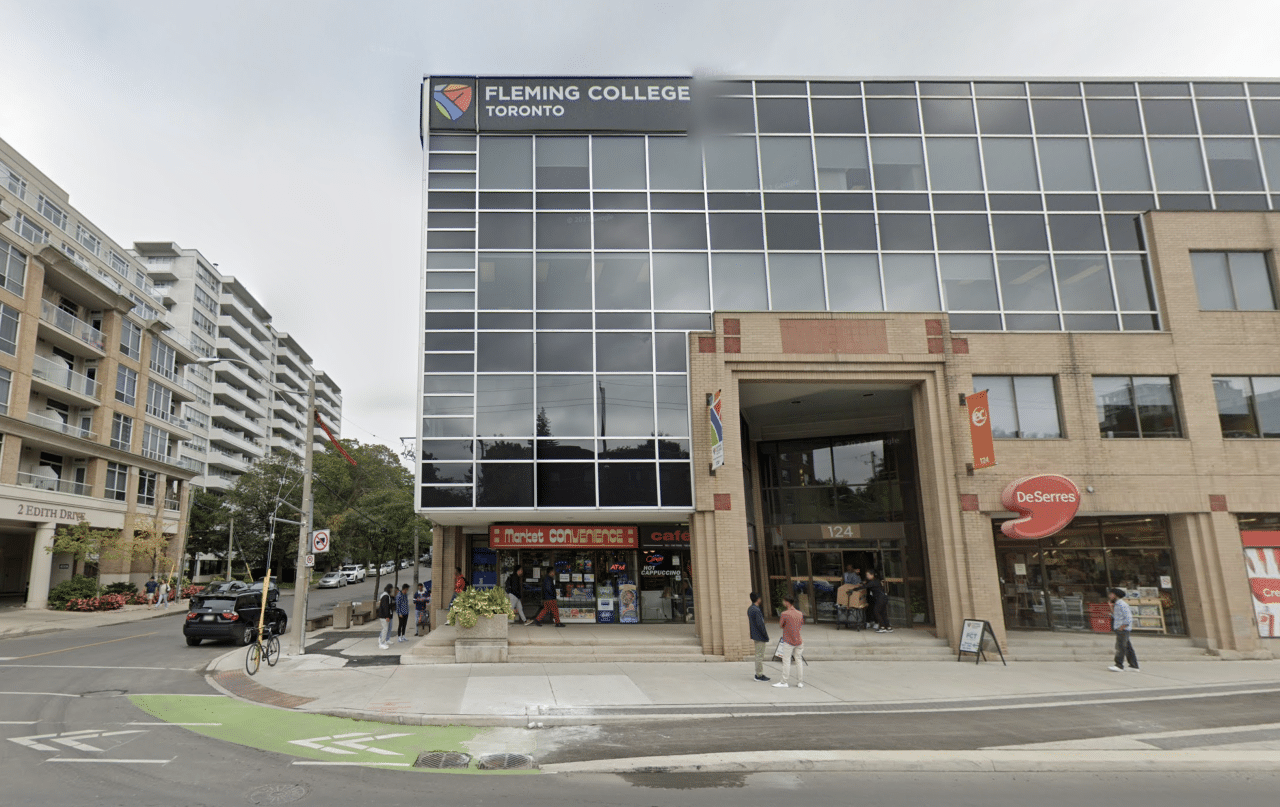
Fleming College Toronto welcomed students from 15 different countries when it opened in 2022, according to Global University Systems Canada’s annual report for that year. The report included a quote attributed to Fleming president Maureen Adamson, referring to students as a “commodity.”
“GUS Canada shares our commitment to providing students with a quality experience in teaching and learning, in facilities and student support, and in outcomes. We trust them with our most precious commodity, our students,” Adamson is quoted as saying.
According to the report, 584 students attended Fleming College Toronto that first year. Enrolment quickly skyrocketed. In 2023, 5,196 study permits were issued to allow international students to attend the public-private college, according to figures Currents obtained from the federal department of Immigration, Refugees and Citizenship.
Meanwhile, 4,905 study permits were issued to international students at Fleming’s main campuses in Peterborough, Lindsay and Haliburton in 2023, that data shows.
Fleming College saw its revenues more than double in the first 10 months of the 2023/2024 fiscal year, thanks in large part to an influx of international students to the Toronto campus.
The college took in more than $286 million in revenue between April 1, 2023 and January 31, 2024, according to a March report from the Finance and Audit Committee of Fleming’s Board of Governors. During the same period in the previous fiscal year the college saw revenues of $142.3 million.
The report projected a surplus of $38.4 million for the 2023/2024 fiscal year, due mostly to “significant increases in enrolment.” The college also saw a surplus of $10 million in the 2022/2023 fiscal year, according to the report. (The college’s year-end financial reports have not yet been made public).
But after last year’s surge, enrolment at Fleming College Toronto is now set to collapse. The province did not grant it any international study permit spots for 2024, Adamson told Currents by email in April.
“At Fleming College Toronto, we will lose over 5,000 students which results in a revenue loss of more than $38 million annually,” she wrote.
It’s unclear how much impact the international student cap could have on enrolment at Fleming’s main campuses.
Union leaders say they tried to work with college to avoid cuts
According to union leaders at Fleming, the college could have avoided slashing programs if it had worked with faculty and staff. They said Fleming’s faculty union offered to collaborate on a “process of renewing and revamping programs to meet the changing labour market and changing enrolment” in a letter to Adamson in January.
“Instead, decisions were made behind closed doors without the transparency and engagement the union is entitled to under our respective collective agreements,” reads an emailed statement from Liz Mathewson, outgoing president of Union Local 352, which represents Fleming faculty and Marcia Steeves, president of OPSEU Local 351, which represents support staff.
In her letter to staff announcing the cuts, Adamson wrote that the college “accelerated” the normal review process for deciding whether to eliminate programs, due to the budget hit the college is expecting from the study permit cap.
But union leaders also questioned why the cuts had to be so deep, given the financial gains the college has made from growing enrolment in recent years. “So why the drastic cuts to programs and possibly jobs? Why now?” Fleming union leaders asked in their statement.
The union leaders said they will “make every effort to prevent lay-offs” among their members. However, Fleming also has many contract faculty who are not protected by a union.
Currents spoke to one of those contract professors, who said he is still coming to terms with what the changes will mean for him, but expects he may get a smaller contract or no work at all next fall. “I guess I’m sort of in partial denial,” said the professor, who also asked to remain anonymous out of fear of reprisal for speaking out.
“Learning does not seem to be of much interest to management,” he said. Instead, their main focus is on “the dollars – getting the bums into seats.”
He called the hurried decision to cancel programs an example of “manipulative corporate behaviour” not befitting of a public institution.
He said he supports the federal cap on international students because he thinks Ontario colleges are “exploiting” international students and blamed Fleming’s program cuts on a “lack of provincial funding” for post-secondary education.
Last February, the Ford government announced nearly $1.3 billion over three years to “stabilize” Ontario’s colleges and universities, after a government-commissioned panel warned that the financial sustainability of the post-secondary sector was “at serious risk.” The funding boost was far less than the $2.5 billion over three years that the panel said was needed to keep public colleges and universities viable.
The blue ribbon panel, struck in 2023, concluded that colleges and universities have been struggling to stay afloat because of low provincial funding, combined with the Ford government’s decision to slash domestic tuition rates by 10 percent in 2019 and keep them frozen ever since. As a result, post-secondary institutions have ramped up enrolment of overseas students, who pay considerably higher tuition, in order to shore up their budgets, according to the panel.
Student board of governors member says she was left out of meeting on program cuts
OPSEU has also claimed that some members of Fleming’s Board of Governors were “barred” from attending the April 23rd meeting where the decision to slash the programs was made.
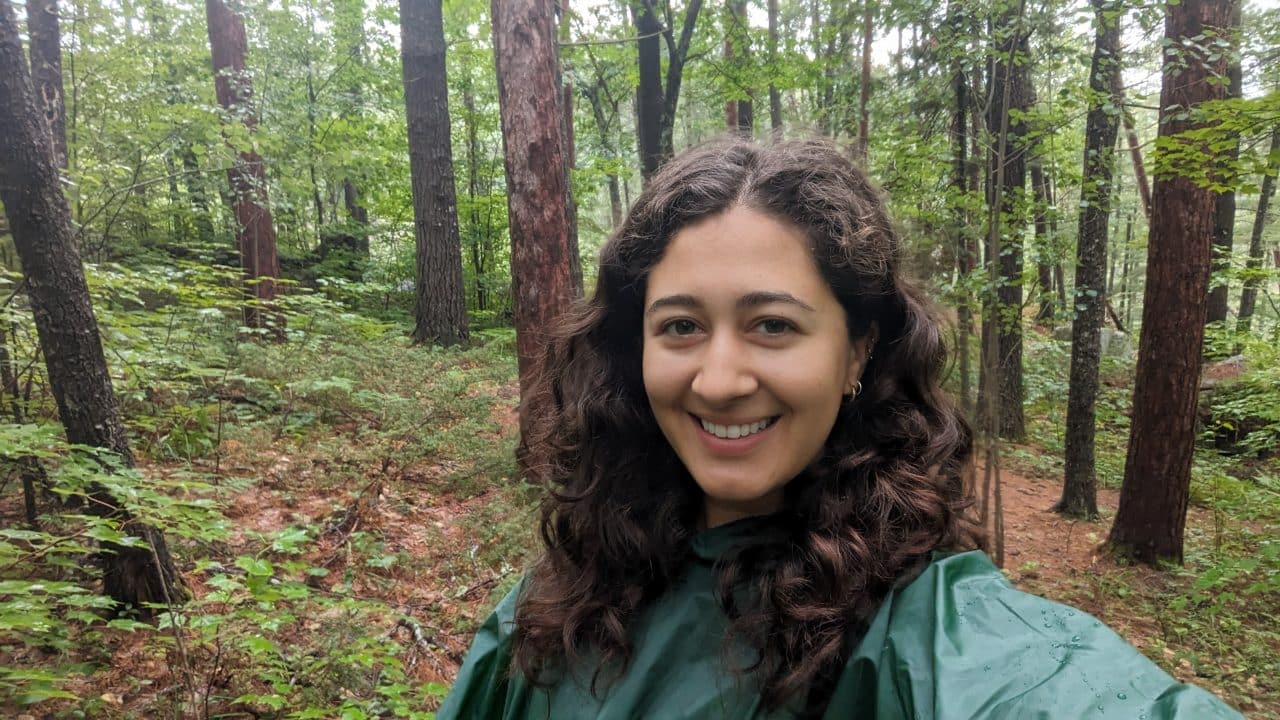
Kiersten Singh, the student representative on Fleming’s board of governors, said she was “not included” in the meeting.
“Unfortunately, I found out with the rest of the general public about the suspension of the programs and I was very upset,” she said.
Singh said during her two-year term on the board, it was the norm for internal governors to be left out of meetings where “big decisions,” such as program cuts, were made. Student and staff representatives on the board are referred to as internal governors.
The board is made up of 17 voting governors, including one student, according to Fleming’s bylaws. There are five internal governors and 12 external governors from outside of the college.
All governors must be notified of meetings at least one day in advance. But the bylaws state that any decisions made at a meeting remain valid even if “errors or omissions” were made in sending out notice of the meeting.
Singh said her experience on the board of governors was “discouraging.”
“I felt like I was only there to check off a box to say that they had informed a student representative,” said Singh, who will graduate in June. She said during her time on the board there has been a lot of focus on recruiting more international students, but not enough on improving the student experience.
Singh just completed an advanced diploma in Environmental Technology, one of the programs being eliminated at the Frost Campus. She said graduates from Frost’s environmental programs are in high-demand by employers and “will be part of creating a sustainable future.” But according to her, Adamson doesn’t seem to have “much understanding about how important the Frost Campus [and] the programs offered there truly are.”
Cuts due to low enrolment, president says
In a statement on Fleming’s website in May, Adamson addressed what she said was “conjecture and misinformation” swirling about the program cuts.
“Frost campus is NOT closing,” the statement reads. “In fact, the intention is to grow applied research at Fleming College through this campus, as well as related programs.”
“Fleming continues to be among the colleges that deliver the highest number of environmental related courses in Ontario,” it continues.
The statement said some of the cancelled programs “have low projected domestic enrollment, others have zero projected domestic enrollment, and other programs are no longer financially sustainable with enrolment levels that do not cover the cost of delivery.”
“Many factors were considered by the senior academic leadership, senior management leadership and the board of governors” in making the cuts, Adamson told Currents by email in April. “Some of the factors that were examined were enrollment, the cost of running the program and consolidating programs that have duplication.”
Adamson has said current students will not be affected by the cuts, and that the college’s “priority will be to enable program completion of any student that is currently enrolled in any of the suspended programs.”
Author

Related Articles
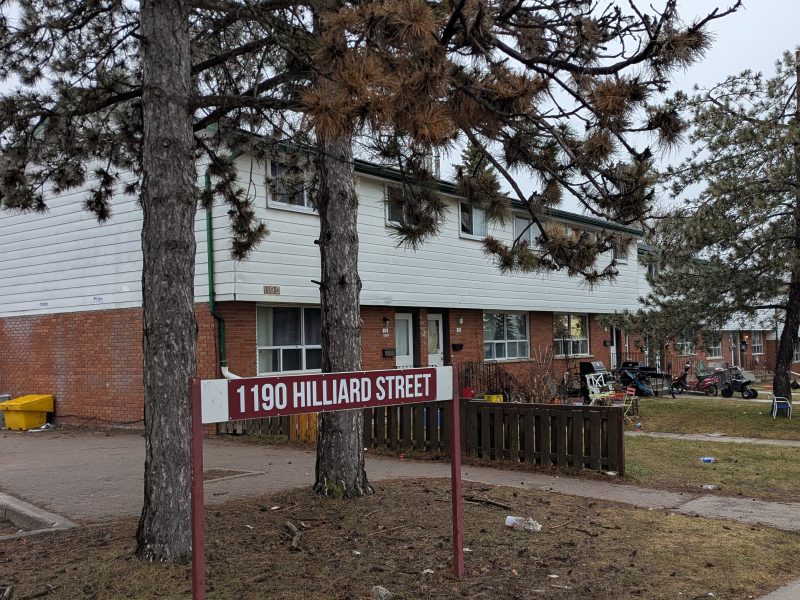
Tension, uncertainty ahead of potential public housing redevelopment
Planned $47.2 million redevelopment on Hilliard Street leaves current residents with questions about what happens to them

Alderville First Nation grants legal personhood to Rice Lake
Exploring an alternate solution to climate change, and a growing international movement

After a year under an Ontario-appointed supervisor, Peterborough’s Children’s Aid Society won’t say if its budget is balanced
The Ford government appointed a supervisor last year to “reinstate good governance and fiscal sustainability” at the society
