
Audio PODCAST: Peterborough Police to crackdown on public drug use
Chief Stuart Betts announces a “no-tolerance” approach to policing public drug use and one local harm reduction worker reacts to the policy shift
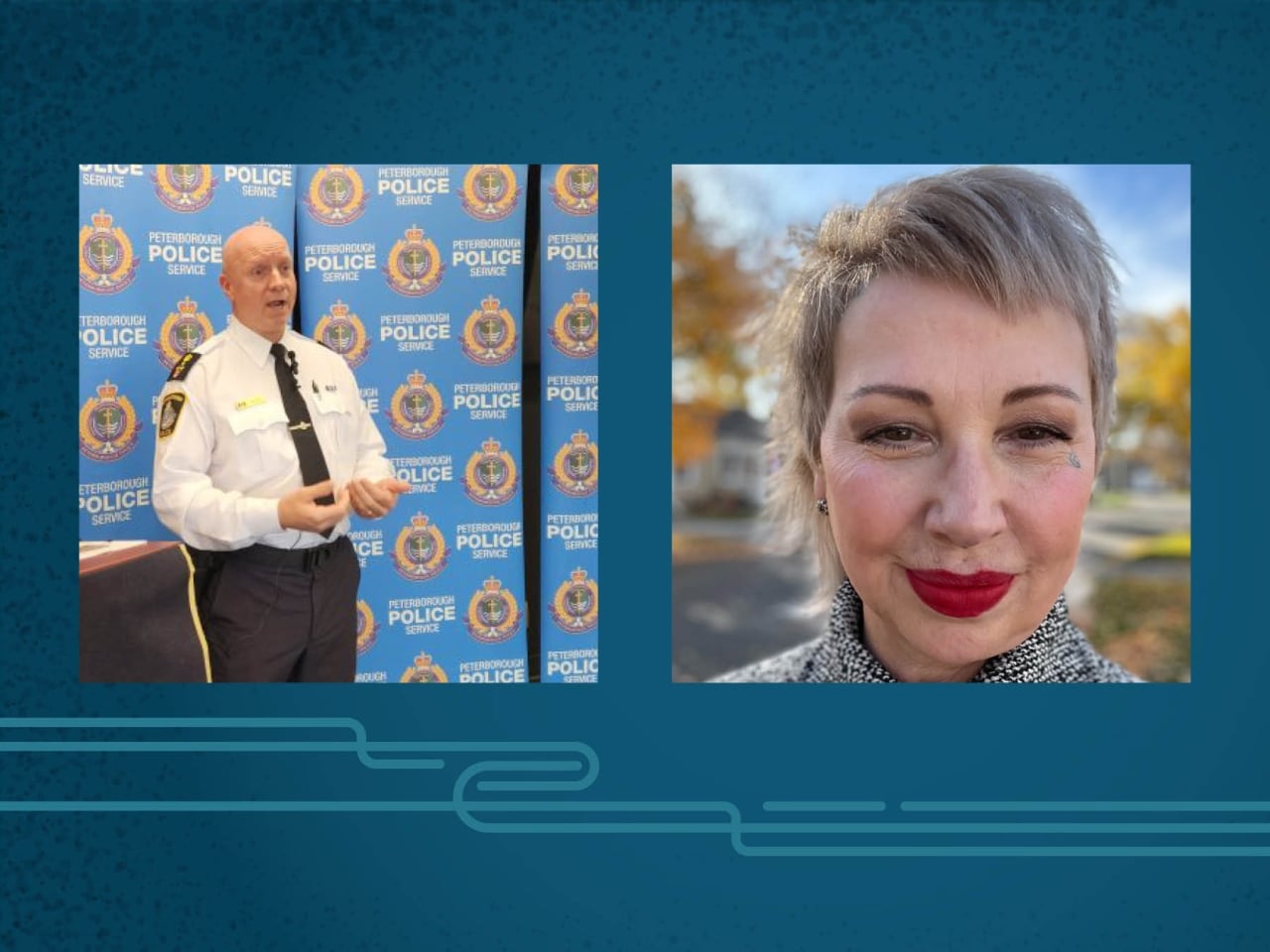
On October 5, 2023, Peterborough’s police chief, Stuart Betts, announced a new “no-tolerance” approach to policing the use of illicit drugs in public. Starting immediately, police officers will order people who are using drugs in public to move along to a different location and arrest them if they don’t comply, Betts announced.
Betts said the new approach is intended to make the community safer. “We have seen a proliferation of open-air drug use in our community,” Betts said. “It’s creating an environment where community members have expressed concern and fear.”
The announcement blindsided healthcare leaders, harm reduction workers, and others who support people who are experiencing homelessness and using drugs in Peterborough. Peterborough Currents will provide more coverage of the community’s reactions to this new policy in our newsletter later this week.
First though, we are bringing you audio coverage through our partnership with Trent Radio, whose Local Journalism Initiative reporter Eddy Sweeney attended Chief Betts’s media conference. Sweeney then spoke with Star Fiorotto, a local harm reduction worker. Fiorotto believes the announcement is all about “optics” for the police as the force seeks a budget increase later this year. She said the new approach won’t make the community safer. “What we need are more supports, not more policing,” Fiorotto told Sweeney.
You can listen to the podcast in the audio player above, or you can find it in the podcast app of your choice. A transcript of the episode is below if you prefer to read it.
Episode Transcript
Will Pearson 0:04
Hi there and welcome to the Peterborough Currents podcast. My name is Will, and I’m really glad you’re listening. This week Peterborough’s Chief of Police, Stuart Betts, made an announcement that blindsided local healthcare leaders, harm reduction workers, and others who support people experiencing homelessness and using drugs in Peterborough. Effective immediately, police officers in Peterborough will be adopting a new zero tolerance approach to the use of illicit drugs in public, Betts announced. So, that means officers will now be directing people who are using drugs in public to move along to a different location. And if they don’t comply with that order, officers will arrest them, Betts announced. This is a significant departure from how the local police force has responded to drug use up until now. And Betts pointed out at his press conference that Peterborough is actually the only community in the province that is now taking this approach. So on this episode of the podcast, we’re bringing you coverage of this story made possible through our partnership with Trent Radio, whose Local Journalism Initiative reporter Eddy Sweeney attended Chief Betts’s media conference on Thursday. Eddy also spoke with a local harm reduction outreach worker to get their reaction to the announcement. So we’ll hear that conversation as well. But first, let’s get started with Eddy’s report from the police chief’s press conference.
Eddy Sweeney 1:24
On Thursday, October 5, Chief of Police Stuart Betts announced that Peterborough Police Service is adopting a new philosophical approach to what he called open air illicit drug use in an attempt to better ensure public safety.
Stuart Betts 1:37
So effective today, we are launching the safer places — Safer Public Spaces approach, which is a no-tolerance approach to open air illicit drug use.
Eddy Sweeney 1:49
Chief Betts mentioned that among the responses to their community safety and wellbeing plan, only 48% of community members who responded felt either safe or very safe in Peterborough. Chief Betts believes that illicit drug use in public spaces is one of the reasons for this, which led to this change in policy.
Stuart Betts 2:07
It means that members of this community can expect police officers will not tolerate people injecting and smoking iup n front of public places, places where community members should feel safe.
Eddy Sweeney 2:20
This plan includes increased responses and accountability to community reports about drug use in public spaces.
Stuart Betts 2:26
It also means that our officers are empowered as they’re driving and patrolling in our streets, as they’re walking on their beat, as they’re on their bicycles to stop and tell people if they’re engaged in that behavior to move along. This is no longer tolerable on our streets.
Eddy Sweeney 2:45
Chief Betts says that they are not uncompassionate towards those experiencing addiction, but that illicit drug use should only happen in appropriate locations like the Consumption and Treatment site on Simcoe Street.
Stuart Betts 2:57
If they do not comply with that, the public needs to be aware, our officers have been told that possession of those drugs is still illegal. People will be arrested, they will be searched, and those drugs will be seized. We do not want to criminalize anybody who has an addiction. That is not our intent. Our intent is to ensure that they are provided with the resources they need and the direction they need to where they can go to safely consume these substances.
Eddy Sweeney 3:26
Peterborough police officers will begin carrying pamphlets containing information on 24 hour addiction services, and where they can find help in the city. Chief Betts stated that Peterborough will be the first community in Ontario to adopt this style of policy and second in Canada. At the beginning of September of this year, Edmonton, Alberta implemented a similar zero tolerance stance to ensure community safety. Peterborough Police Service’s Safer Public Spaces zero tolerance approach will be in effect immediately starting on October 5.
Stuart Betts 3:56
Again, we’re not here to criminalize people who have an addiction. We’re here to make our streets safer. We’re here to make our public spaces safer for everybody.
Eddy Sweeney 4:05
This has been Eddy Sweeney reporting for the Local Journalism Initiative and for CFFF FM, 92.7, Trent Radio, here in Peterborough/Nogojiwanong.
Will Pearson 4:14
Okay, thanks to Eddy Sweeney for that report. Just hours after Chief Betts made his announcement, Peterborough Public Health put out a statement to express its opposition to the new policy. The health unit’s statement said that the new approach “differs significantly from an evidence-based public health approach to substance use, which has been the shared approach of our community for the last 14 years.” Peterborough Public Health also supplied a statement from the region’s medical officer of health, Dr. Thomas Piggott, who said, “Sick people are not criminals.” Piggott went on to say that the Chief’s new approach “criminalizes people who are vulnerable and ill, and pushes them further from help and support.” That last point was echoed by Star Fiorotto in an interview on Trent Radio with Eddy. Fiorotto is a harm reduction worker with KT6, a peer support group run out of PARN. You can often see Fiorotto driving the PARN outreach truck around town delivering harm reduction supplies to people who use drugs. And one of the first things that Fiorotto brought up in the interview was this concern that threatening to arrest people who use drugs might mean that they’ll be pushed out of sight, where it’s harder to connect them with support. Let’s listen to the conversation.
Star Fiorotto 5:37
The bad effect would be that they go into hiding to use. And when they are in hiding, people like E Fry, and One Roof and One City and PARN, we won’t be able to find them right away. And we won’t be able to hand out the safe harm reduction supplies, safe sex supply — safe sex worker supplies, Naloxone, and people will die. And without us doing that work, then that’s a more of a, that’s a bigger burden on the taxpayers. For every person who contracts HIV, it’s half a million dollars, half a million for the treatment, unless the person dies. But for treatment, that’s what it costs our community per person. So when we can’t find them, we can’t help them. And we can’t treat them and people will disappear and die. Maybe that’s the optics that they’re looking for so that they can sell more homes and raise the taxes and have more businesses downtown. It’s not okay. What we need are more supports, not more policing, we need more detox.
Eddy Sweeney 6:44
So, yeah, in yesterday’s announcement, Chief Betts attributed community members’ fear and feelings of being unsafe at least in part to illicit drug use in public spaces. He also said that they’re implementing this change to, “make our streets safer for everyone.” I guess my question for for you is will this change make the streets safer for anybody? Why or why not? And who?
Star Fiorotto 7:15
Good question. So safer for the person walking their child down the street to go to the theater. So they don’t have to explain who that person is on the corner looking like they might need something that they can’t give them, whether it’s food, a place to sleep. It’s really safer in like not having to be empathetic to the people that are around us. Which is not okay. If we can be safe in explaining the marginalization that happens within our community and communities around the world — because this is not just Peterborough, this is everywhere. I’ve been everywhere, it’s there. Maybe it will help people in the sense of if there is somebody in psychosis, they won’t be around as much downtown so the people will feel like they’re safer, or it’ll appear that they’re safer. But that’s not okay either. We need to have mental health workers out allowing people to have safe places for people to go when they’re in psychosis or when they’re in the need to be well. And by well, I mean, using drugs safely while they’re trying to get off of using the drugs, we need that kind of safety, not not NIMBY.
Eddy Sweeney 8:34
Yeah. So and you mentioned it a few minutes ago and Chief Betts stated that they don’t want to criminalize anybody, he did use that word. They don’t want to criminalize anybody who has an addiction. But they do intend to provide people the direction they need, he says, to consume these substances safely and to support people affected. Like as someone who works in harm reduction in Peterborough, do you think they’re offering the appropriate direction and support to these individuals?
Star Fiorotto 9:11
No.
Eddy Sweeney 9:12
So what sort of change would they need to implement? Because they have these pamphlets with information like we were talking about. And I think they’ve consulted local organizations that work with people experiencing addiction. What sort of supports would the police need to implement to do this in a more appropriate way?
Star Fiorotto 9:33
Mental health support workers in the cars. That’s something that happened in Bancroft and in other communities you have mental health people that come out, and they know the people in the community, they know what they need. They’re like, “Okay, do you need to get over the CTS right now? Let’s get you over there. Let’s get you into the hospital. You have an injury? Let’s work with the street medicine doctors.” That’s that would be wonderful. Right? Put them in the cars. Have them helping them with doing this work. Have that harm reduction system navigation work working. This is something that we’re working with in KT6 is really allowing the people that are in the KT6 to be those harm reduction system navigators. Knowing the people in the community is super important. And they know where they are. They know what they use. They know the supplies that they need. The police know that too, but they are being paid differently. They’re not being paid to help somebody get high. They’re helping people to not have a place to do it safely. And it would be wonderful if we had a bigger detox. If we had a place at the hospital where people could actually get treatment, while, if they were injured, and they’re coming down off of drugs, they don’t have a place to safely do that there because they end up going into psychosis. So that would be something that we could do with the police, like or with, not with the police, but the police should allow the community to do that. Focus the money there. Because people, when they’re well, meaning if they’re feeling like they’re getting the medical treatment, the mental health treatment, they’re more apt to use less. I have seen that in the KT6 crew. We have seen a ginormous change in the people that are in the crew. And they’re motivated. And the people that see them in the crew, are motivated to become part of the crew, and to be part of the book and be part of everything. And that’s they’re being a part of the change. And it would be lovely if maybe the police would come and chat with some of them, with blinders on, first of all, so they couldn’t see who they were, but to like, find out how things could change on the street for the better.
Eddy Sweeney 11:40 Thank you, yeah. I think I have one more question to wrap it up. It’s something that we talked about on the phone yesterday. But, why do you think this happened now? Why do you think this announcement was yesterday, and not six months ago or not in January of next year?
Star Fiorotto 11:56
Well, from our conversation before our interview, the budget. The budget optics are really important for the police to be able to say, “This is what we’re doing with the money that we’re asking for.” Because they’ve got an increase. I mean, the increase is there, they’re being called for all of these calls all the time. It costs money. It costs so much money every time the police are called to look at somebody who’s using drugs on their front lawn or down the street. So when they say that they’re going to give an explanation of why they haven’t arrived. They can be accountable. And also the budgetary increase will also look like it’s important. So I just think it’s down to the budget and the optics and making people in the community, homeowners, the business owners, feel like they’re being appeased.
Eddy Sweeney 12:47
Well, thank you so much for being here with me. I’ve been speaking with Star Fiorotto from PARN and the KT6 crew. An active community member doing harm reduction in Peterborough. And we’ve been talking about the October 5 announcement from Chief Betts of a new no tolerance approach to drug use in public spaces.
Will Pearson 13:07
Thank you to Eddy and thank you to staff for that conversation, which first aired on Trent Radio on October 6. Similar to Fiorotto, I also found the timing of this announcements from Chief Betts really interesting. Next month, city councillors will be debating the municipal budget for 2024. And it’s already becoming clear that this will not be an easy budget to finalize without property tax increases that are higher than those we’ve seen in previous years. There are a lot of competing interests that councillors will be trying to balance out as they debate the budget this year. And Chief Betts has already indicated that he needs a budget increase of at least 11% just to continue operating the police force according to the status quo. But he’s indicated that he’ll likely be looking for an even bigger increase than that to be able to hire more officers. So I think this is something to keep a close eye on over the coming months. If you have any questions about it, get in touch, you can email me, will@peterboroughcurrents.ca. If you send me a note, that’ll help me to make sure that our coverage responds to your interests and to your needs. As always, the best way to stay in touch with Peterborough Currents is to sign up for our email newsletter. We send it every week now, and it includes all of our latest stories and other headlines to help you keep up to date and connected with your community. Okay, thanks for listening to the Peterborogh Currents podcast. I look forward to chatting with you next time.
Authors


Related Articles
Province to support Peterborough Street Medicine team with over $1 million a year for three years
Program aims to increase access to primary care for people experiencing homelessness and divert traffic from emergency rooms
Architecture firm denies blame for PRHC’s leaky roof
Hospital, architecture firm and general contractor all point fingers at one another in court filings over PRHC’s faulty roof, which may take years to fix.

Moms call out stigma at event honouring victims of the local drug crisis
Participants said their loved ones faced stigma when seeking help — including at Peterborough’s hospital. “We have a lot of growth to do,” a hospital representative responded. “But we’re trying very hard to get better.”
