
Local teens vow to hold city to its climate commitments
Young people were loud proponents of Peterborough’s new climate plan this spring. With the plan approved, they now say they’ll keep fighting to ensure it gets implemented.
This article was originally published in the Spring 2025 issue of the Peterborough Currents Magazine, which Currents released on May 12, 2025. The magazine is free or pay-what-you-can, so if you would prefer to read this story in print, feel free to grab a copy. More information here.
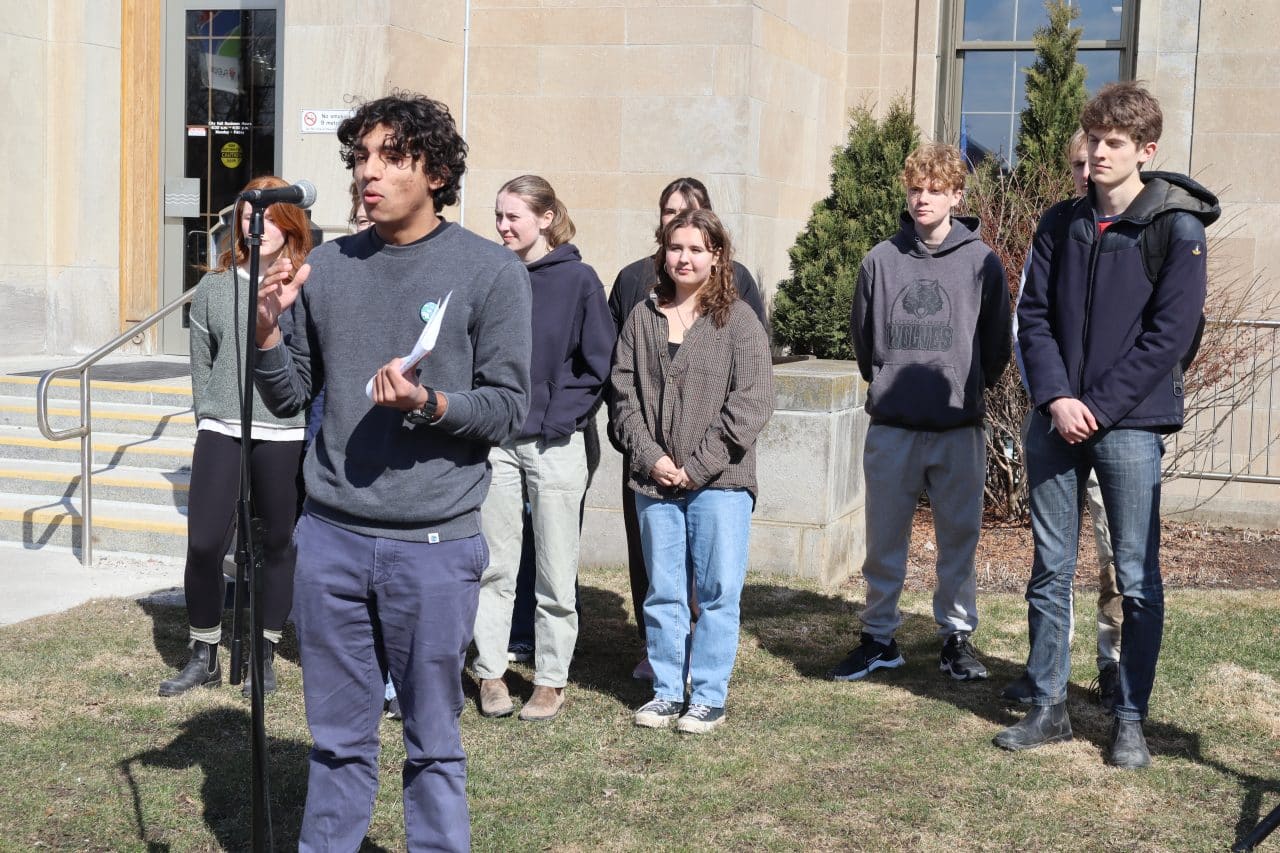
“I’ve never touched a microphone before,” says a teenage girl standing with a group of other high school students on the front lawn of Peterborough’s city hall.
It’s late March and, with the snow recently melted, the grass is just starting to turn green again. She steps up to the mic and then waits for a lull in the noisy George Street traffic before beginning. “Today is a very important day,” she says.
That morning, the city had released Peterborough’s proposed Climate Change Action Plan 2.0. Replacing a region-wide plan from 2016, the 259-page document lays out a path to transform Peterborough into a vibrant, green city in just a few decades.
If the plan is fully realized, Peterborough will look dramatically different by 2050, when these teens are in their early 40s. Homes will be energy efficient and heated by clean energy. Bike lanes will criss-cross the city. A beefed-up transit system will run electric buses. Parks and sidewalks will be shaded by an expanded tree canopy, helping keep the city cool during heat waves and prevent flooding. And, according to the consultants who prepared the plan, building a sustainable and climate resilient city will have created thousands of new green jobs.
“Even among very significant budgetary concerns in our city, this plan is extremely important,” says another student, Nevyn Ghori. “With this plan, we would be able to make our city a better place to live.”
These teens, participants in a local high school program focused on sustainability, have come to city hall as part of a weeks-long campaign to get city council to pass the climate plan. They circulated a petition, wrote letters to the editor of the local newspaper, called and emailed the mayor and city councillors, and made a 5-minute video explaining the vision for a better, greener Peterborough.
The plan’s goal is for Peterborough to achieve net-zero emissions by 2050. That will require big investments by not only the city and upper levels of government, but private citizens and businesses. The consultants behind the plan, Sustainability Solutions Group, peg the collective price tag at $2.2 billion over 25 years. That amount includes things like the cost of people switching to electric vehicles and retrofitting their homes to be more energy efficient.
Meanwhile, much of the city’s share of spending would go toward measures to make it easier for people to pollute less, like adding more electric vehicle charging stations, providing loans for home energy retrofits, and ensuring new development is more compact so people can get around by walking, cycling and transit.
The total cost the city will have to bear is still unclear. But a staff report puts the figure at $20.5 million in the “near term,” mostly to expand Peterborough’s new home energy retrofit loan program (though city staff say future provincial and federal funding could bring down that total).
Council will also have to find the money for other measures it’s already endorsed, such as a major expansion to the bike lane network and significantly boosting transit service.
Knowing people might balk at the $2.2 billion cost, the students are quick to stress that the shift to sustainability is expected to come with a financial payoff in the long run. The consultants project that savings from lower fuel and energy bills will more than make up for the required investments, with residents, businesses and the city set to collectively save as much as $232 million by 2050. (The amount of projected savings had been nearly $1 billion, until Prime Minister Mark Carney ended Canada’s consumer carbon tax in March).
Easing climate anxiety by focusing on solutions
To these students, the climate plan is a lot more than a collection of policy guidelines and strategies for reducing emissions. Instead, the document seems to represent a lifeline to a better future, as they come of age in a time of global climate upheaval.
One of the students, Will Eamon, 16, says he’s been dealing with anxiety over climate change since he first learned about it in grade five or six. “We did a project on it and I was terrified because I didn’t really know that it even existed before that,” says Eamon.
His mind leaped ahead to a future ravaged by rising temperatures. As he grew older and entered high school, the planet kept smashing one heat record after another, and his climate anxiety grew. (The last ten years have been the hottest ever recorded, with 2024 seeing global average temperatures temporarily surpass the internationally agreed target of 1.5 degrees Celsius above pre-industrial levels, according to the World Meteorological Organization).
Eamon started to turn the corner and feel more optimistic when he joined the Youth Leadership in Sustainability program, offered by the Kawartha Pine Ridge District School Board, in the fall of 2024, he says.
“We weren’t always just talking about how bad things [are],” he says. “We also talked about the positive things, like all the solutions we have in place that can be put in to help out the crisis.”
Focusing on solutions has been a balm for his climate anxiety, which is the reason he’s so excited about the city’s proposed plan for cutting emissions. His hope is that his hometown becomes “one of the greenest cities in all of Canada” – a climate leader helping the world dig out of the ecological mess his generation is inheriting.
Council endorses new climate plan. Now comes the hard part — implementing it.
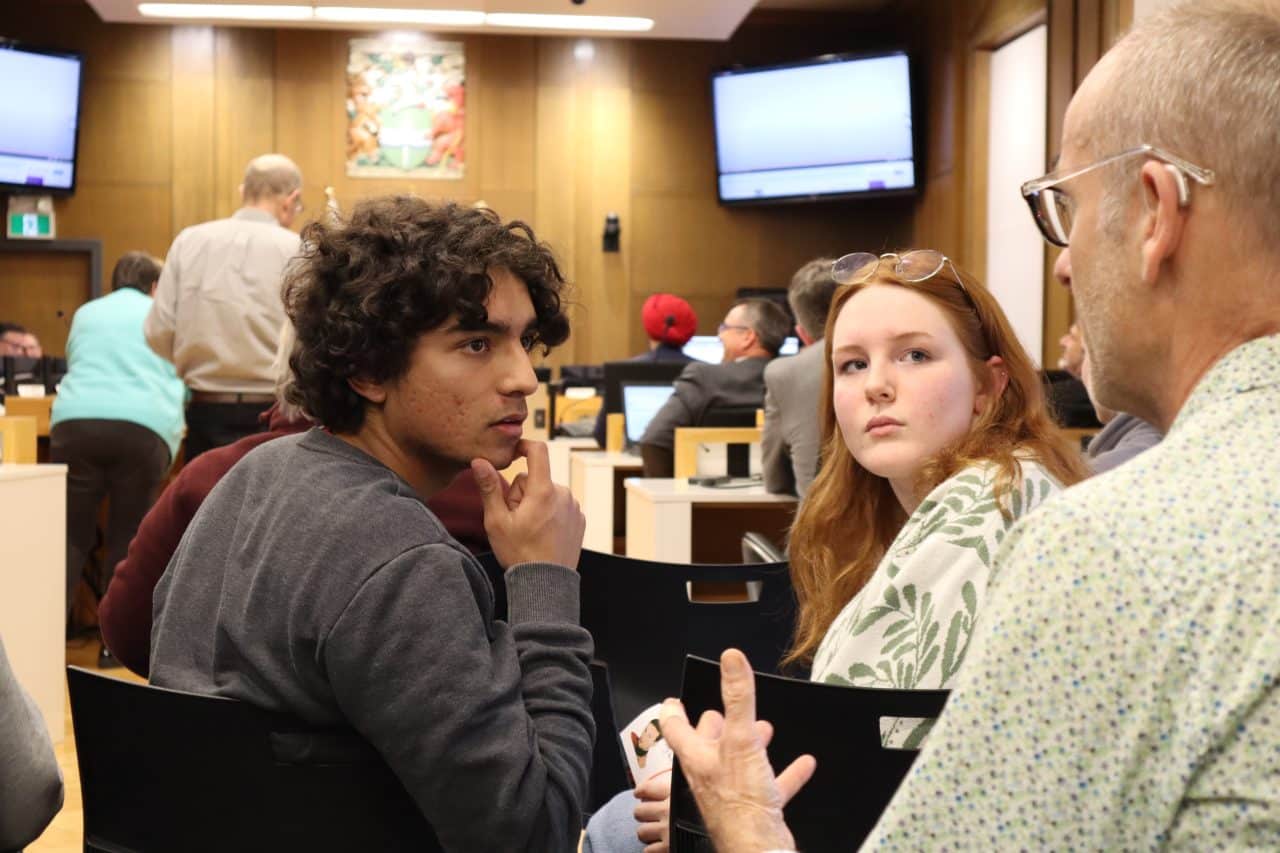
A few weeks after their initial event, with the city plunged into a state of emergency after a severe spring ice storm, the students return to city hall. One by one, they walk up to the microphone in council chambers to ask council to pass the climate plan.
Grade 11 student Lena Skinner, 16, reminds councillors that local teens have been urging the city to take stronger climate action for years. It was the emotional appeals of high school students speaking in these same chambers that helped push city council to unanimously declare a climate emergency in 2019. But critics say six years later, those words haven’t been followed up by enough action.
“Why are we waiting for some environmental apocalypse to happen?” Skinner says. Climate change’s “merciless attacks on environmental and human well being have only gotten more concentrated and frequent the longer we have waited and contributed to the issue.”
“I challenge you to think about your grandchildren, your children, or anyone young in your life, and acknowledge that you have the trajectory of their life in this city in your control right now,” she continues.
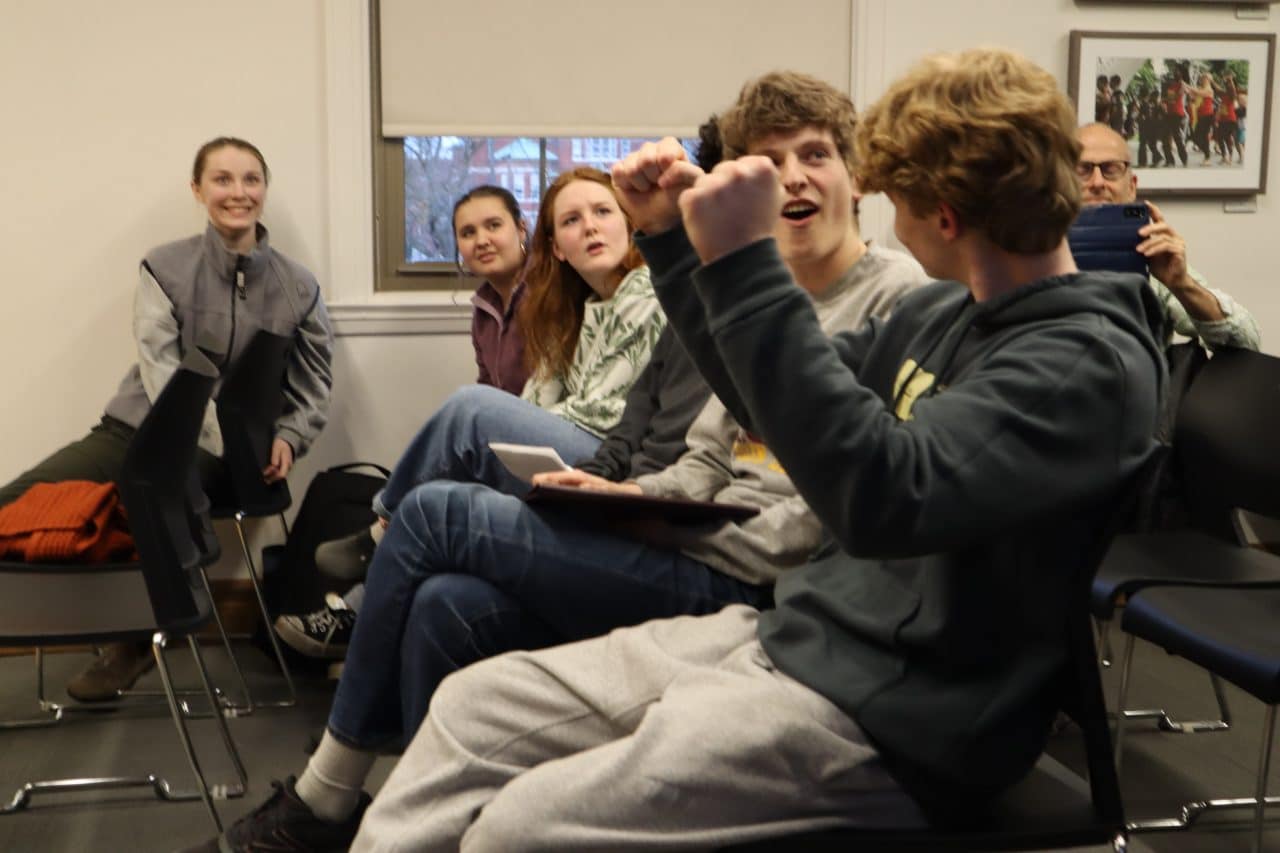
After the public delegations finish, council votes overwhelmingly to approve the climate plan, with only two dissenters: north-end councillors Andrew Beamer and Dave Haacke. Several councillors walk up to the students to give them praise, fist bumps and encouragement afterwards.
But the decision doesn’t come with any funding commitments to put the plan into motion. And big questions remain about whether the city will be able to muster the money and political will to see the bold transformation the plan calls for to the finish line.
Peterborough is already falling behind on its previous climate goals
Nico Ossa Williams was one of the high school students who successfully urged city council to declare a climate emergency six years ago.
“It was a very hopeful moment,” says Ossa Williams. Now 23, he graduated from Trent University this spring with a degree in environmental sciences and biology.
Ossa Williams hoped the 2019 emergency declaration would be a major turning point for climate action in Peterborough. But only months later, the pandemic struck.
“I remember thinking by the end of 2019, ‘2020, is going to be the year of the environment,’” he says. “And everything lined up to be that way, up until COVID hit.”
“That definitely shook things up and moved environmental issues down the priority list.” The declaration was made in Ossa Williams’ last year of high school. He expected that by the time he finished university Peterborough’s emissions would be on a steady track downward, thanks to investments in things like expanding cycling infrastructure and improving transit service.
However, the city’s own data shows Peterborough is not even close to being on track to hitting its short-term goal of cutting emissions by 45 percent below 2011 levels by 2030. A city staff report from September 2024 said emissions from homes, businesses, industry and private vehicles in Peterborough are only projected to drop by 17 percent by 2030. Emissions from city buildings and vehicles are set to drop by 32 percent.
Ossa Williams says he doesn’t want to be too “harsh” on the city for its lack of progress, since Peterborough has faced one crisis on top of the other in recent years: the pandemic, the housing crisis, and the drug poisoning crisis. But the climate crisis is urgent, too, he says, and people who are worried about it need to keep the pressure on the city to make sure it doesn’t fall off the agenda.
“We need to make it clear that this is what we want,” he says. “We need to make sure that we’re voicing our concerns as a group.”

The scale of change the plan calls for is massive. As is the $2.2 billion of public and private investment required. A recent Peterborough Examiner editorial argues the city won’t be able to drum up that kind of investment unless it’s part of a huge, nationwide sustainability push. “Investment on that scale is absolutely necessary, and doable, but Peterborough isn’t going to make it happen,” the editorial states. Instead, the city should scale back its ambitions and focus “more narrowly” on “what can realistically be accomplished with the available staff and budget,” the newspaper argues.
But Skinner, the high school student, says scaling back on the city’s climate ambitions now will only lead to even higher costs down the road. “Right now, what we’re being presented with is a bunch of opportunities that are relatively affordable, easy to implement. Some of them come with government relief and incentives, and it makes it a pretty simple process to get started on solving this issue,” she says.
“But the more we wait and let the actual climate crisis progress, the harder it will be to find those solutions and implement those solutions in a timely manner at a rate that will actually help us solve the problem.”
Skinner knows getting council to pass the climate plan was only the first step to realizing the transformation that she says her future depends on. It will take “more phone calls, more texts, probably more delegations” to make sure the climate commitments council has made on paper actually show up in future city budgets, she says.
“But we’ve started off really well,” she says.
Will she be back before city council in the future? “I plan on it,” she says.
Author

Related Articles
Alderville First Nation grants legal personhood to Rice Lake
Exploring an alternate solution to climate change, and a growing international movement
Promoting preparedness in East City
A grassroots movement aims to help neighbours out in the next big storm
“We need these protections in place”: Peterborough residents warn against loss of environmental protections in wake of Bill 5
Ontario’s Bill 5 aims to speed up development and resource extraction by weakening environmental protections
