
City withholds environmental assessments of contaminated Canoe Museum property, citing interests of unnamed “third parties”
“There is public interest in having this information disseminated,” says local environmental lawyer

The City of Peterborough has declined to release environmental assessments of the contaminated Canadian Canoe Museum site on Monaghan Road. The city decided to withhold the documents after consulting with “third parties” on whether their interests would be impacted by releasing the documents, a letter to Currents states.
The city did not disclose who the third parties were or how they demonstrated the potential impacts of releasing the environmental assessments.
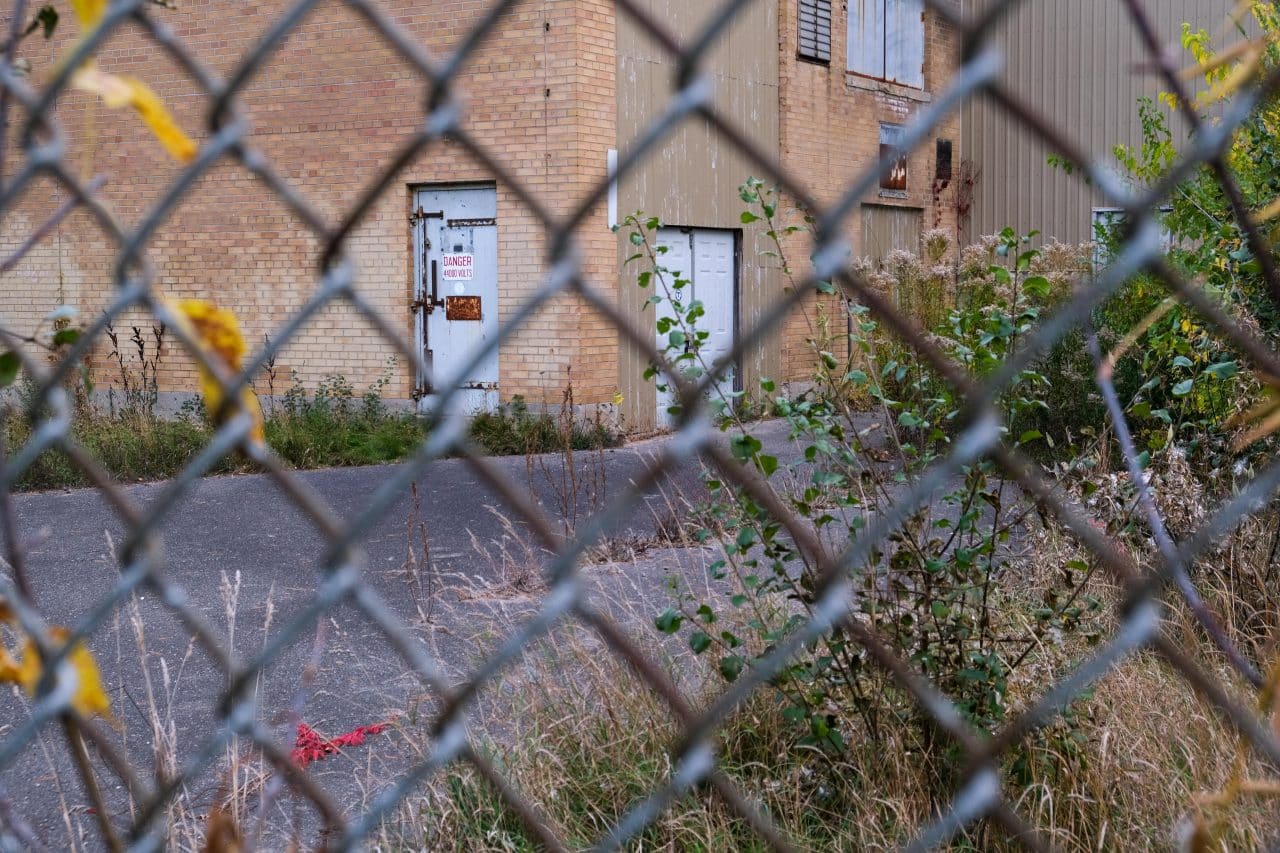
Industrial contamination at 910 Monaghan Road is “well known and documented,” a city staff report stated in 2022. Before the Canoe Museum first opened there in 1997, the property was the site of a boat motor manufacturing plant owned by the company Outboard Marine.
Outboard Marine declared bankruptcy in 2000. A subsequent investigation of the site by engineering firm Dillon Consulting revealed “legacy environmental issues” left behind by the company, including “a subterranean pool of degreasing fluid” estimated to contain thousands of litres of trichloroethylene (TCE), a cancer-causing industrial solvent.
Dillon carried out environmental remediation in the early 2010s and claimed in a subsequent report that its efforts made a positive impact on the site.

In recent years, the Canoe Museum prepared to move to a new location on the shore of Little Lake and the City of Peterborough began to eye the Monaghan Road property as a potential location for a new transit garage. The city hired Cambium Consulting and Engineering to undertake new environmental assessments so the city could better judge the risks of owning the contaminated land.
The environmental assessments were never released to the public. But according to a city staff report, Cambium recommended a new remediation strategy to treat and remove lingering contaminants and estimated doing so would cost $8.8 million. “However,” city staff warned, “there is still risk that additional contamination could be found during construction” of the transit garage.
Despite the uncertainty, councillors officially selected the Canoe Museum site for Peterborough’s new transit garage in July 2022, with a plan to access federal funding to help with the remediation.
Currents requested Cambium’s environmental assessments from the city through the freedom-of-information (FOI) process this summer. The city denied the request.
According to provincial legislation, the city is obligated to release any records in its possession requested by FOI, save for a few exceptions. One of those exceptions is if the records contain sensitive information provided in confidence that “could reasonably be expected to” cause harm to a third party.
In those cases, the third party can consent or object to the release of the records, according to a fact sheet from the Information and Privacy Commissioner of Ontario.
A September 2023 letter to Currents from City Clerk John Kennedy states that the city decided to withhold access to the records after “representations” from a third party were received. In a followup email, Freedom of Information & Privacy Coordinator Sarah Dessureault clarified that two third parties were behind the decision to withhold the documents.
When asked who the third parties were and how they demonstrated the potential impact of releasing the documents, Dessureault stopped responding to emails from Currents. An email to the city’s communications manager Brendan Wedley requesting comment also went unanswered.
John Desbiens, the CEO of Cambium, said that it wasn’t his company that objected to the release of the records. Desbiens said Cambium was “neutral” on the issue, and that it’s up to the owner of the records to decide whether they are released.
Over a period of weeks, Currents sought to learn whether the Canadian Canoe Museum was one of the third parties and sent multiple emails to three different staff people at the museum, including executive director Carolyn Hyslop, to ask. None of the emails were answered. Two messages left on Hyslop’s voicemail also went unanswered.
UPDATE: Three days after this article was published, the Canoe Museum provided a statement to Peterborough Currents confirming it was one of the third parties but putting the onus on the city to decide the fate of the documents. “[A]s the owner of these reports it is within the city’s discretion to decide what to do with them,” the statement read in part. “In inviting the city to hold off publicly sharing the environmental studies it commissioned, The Canadian Canoe Museum simply wished to draw attention to the mutual confidentiality agreements that govern the commercial process of selling the properties that is currently underway.”
City council’s intention was for the City of Peterborough to buy the site, but provincial land records obtained by Currents suggest the museum still owned the site as of October 16.
Environmental lawyer David McRobert says the public has a right to know what’s in the environmental assessments. “There is public interest in having this information disseminated,” he said. “People are living in the vicinity of the former site.”
In 2012, the health unit conducted air quality sampling in 26 homes near the site and found that three of them had levels of TCE above the recommended standard, according to the Peterborough Examiner. In 2013, the Ministry of the Environment stated that TCE levels in the neighbourhood were dropping, the Examiner article also reported.
Around this time, McRobert helped to organize residents in the neighbourhood with the goal of potentially launching legal action. He said that Romaine Street residents had “a considerable concern and awareness” of the underground pool of chemicals at the time, “especially for those people who did not have concrete basements” to block the pool’s vapors from entering their houses.
“I don’t know the details as to how much of the contamination remains,” McRobert said. But he’d like to know. He said withholding the environmental assessments “does undermine public trust.”
Currents has filed an appeal of the city’s decision with Ontario’s Information and Privacy Commissioner.
This article was updated on Friday October 27 to include a statement from the Canadian Canoe Museum. Additionally, the initial framing of the article was edited to better reflect Currents’ uncertainty over who is ultimately responsible for deciding to withhold the documents.
Author

Related Articles
Alderville First Nation grants legal personhood to Rice Lake
Exploring an alternate solution to climate change, and a growing international movement

Promoting preparedness in East City
A grassroots movement aims to help neighbours out in the next big storm
Local teens vow to hold city to its climate commitments
Young people were loud proponents of Peterborough’s new climate plan this spring. With the plan approved, they now say they’ll keep fighting to ensure it gets implemented.
