
“There are no houses for the students”: Local reactions to new international student cap
City council, Fleming and Trent all oppose new federal rules. But views among international students are more mixed.
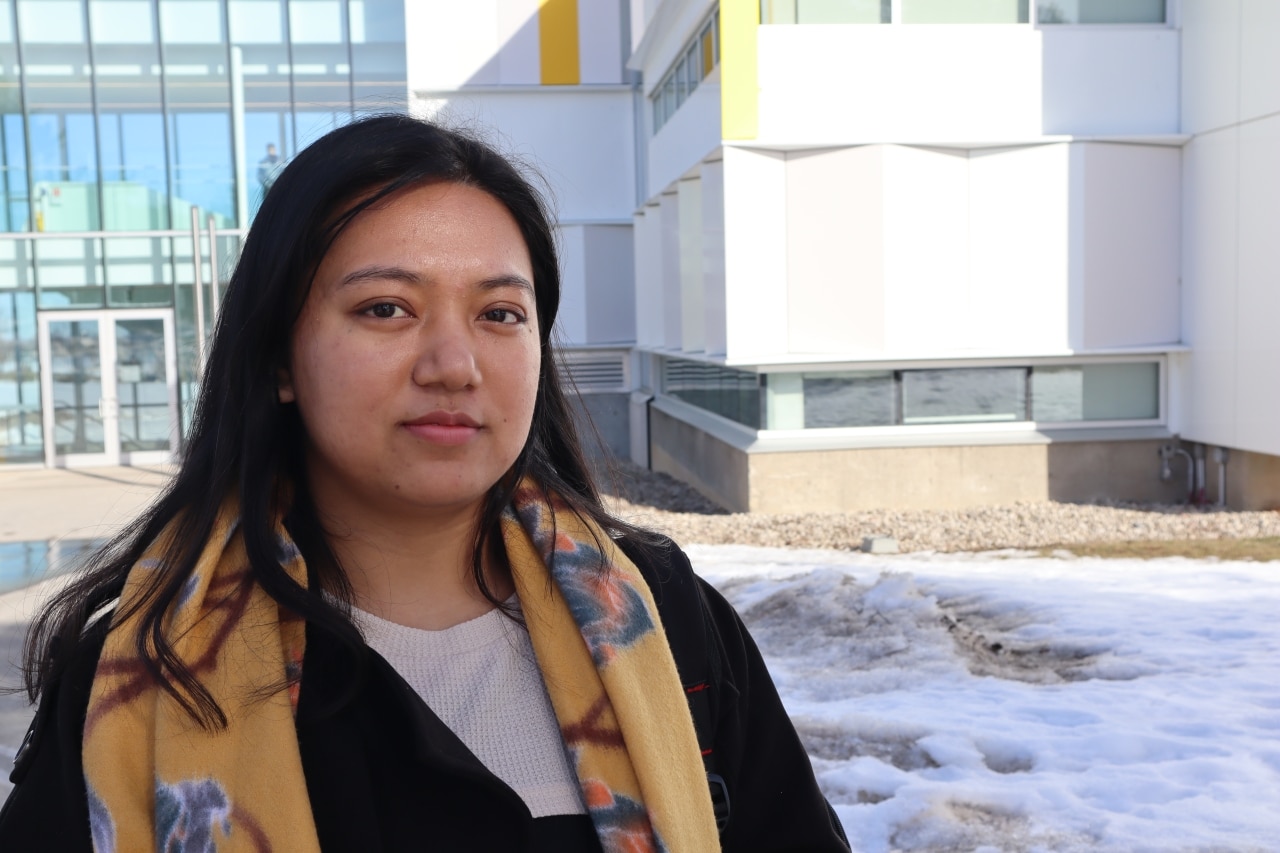
The day Purnima Gurung arrived in Peterborough to study at Fleming College, she still didn’t know where she was going to live.
Before coming to Canada the student from Nepal had looked online for places to rent in the city, but ran into a lot of rental scams.
“I couldn’t deposit the money because I couldn’t trust them,” she said.
Once in Peterborough, she found a short-term rental, but it was far from ideal.
“I had to share one house with 15 people,” Gurung said. For four months she slept in one room with two roommates at a cost of $500 a month, she said.
Gurung said she knew Canada was expensive, but the severity of the housing crisis surprised her.
In a bid to address that housing crisis, the federal government announced last month it will cap the number of international students admitted to Canada for two years. The change will mean a 50 percent reduction in the number of international students coming to Ontario, Immigration Minister Marc Miller said.
Gurung disagrees with the visa cap, even though she knows how difficult it can be for international students to find housing in Peterborough.
She described her housing challenges as “part of the struggle” of studying in Canada and said if other international students want to come here and face that struggle, “it’s their choice.”
“I wish my brother could come here to study in a couple of years, but I don’t know how it’s going to go,” she said.
Fleming international student Niha Krovvidi said she also opposes the student visa cap.
“It’s a little unfortunate for the people who have had high hopes that they would come to Canada, because the pathway to permanent residence for Canada is a little easy compared to the other countries,” she said.
Some international students welcome student visa cap
In addition to the international student cap, the federal government also announced new restrictions on post-graduation work permits.
Starting in September, work permits will not be granted to graduates of colleges that operate under a public-private partnership model, which is when a private college is licensed to deliver the curriculum of a public college.
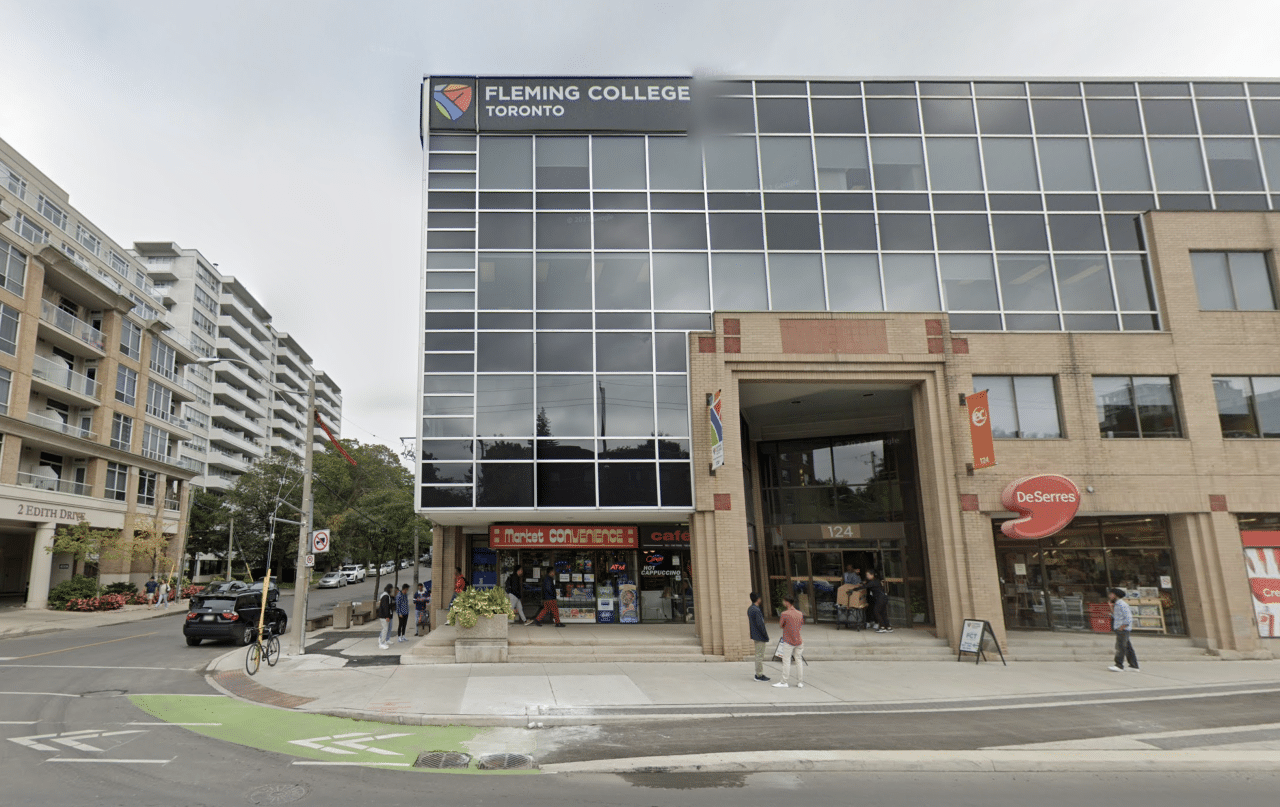
Fleming College has an arrangement like that. Trebas Institute Ontario, a private college and subsidiary of Global University Systems, delivers Fleming curriculum to international students at an office building in midtown Toronto under the banner of Fleming College Toronto, with revenues flowing back to Fleming in Peterborough.
Fleming College Toronto opened in 2022 to a “very positive market response and strong student feedback,” with 1,774 students enrolled by the winter semester and more expected in the coming years, according to Fleming’s most recent annual report.
Moksh Nigam was planning to continue his studies at Fleming College Toronto next fall, after recently graduating from Fleming in Peterborough. But after the federal government’s new measures were announced, he changed his mind and decided to apply for a work permit now instead.
Nigam, who is from India, said he supports the international student visa cap. “I think the decision is a good decision to be very honest,” he said.
Nigam said he struggled to find work for the last few months, but landed a job as a housekeeper recently and occasionally works at a gas station as well. But he’d like to find a position in the field he studied at Fleming: supply-chain management. He hopes fewer students coming to Canada will mean he will face less competition for jobs.

Nigam said limiting the number of international students also makes sense because of the housing shortage.
”There are no houses for the students,” he said.
He currently lives in a house with seven other people and shares his bedroom with a roommate. He didn’t realize how bad Canada’s housing crisis was before he left India last year, he said.
“From India, it looks like there are going to be more homes,” he said.
He said more should have been done by now to address the problem.
“They knew this housing crisis was something that’s going to be an issue over here,” he said. “I think colleges are motivated by profits.”
Despite the challenges he’s faced, Nigam said he doesn’t regret coming to study in Canada.
“I’m not giving up,” he said. “There are good people over here… This country is beautiful.”

Fleming student Deep Patel, who has been looking for work since arriving in Peterborough from India in December, also said he hopes the visa cap will open up job opportunities for him. “That is my mentality, actually. I don’t know how [others see it],” he said.
Like other international students Currents spoke to, Patel shares a rented room with others in order to afford to live in Peterborough, though he said he doesn’t mind it. The situation is “normal” for international students, he said.
Fleming, city council stress economic concerns in opposing federal changes
Fleming College president Maureen Adamson has spoken out strongly against the international student cap, calling it a “rash decision” in a statement last month.
She stressed the potential economic fallout of a decrease in international students, writing that the cap poses a threat to “the vitality of our regional economy.”
Trent University has also expressed opposition to the visa cap. In a statement, the university said it supports the position of the Council of Ontario Universities, which stated Ontario’s universities were “disappointed” by the Trudeau government’s decision.
Trent’s statement said the university has been a “responsible player” in the post-secondary sector and bases international student enrolment “on the unique needs of our communities and regional labour market demands.”
Peterborough city council is pushing back against the new rules, too, voting unanimously this month to urge the federal government to reconsider the changes.
International students are “very important” to the “financial well-being” of Fleming, Trent and Peterborough, and should not be blamed for the housing crisis, Coun. Lesley Parnell said at a city council meeting on Feb. 5.
Coun. Dave Haacke said the new federal rules unfairly target international students. “I think they’re taking it out on the wrong group,” he said.
Council approved two motions on the matter, both of which stressed the economic and cultural benefits international students bring to the region, but did not mention the hardships many face as a result of the housing shortage.
Mayor Jeff Leal introduced one of the two motions and voted in favour of both of them. He previously had told the Peterborough Examiner that he hoped the cap would “give us a bit of breathing space” to catch up on the supply of housing.
Fleming faces nearly $70 million revenue loss due to international student cap
Currents requested an interview with Fleming president Maureen Adamson, but was told she would only respond to questions by email.
When asked about concerns that rising enrolment is contributing to the housing crunch, Adamson wrote that Fleming approaches its “international growth strategy very responsibly.”
She insisted that Fleming ensures that housing is “readily available to all international students” and works with “multiple partners and agencies” to find them units.
There is currently space in Fleming’s 483-unit student residence in Peterborough, she wrote. According to the college’s website, a residence room there costs more than $1,000 a month per student.
Adamson added that the college has signed a memorandum of understanding to begin working with SpacesShared, an online home-share technology platform where students can rent rooms in the homes of seniors.
Fleming is anticipating an almost $70 million drop in revenue as a result of the decline in international student enrolment, she stated. More than $26 million of that amount was to be earmarked for “capital reinvestments” in areas such as student housing.
Adamson stressed that international students make significant economic contributions to Peterborough, and claimed that the new federal rules will result in a $100 million loss to the region.
Boost provincial funding for post-secondary, TUFA president urges
Geoff Navara, president of the Trent University Faculty Association, expressed concern about how the debate over visas will impact international students.
“Given the current political climate – characterized by concerns about the cost of living, healthcare accessibility, and housing expenses – international students may face unjust prejudice and scapegoating for issues beyond their control,” he wrote in an email.
He said that successive provincial governments have shortchanged universities, resulting in an “underfunding crisis” that has led institutions to shore up their budgets by admitting more international students.
“Sustainable and consistent provincial funding models for domestic students are the real solution to the underfunding crisis and institutional overreliance of international students’ tuition dollars,” he stated.
Boosting provincial funding for public colleges and universities was one of the key recommendations of the Ford government’s blue ribbon panel on the post-secondary sector. The panel, which included former Trent president Bonnie Patterson, also recommended raising tuition rates for domestic students.
Struck in March 2023, the panel concluded that colleges and universities are struggling to stay afloat because of government underfunding, combined with the Ford government’s decision to slash domestic tuition rates by 10 percent in 2019 and keep them frozen ever since.
To stay financially viable, post-secondary institutions have ramped up enrolment of overseas students, who pay considerably higher tuition, according to the panel.

City council also urged the province to implement the recommendations of the blue ribbon panel at its Feb. 5 meeting.
Adamson said Fleming “supports the work of the panel” but did not directly call on the province to enact them.
Newly-appointed Trent University president Cathy Bruce, who takes the helm of the university this summer, told Trent Radio she supports the recommendations of blue ribbon panel.
“We are hoping that the provincial government does see the need to support colleges and universities,” she said. “This is our talent pipeline. This is so important in the way that we think about the future of Canada.”
Correction: Comments from Fleming President Maureen Adamson were attributed to another Fleming official in an earlier version of this article. It has been updated.
Author

Related Articles

Doug Ford and the pedagogy of debt
And why basket weaving?

Local school board issues lay-off notices to elementary teachers
A trustee said he hopes many of the 71 teachers who received layoff notices this month will be recalled this summer once the board’s financial picture becomes clearer
Staff cuts on the table as local public school board faces $16.6 million deficit
Union representatives fear teacher layoffs, bigger class sizes
