
At a peaceful farm in Douro-Dummer, horses serve as “strong and steady” companions for people with disabilities
Operating twice weekly through the summer, PARD Therapeutic Riding brings the benefits of horseback riding to people with disabilities
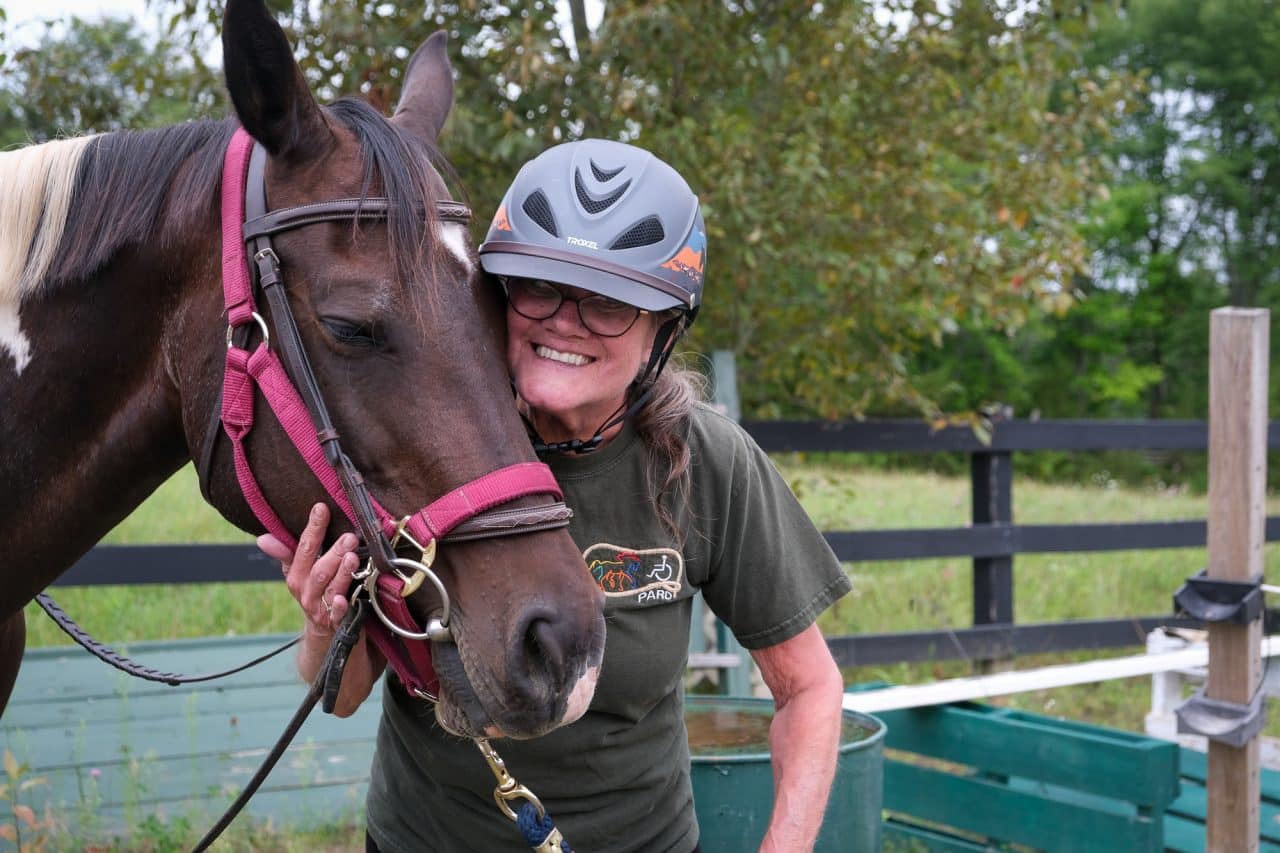
It’s a hot summer evening but Doc, a chestnut Quarter Horse sporting a leopard-print mask to ward off flies, looks supremely unbothered. His unflappability is one reason he’s a good choice for therapeutic riding, where horses can be conduits to improved health for children and adults with disabilities.
In fact, if you ask PARD instructor Wendy Carruthers what makes an ideal horse for the job she says, with a laugh, “Doc.” Pushing thirty and semi-retired, Doc still ticks all the boxes.
“You want a horse who’s not too big, not too small,” explains Carruthers. “Strong, easy-going calm-natured guys — they’ll have riders doing things like throwing giant dice and rings off them or yelling. With some horses you can tell it’s not their jam — they don’t all have the mind for it. The horses who do are people-pleasing horses, they flourish in this kind of work.”
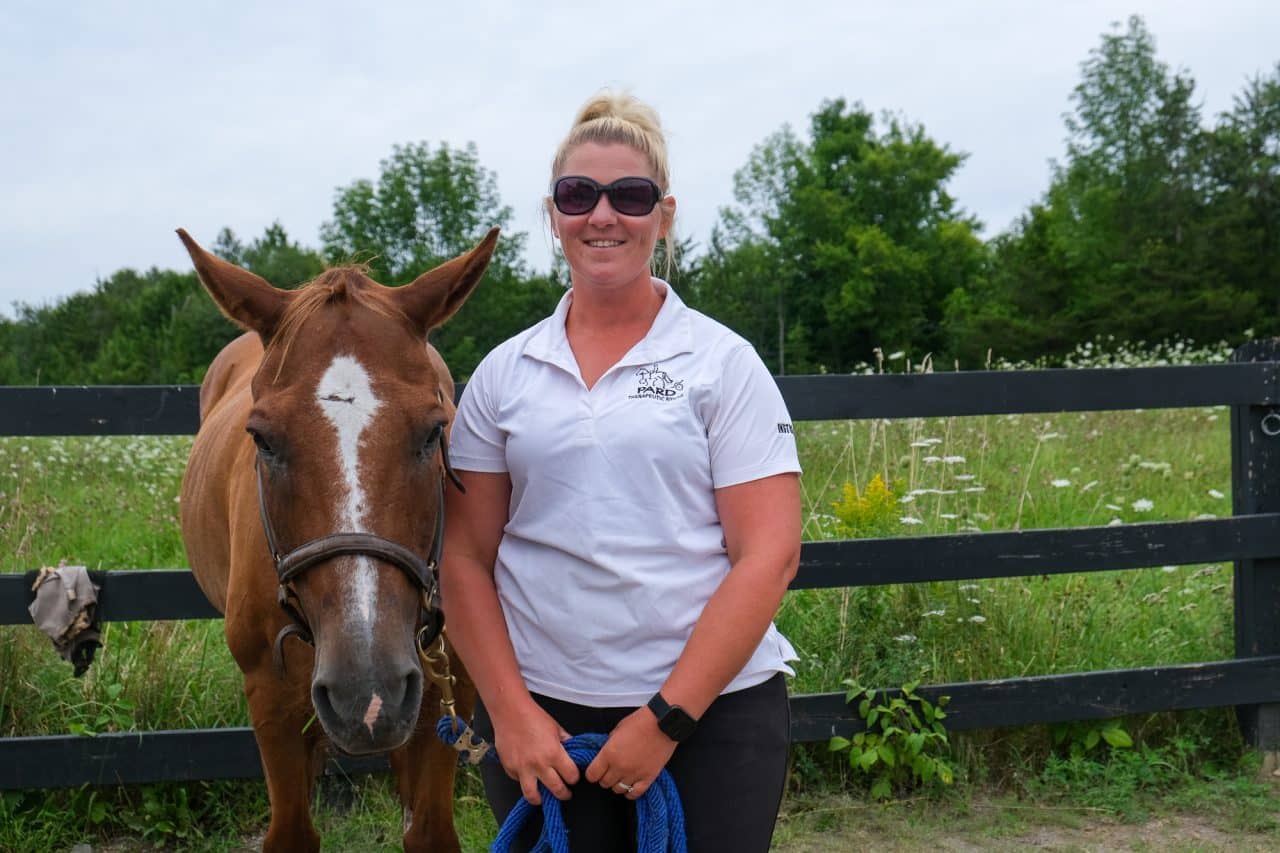
Doc and the other “people-pleasers” stand calmly as they’re groomed and tacked up by a fleet of volunteers, all of whom have made the trek to Wendon Hills Equestrian Centre, a tranquil spot just outside of Warsaw, Ont., owned by Carruthers and her husband.
Wendon Hills is the fifth farm to host PARD in its history, which began in the 1970s when Peterborough-area couple Hope and Rev. Bagot King-Edwards decided to start a therapeutic riding program as their retirement project. The organization became known as the Peterborough Association of Riding for the Disabled (PARD) in 1983, but these days the acronym holds less significance than the current tagline, “therapeutic riding.”
“We try hard to work on the riders’ abilities, not the disabilities,” says Carruthers.

PARD grew out of a rising interest in therapeutic riding sparked in part by Danish equestrian Lis Hartel. Hartel, paralyzed by polio, reactivated some of her muscles through riding, going on to win a silver medal in dressage at the 1952 Helsinki Olympic Games. While the physical benefits of riding horses have been known since the days of the ancient Greeks (Hippocrates, a.k.a. “the father of medicine,” wrote about “riding’s healing rhythm,”) Hartel’s achievement drew mid-20th century attention to therapeutic riding’s potential as a unique form of physiotherapy.
Unlike other “equine-assisted services,” therapeutic riding is a regulated industry. Instructors become certified through the Canadian Therapeutic Riding Association.
PARD has a clearly-stated mission: “To provide the physical, social, and psychological benefits of therapeutic riding in a non-clinical environment to qualifying individuals living in the Peterborough area regardless of age, ability or financial means.” All admirable, but none of the above captures the palpable excitement as each rider arrives for the lesson, leaving family and caregivers at the gate as they get on the horse.
Mounting can be a fraught moment for any rider. The horse might swing away from the mounting block or step forward too quickly for comfort — or safety. But at PARD, mounting is a carefully managed process. Most often the horse is positioned between two parallel ramps as the rider’s team (instructor, horse leader and “side-walkers”) carefully assist.
Once everyone’s up the lesson begins, the horses walking calmly around the circumference of the ring. Side-walkers ensure rider-steadiness as new challenges are introduced — changes of direction, stepping over poles, playing games. One lesson involves a gentle race where riders take turns throwing a giant foam die from their horse onto the ground, the number they throw determining how many steps forward they ask their horse to take. It’s clearly fun, but also therapeutic.
“Horses are the only animal that offer the same three-dimensional movement as a human walking,” says Carruthers. “For some riders, especially those wheel-chair bound, riding is the only real form of the feeling of walking possible. We encourage them to use the correct riding position too, to use their core and legs. Some riders come to us hunched over, not looking up, and over the summer they start to sit up and lift, and then they sit up more off the horse too — you can see real differences.”

Lori Steers, whose daughter Helena has been riding at PARD for around 10 years, concurs.
“It’s so good for her,” says Steers. “You think, oh, she’s just sitting on a horse, but it’s more than that, it’s helped her posture, her muscle tone, her communication and her language, since she’s not very verbal. She loves it.”
As for Helena, when asked which horse she rides a look of delight crosses her face. “Sassy!” she sings out.
Although at PARD attention is on the riders and their horses, the lessons could not take place without the impressive volunteer ground crew. One of those volunteers, public-school teacher Danielle Moher, says that the rewards are tremendous.
“I see the joy in the kids. They’re excited to come, they get to know us and over time they advance with their skills and language development — we’re often talking and singing when we’re walking around. There’s a physical side of it and a mental side of it as well. The riders have to concentrate, follow directions, count, talk about colours and things like that. There’s a lot of interaction — and laughter,” says Moher.
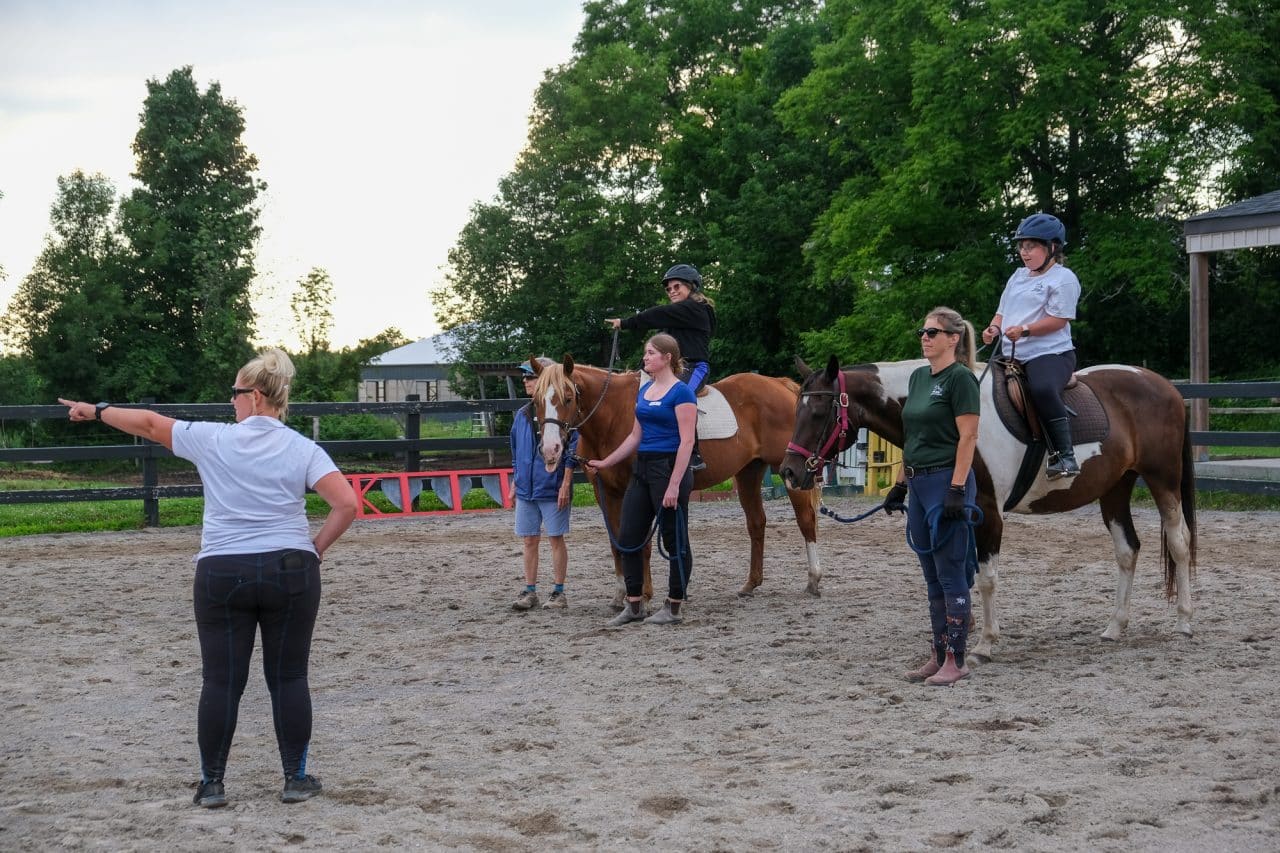
That excitement is clearly evident in young riders Emma Hendry and Kate Pottle, both waiting their turn for a lesson. Hendry says she likes the way her horse, Raven, listens to her, stopping and walking when asked. Pottle, another Sassy fan (“I really love her!”), appreciates the connection between human and horse. “I like the way she looks at me,” she says.
Some of the benefits of therapeutic riding, such as improved mobility, balance, coordination and confidence, could be gained from other forms of therapy. But therapeutic riding can provide a kind of freedom and independence that other therapies may not. Plus, there’s the intangible but undeniable benefit of simply being around horses.
“I’ve seen many of our horses nuzzle up to and enjoy the company of our riders as they start or finish their ride, or stand patiently while we get more challenging riders on or off their horses,” says Carruthers. “Horses are remarkably strong and steady constants for our riders.”
Author

Related Articles
A century on, descendants of early Chinese restaurant owners still run businesses in Peterborough
Local restaurateur and bar owner Shannon Mak’s great grandfather ran a downtown Chinese restaurant starting in the 1910s

Self-esteem coach. TV camera operator. Blacksmith. Volunteer fair showcases some unexpected ways to give back.
With volunteering on the decline in Canada, Volunteer Peterborough is trying to make it easier to contribute

Meet Marjorie, the giant Newfoundland dog spreading joy at a Peterborough retirement home
“I think dogs are nicer than most people,” said a Royal Gardens Retirement Residence resident who looks forward to the therapy dog’s weekly visits.
