
Ban loitering? Report recommends changes to deter drug use at Peterborough Public Library.
Reports also calls for planting thorny bushes and altering benches outside library so people can’t sleep on them
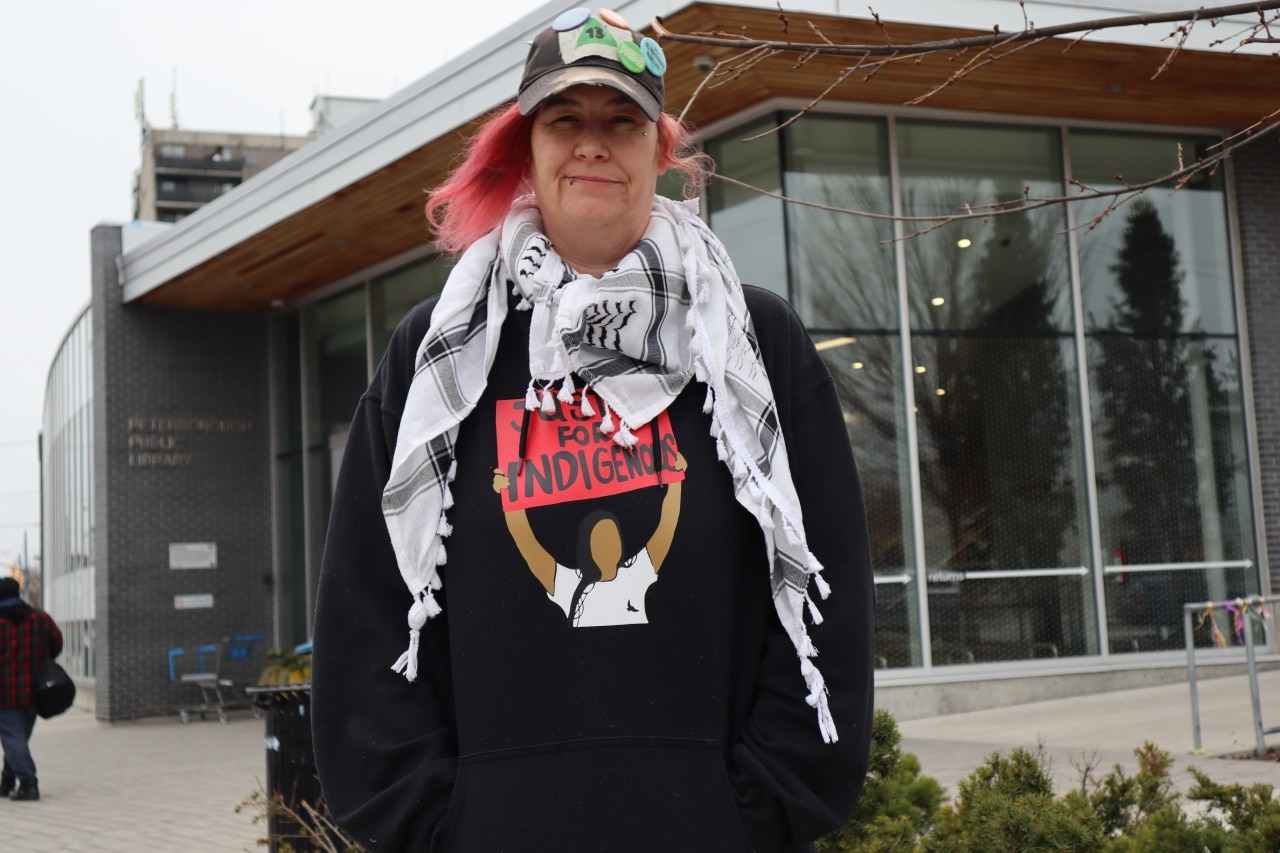
A new report recommends that the Peterborough Public Library ban loitering as one of a string of measures to “respond to community safety and security concerns” at the main branch.
The report is the result of an assessment volunteers with the Peterborough Police Service’s auxiliary unit conducted in January that looked for ways to reduce activities such as drug use on library property.
Police volunteers, known as auxiliary officers, visited the library once during operating hours and once at night to come up with their recommendations, which include banning people from lingering at the library. “Permitting loitering encourages unwanted and unauthorized activity,” their report states.
Library CEO Jennifer Jones presented a section of the report to the library board at its March 5 meeting. She is now waiting to receive quotes on how much the proposed changes would cost before board members vote on which ones to implement.
Many of the recommendations focus on making changes to the library’s exterior, such as planting thorny bushes to prevent people from sleeping on the property, according to Jones. It also recommends adding a third arm rest to the benches in the Library Commons to prevent people from lying down on them.
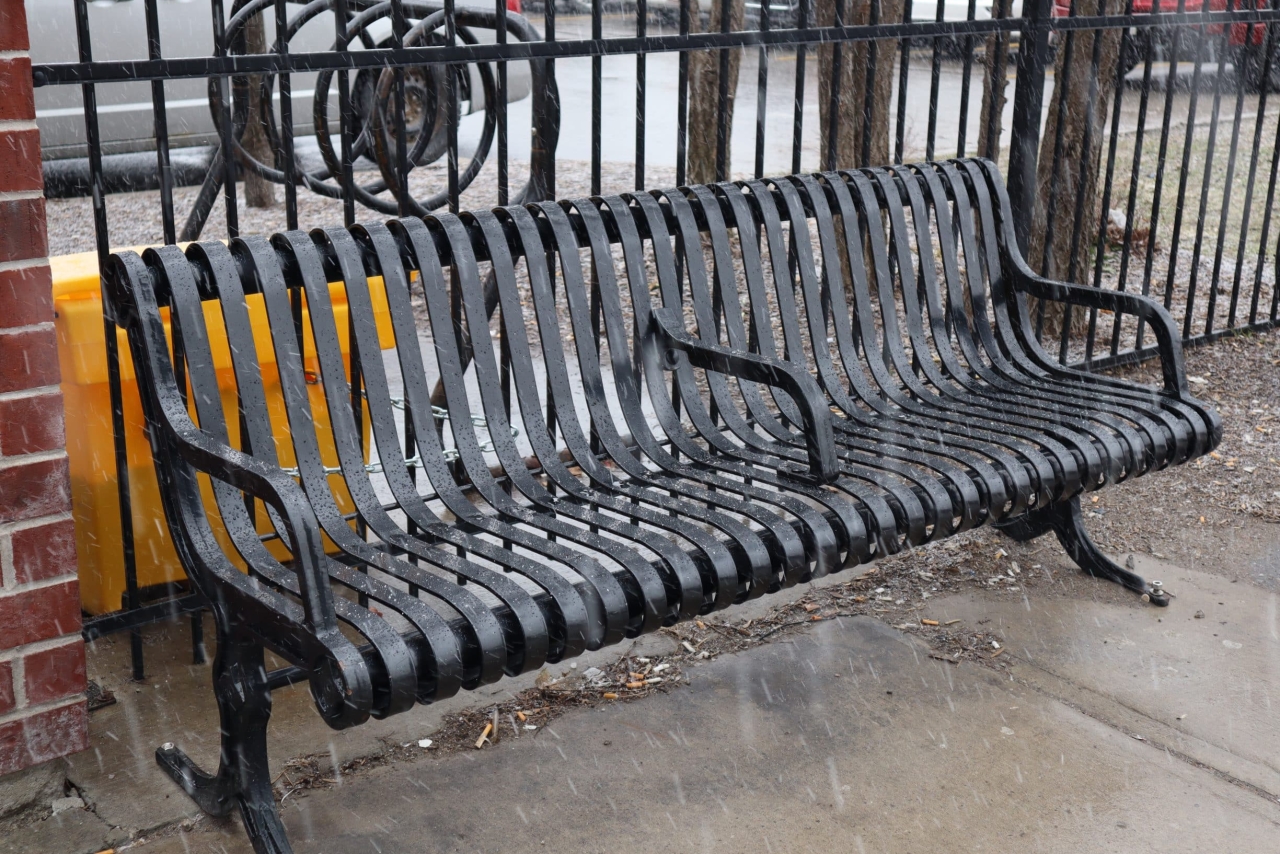
Jones said planting thorny bushes is one thing the library can easily do, but she doesn’t support all of the proposed measures.
The idea of banning loitering “makes me laugh,” said Jones.
“We actually encourage loitering here,” she said. “That’s kind of what we are.”
The library is “neutral ground” where anyone in the community can go and spend time, as long as they follow the library’s rules and don’t do anything illegal, said Jones. Napping is even permitted in the library’s code of conduct.
As for adding a third armrest to the benches in the Library Commons, Jones said “that’s a city problem” – the municipality controls that space. But she said preventing people from sleeping on benches there would be “a waste of time.”
“It’s not worth the effort,” she said. “People need to sleep.”
Library staff found 137 needles and other pieces of drug paraphernalia last year
It doesn’t bother Jones when people sleep outside the library overnight, but drug use is a different matter, she said.
“They’re often using illegal substances and we often have to call the ambulance for them in the morning because they’re not responsive,” she said.
Library staff found 137 needles and other pieces of drug paraphernalia, as well as 86 alcohol bottles and cans in and around the library in 2023, according to the report. Those numbers are a “drastic decrease” from before the supervised drug consumption and treatment site opened across the street in 2022, but drug use at the library is still a concern, according to Jones.
Meanwhile, people are also sheltering on the accessibility ramp that leads to the book drop and the library’s north entrance, which poses an accessibility issue, she said.
“People are scared walking up the stairs, or they can’t come up the ramp because people are blocking it,” she said.
To address those concerns the report recommends lowering the concrete wall along the accessibility ramp in order to “remove an area of concealment.” The ramp is also slightly heated in winter to keep it free from ice and snow and the report suggests turning off the heat outside of library operating hours.
But library staff have already tried lowering the temperature, only to find that people still used the ramp to hide from the wind, Jones said. “We know that doesn’t change anything.”
Jones said it would be a “huge cost” to lower the wall along the ramp and that doing so may contravene provincial accessibility requirements, but she is looking into “what the options are there.”
Drug use occurring in garden outside children’s area, library CEO says

Meanwhile, people are also using drugs and sleeping in the garden on the building’s south side, which is outside the children’s area on the lower level. The spot has also “become a bathroom,” according to Jones.
“They often use it as a washroom, which is problematic, especially when the windows look right into the children’s area of the library,” she said.
The report proposes constructing a fence along the south side of the building to prevent access to the garden. Jones said that’s a possibility but it would have to be done in a way that doesn’t block the emergency exit located there.
But a better solution would be to first talk to marginalized people who are spending time in the garden, according to Sam Blondeau, a Trent PhD student who researches the criminalization of homelessness.
“I would have conversations with them and find out if they are even aware that this is an issue for other people,” they said. “My first question is: are they even really aware that that’s where the kids’ section is?”
Blondeau worked in shelters and did homelessness outreach for many years and found that when people are in survival mode it can be difficult for them to notice how their behaviour affects others.
“I know that a lot of people, when they’re on the street and in that state, they’re kind of oblivious to some of the stuff that they’re having an impact on,” they said.
Blondeau found that after having conversations with people they were often willing to change their behaviour.
“There’s so much that can happen in those conversations,” they said.
“It feels like you’re unwanted.”
The library has become a “bastion” for many people without homes who have nowhere else to go, according to Blondeau. “It’s a place where people can go and just rest. There’s nowhere for anybody to rest that is safe,” they said.
Making the library less hospitable to marginalized people will only make matters worse, they said.
“When you look at the research, what you will find is that these kinds of measures actually exacerbate the issue, because they push people to other places, or they push people away from services, and they make people’s safety more precarious,” they said. What people really need are more services and “safe spaces to be.”
Blondeau suggested that the library bring in people with lived experience of homelessness to work with marginalized people to find solutions to concerns around things like drug use.
“We need to focus more on building relationships within our community, especially to people who are vulnerable and marginalized,” they said.
But instead, the report takes an overly “punitive” approach, according to Blondeau.
“I’ve never been able to understand why the response has to be so militant towards a group of vulnerable people who have no agency,” they said. “Why aren’t we talking about designating more social housing? … Why aren’t we talking about the things that will actually help alleviate this in the long run?”
Blondeau said they know how it feels to be on the street and find yourself excluded from public spaces. They were one of the “street kids” who would spend time in Peterborough Square and in front of the CIBC building downtown in the 1990s, they said. “The reason we used to hang out there was because we had nowhere else to hang out. There was nothing for us to do.”
But then the mall put up no loitering signs, CIBC installed planters to stop them from sitting in front of the building, and benches started being removed from the downtown, they said.
Blondeau still remembers how that felt. “It feels like you’re unwanted. It feels like you’re not worthy,” they said.
The report also recommends upgrading the library’s security cameras and increasing lighting on the building’s exterior.
Currents asked Coun. Gary Baldwin, a member of the library board and the Police Services Board, to comment on the recommendations, but he directed questions to Jones.
Author

Related Articles
A century on, descendants of early Chinese restaurant owners still run businesses in Peterborough
Local restaurateur and bar owner Shannon Mak’s great grandfather ran a downtown Chinese restaurant starting in the 1910s

Self-esteem coach. TV camera operator. Blacksmith. Volunteer fair showcases some unexpected ways to give back.
With volunteering on the decline in Canada, Volunteer Peterborough is trying to make it easier to contribute

Meet Marjorie, the giant Newfoundland dog spreading joy at a Peterborough retirement home
“I think dogs are nicer than most people,” said a Royal Gardens Retirement Residence resident who looks forward to the therapy dog’s weekly visits.
