
Audio Non-profits plead with councillors to reverse proposed cut to municipal grants. The cost to taxpayers? Less than $1 each.
Meanwhile, Chief of Police Stuart Betts makes the case for a $4.6 million boost to the police budget.

Representatives from a variety of community groups addressed city councillors on Tuesday, November 14 to ask councillors to reverse a proposed cut to the municipal grants they receive.
Peterborough’s draft budget proposes cutting the Community Service Grants it gives to 14 local non-profits by between 3.5 percent and 5.2 percent in 2024. The Community Service Grant program provides funding to non-profits that deliver programs to improve the quality of life for residents in Peterborough, according to the city’s budget documents.
Representatives from many of the groups facing the cutback — including the New Canadians Centre, Peterborough GreenUP, and Artspace — were present at the November 14 finance committee meeting to ask councillors to reverse the proposed cutback when they debate the budget starting on November 20.
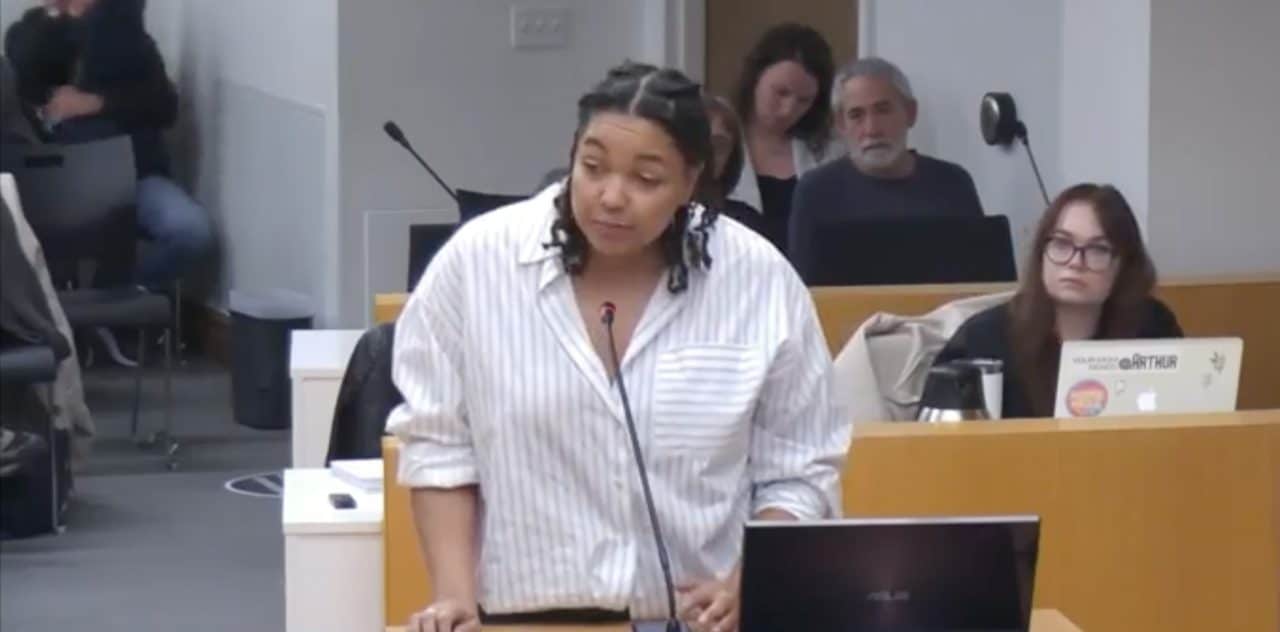
Patricia Wilson spoke at the meeting representing the Community Race Relations Committee (CRRC). The CRRC, which promotes anti-racism locally, would have its municipal grant decreased by $1,560 if the cuts go through. Wilson said the city shouldn’t cut its support for the CRRC at a time when hate crimes and race-based incidents are increasing. “Now more than ever, our services and supports that we provide are desperately needed,” Wilson said.
If the grant cuts to the 14 non-profits are approved, the city would spend $29,132 less on all the groups combined next year compared to 2023. That works out to savings of $0.67 for the median household in the city.
“When you look at what those overall numbers are, it’s so small,” said Su Ditta, the executive director of the Electric City Culture Council. “It’s shocking that we’re trying to deal with giant size economic problems by cutting these tiny organizations.”
Meanwhile, at the November 15 2023 finance committee meeting, Chief of Police Stuart Betts made the case for a 15.3 percent increase to the police budget for 2024 — that increase would cost the median residential taxpayer $106 more next year.
We cover these two stories and more in the latest episode of our 2024 Budget Podcast, which Peterborough Currents is producing in partnership with Arthur Newspaper. You can listen to the episode in the audio player below, or you can find it in your favourite podcast app. You can also read a transcript of the episode below.
City council’s budget deliberations kick off at 6 p.m. on November 20, 2023, and continue through the week. Then, councillors are expected to give their final approve to the 2024 budget at a city council meeting on December 11, 2023. Peterborough Currents and Arthur Newspaper will continue covering the municipal budget process in this podcast series. Thanks for listening!
Episode Transcript
William Pearson 0:00
Hi there, you’re listening to the Peterborough Currents podcast and the Arthur Newspaper podcast. My name is Will. I’m the publisher and editor of Peterborough Currents. And we’ve teamed up with Arthur Newspaper to bring you a series of podcasts about Peterborough 2024 municipal budget deliberations. This is episode two in the series. We are releasing it on November 20 2023. On this episode, we are recapping what happened at the November 14 and November 15 finance committee meetings where citizens and community groups and local agencies had a chance to address council about the upcoming budget. Before we get to that, though, I just want to take a second to get you oriented so you know sort of where we stand in the budget process. As I said, we are releasing this episode on November 20. That means city councilors are beginning their budget deliberations tonight. Councillors will go through the budget, page by page and line by line and debate what changes should be made to it. The budget is hundreds of pages long so they won’t get it all done tonight. They will return tomorrow night, November 21, and Wednesday, November 22 to keep going. It really is a marathon. After they finish those deliberations, the amended budget is expected to go to city council for a final vote on December 11. And at that meeting, the December 11 meeting, there is another opportunity for citizens to address council. If you have anything you want to say, you can sign up to give a delegation at that meeting, if you wish. Okay, so we have a lot to cover on this episode, we’re going to talk about everything from arts funding to economic development to the police budget. You’re going to hear author co-editor Evan Robins and myself discuss the November 14 meeting. And then you’ll hear another Arthur co-editor, Sebastian Johnston-Lindsay, and myself discussed the November 15 meeting. So here’s Evan to get us started.
Evan Robins 1:59
Okay, so Tuesday, November 14 was a chance for citizens to address councillors about the proposed budget. I wasn’t there. But, Will, you were watching. Can you tell me a bit more about what happened?
William Pearson 2:12
Yes. I was watching on the internet. There were I think about 12 registered delegations from citizens. Citizens get five minutes each to talk to counselors about their thoughts on the budget. But almost all of the ones that showed up were actually representing local community groups who are staring down a cut to the funding that they receive from the city. So the city has this program called Community Service Grants. These grants provide funding to local arts groups, social service agencies, organizations like that to help them to do their work. And the draft budget this year proposes cutting these grants by 3.6% for most of the groups that receive them.
Evan Robins 2:48
So when we talk about community organizations that are facing cuts to their Community Service Grants, what kind of groups are we talking about specifically?
William Pearson 2:57
Okay, so like just as an example, Artspace, the downtown gallery and artist-run center receives one of these grants. Last year it was worth $37,294. And in next year’s budget, the draft budget rather, proposes reducing that to $35,962. So that’s a decrease of 3.6%. Leslie Menagh, the artistic director of Artspace, was one of the citizens who made a delegation to council on the November 14 Finance Committee meeting. Here’s what she said.
Leslie Menagh 3:28
Artspace is in receipt of the annual service grant for which, to our distress, the city has proposed a 5% decrease in 2024. This is an alarming shift from previous years’ proposed annual 1.5 increases. And though this, although the savings to the city is negligible as a result of this cut, what it represents to service grant recipients like us is that our ability to deliver reliable quality programming is destabilized.
William Pearson 3:58
Another recipient of the Community Service Grants is the Community Race Relations Committee. They’re a group that has done anti-racist work in Peterborough for for decades. Patricia Wilson was at the Finance Committee meeting representing the CRRC. And Patricia told council that the city shouldn’t be cutting its support for a group that’s doing anti-racist work in Peterborough when hate crimes have been documented to be on the rise here.
Patricia Wilson 4:23
It was reported in 2021 that Peterborough has the second highest rate of hate crimes and race based incidents in Canada, according to census data, and I’ve recently heard that number has more than doubled in 2023. Now more than ever, our services and supports that we provide are desperately needed.
Evan Robins 4:39
So it sounds like a lot of groups posted delegation to the city to argue against these cuts to community service grants.
William Pearson 4:46
Yea altogether there’s 14 community groups who are threatened with this funding cut. They range from, like the Little Lake Music Festival to Peterborough Greenup to the Peterborough Drug sSrategy. And a lot of them delegations kind of attempted to kind of like put up a unified front and kind of argue that all of these groups are contributing to the social or environmental well being of the city and that they should all be, they should all have their funding restored to the previous levels and not cut.
Tegan Moss 5:17
When I look at the list of service grant recipients, I’m struck by the collective impact of the organizations that it funds. The social fabric that I know makes Peterborough a wonderful place to live, work, and play is one that includes the arts, community supports, and environmental organizations.
William Pearson 5:35
So that was Tegan Moss. She’s the executive director of Peterborough, Greenup. Here’s Andy Cragg, the executive director of the New CanadianS Centre.
Andy Cragg 5:43
What we do as service grant recipients is of such value that if it stopped, it would cause a challenge or even a crisis, and the city might even have to step in and figure out how to deliver that service. I don’t envy the task that you have in front of you in crafting next year’s budget, but I urge you to look elsewhere for the cost savings you need to find to fund planned expenditures.
Evan Robins 6:01
So we’ve heard a lot from community organizations so far, what else did people bring up?
William Pearson 6:07
So there really weren’t that many other concerns brought up. I think there were like maybe two or three citizens who made delegations that weren’t representing one of these groups that are facing these community service grant cuts. Tricia Clarkson was one of them. She phoned into the meeting to express her displeasure with the proposed 9.6% tax hike.
Tricia Clarkson 6:27
9.59% tax hike’s higher than the rate of inflation, which is currently at 3.8% right now. And our municipal taxes should try to match the rate of inflation because residents and homeowners are having a hard time making ends meet as it is. As Peterborough is the number one city in Canada that has the most amount of seniors, most of who are living on small pensions council should consider raising taxes no more than 3.8%, same rate as inflation. A 9.59% tax hike is much higher than the percentage allowed for annual rent control hikes in Ontario by landlords, which is currently 2.5%. The city should try to keep in line with a few percentages of rent hikes, there should be a cap on how much the city is allowed to jump its taxes, just as there’s a cap on how much landlords are allowed to increase their rent percentages. Landlords will also be adversely affected by the city’s drastic tax increase, because they’re only allowed to raise rents 2.5%. Well, at the same time, they’ll have to pay 9.59% in taxes.
Evan Robins 7:35
Okay, so we have representatives from community groups saying don’t cut our grants. But we also have this citizen saying don’t raise my taxes. It seems to me that there’s a conflict here.
William Pearson 7:47
I mean yes and no. It’s, it’s true that you can’t like reverse these cuts without raising property taxes. And no one’s happy about the prospect of paying hundreds of dollars more in taxes next year. And I think that citizen that we just heard from, Trisha, is definitely like right to point out how those extra taxes are going to be for some households to pay. But I don’t know that wanting lower taxes necessarily puts you in conflict with these particular community groups. The grants that these groups receive are really not what’s driving the property tax increase. They’re actually like an incredibly small portion of the city’s budget. Su Ditta, the executive director of the Electric City Culture Council was at the meeting. And she made this point, just before the meeting got started.
Su Ditta 8:29
I think that when you look at what those overall numbers are, it’s so small. It’s shocking that we’re trying to deal with giant size economic problems by cutting these tiny organizations.
William Pearson 8:43
So, we mentioned on the first episode of this podcast, that the median household in Peterborough will have to pay an extra $434 on their tax bill next year if the 9.6% tax increase is approved. Meanwhile, the cuts being proposed for these groups, I did a little bit of math on my paper next to me, during this meeting to figure out, okay, what is this actually going to save the taxpayer if these cuts go through? And what would it cost the taxpayer to reverse the cuts? And it works out to like 60 cents, maybe 65 cents? So if we’re talking about a property tax increase of $434, for the median household 60 cents is really not a big proportion of that.
Evan Robins 9:22
Yea, when you put it that way, it seems like these community service grants are not really the biggest thing contributing to this year’s tax bill. So then, I guess what it seems to me is that if we want to see a lower tax rate, we need to begin to examine some of the bigger budget item lines that are on this draft budget.
William Pearson 9:40
Yeah, so maybe like things like the capital budget, which I think makes up about 18% of the property tax next year or the the police budget with which also makes up about 18% of the property tax for next year, would be I think, like, better places to look for savings if you really want to make a dent in the tax rate increase. But that’s, yeah, that wasn’t really talked about on the November 14 meeting. I think this this is something — I’ve watched like city budget deliberations for a few years now. And I’m always struck by the way they often zone in on incredibly insignificant sums of money to debate. And I think this is just a really good example of how that happens. And like the whole meeting, this was an hour and a half meeting, I think. And it was mostly focused on these grants that are just like minuscule portion of the city’s budget, and seem to get this like extra scrutiny from City Council. But that’s basically everything that happened on November 14, that finance committee meeting, but before we go, I wanted to share with you one more clip from another citizen that spoke. We heard earlier from Trisha Clarkson, a citizen who said that, who argued against this 9.6% tax increase. Another citizen named Rob Hailman also spoke. And he argued that, while no one wants to pay this extra money, he doesn’t think that the budget looks inefficient or wasteful.
Rob Hailman 10:59
We all know that the tax increase that is on the table before us is higher than anybody might want to see. But it does not seem to me that it is a wasteful or inefficient budget. With that in mind, I’m here above all else to beseech you, as you’re considering any changes you’d like to make to the draft before you to exercise a great deal of prudence and careful deliberation. I know that there’s going to be great pressure to find places to save money. And with the budget we have before us, anywhere, it seems could be, would be an incredibly difficult choice that requires great deliberation. We face a number of challenges in Peterborough and in the world that can only be addressed with the assistance or involvement of the public sector, including the municipal sector. The housing crisis, the addiction crisis, the climate crisis, issues with was employment and economic development. These aren’t challenges that Peterborough as a municipality can meet on its own. But unfortunately, higher levels of government are all too often absent. And that absence only increases the importance of the investments that are proposed in this budget.
Evan Robins 12:12
Okay, so that was Rob Hailman speaking to the 2024 draft budget at the Tuesday, November 14, Finance Committee meeting. Thank you so much for talking with me, Will, I feel like I’ve learned a lot more about the processes of this budget deliberation.
William Pearson 12:26
Okay, are you gonna go to the next meeting?
Evan Robins 12:29
I certainly hope so.
William Pearson 12:30
Yeah. They’re fun. Okay, so now we’re going to talk about the Finance Committee meeting that was held on November 15. Sebastian, you were there. Tell me what happened. What was this meeting all about?
Sebastian Johnston-Lindsay 12:52
Yeah, so November 15 was a chance for external organizations that are funded by the city to present their budget requests to council and for councillors to ask questions about it. And there are 10 such organizations listed in the budget. They range from the Peterborough Public Health to Fairhaven long term care home to the Peterborough Humane Society, which are just some that are listed there. But the police are by far the biggest of these groups, and with the proposed budget of $35 million being asked of the city this year. And following that is the paramedics with a $6 million budget ask for the city in 2024. But only three groups showed up and those three groups were the police, the Innovation Cluster, and the paramedics. And so we’re going to be talking about Peterborough Public Health next week is the report was was deferred.
William Pearson 13:35
Okay, so I watched this online too. And I know that police went first. So let’s talk about that first. Tell me kind of who showed up and what they said.
Sebastian Johnston-Lindsay 13:47
Yeah, so the chief of the Peterborough police service, Stuart Betts had a job to do. He was there asking for $4.6 million dollars more next year, so an increase to the 2023 budget, which represents an increase of 15.3% and translates to more than $100 per medium household in Peterborough.
William Pearson 14:06
Okay, so he’s asking for a budget increase that’s big enough that the median household in Peterborough, which means that half the city would pay more and half the city would pay less, but that median household would have to pay more than $100 more this year for police than last year.
Sebastian Johnston-Lindsay 14:22
That is correct. Yes. So Betts’ main message was that crime rates go up when police funding goes down. And he illustrated that through a series of slides which indicated that as a percentage of the budget, the police service are actually taking up increasingly, by small increments, less and less of the overall municipal budget. But to start things off, Drew Merrett, the Finance Chair of the Peterborough Police Board, kick things off.
Drew Merrett 14:48
And being a business person, I thought that I’d be able to find some cost-cutting opportunities while still providing our citizens the quality of service needed. There are a few that we could find in this organization, But in fact, the Peterborough Police Service has been underfunded for over 10 years. We’re treading water, and it is time for council to help us start swimming. So together we can provide the service our citizens do deserve. I would like to introduce Chief Stu Betts to present our budget for 2024.
Sebastian Johnston-Lindsay 15:19
So a very vivid image right there, certainly, and a lot of this messaging around the police’s current inability to provide service was relayed throughout the police presentation as well. Chief Betts told councillors that the 2024 police budget doesn’t include any frills.
Stuart Betts 15:35
Chair, what I’ll talk to you tonight about is adequate and effective delivery of police service and public safety in our city. This is not enhancements. This is not what I’m talking about. Enhancements are nice to haves. What I’m talking about is the delivery of the very important public safety and personal safety of policing. I’m not looking to enhance anything, I’m looking to provide the service that the community repeatedly tells me they want and quite frankly, the service they deserve.
Sebastian Johnston-Lindsay 16:06
Betts argued that the force needs more money to hire more staff to respond to rising crime rates and public perceptions of unsafety. He also said that the recent changes to Police Services Act that place greater demands on the police services that he needs more staff to meet. And so this year, the service hired 11 new staff and in 2024, the Service wants to hire 10 new staff. Last year, they kept the budget increase lower by dipping into reserves and hiring mid-year. But this year, that’s not happening. Betts made the case that the city needs to pony up the $4.6 million more.
Stuart Betts 16:39
Where we stand is that our request for 15.3% to get us to the level of policing where we need to be to start to provide that adequate and effective policing. This is not a cost that we’ve just pulled out of the air. This is based on the needs of the organization. This is based on hiring ten staff members to provide that adequate and effective policing.
Sebastian Johnston-Lindsay 17:00
So we really kept repeating the phrase “adequate and effective policing.”
William Pearson 17:04 Right.
And there’s there’s a reason for that right? That’s what the Act says that police services need to do. And I think something that’s hanging over all of this debate is the fact that the city doesn’t really have the final say on this police budget at the end of the day. If a Police Services Board believes that a municipality is not funding it enough to provide that adequate and effective policing, they can appeal to the province and the province will decide, okay, how much money does the city have to pay to provide this, you know, quote, adequate and effective policing? What exactly does that mean? I don’t really know, to be honest. But I think that it’s it’s not irrelevant that Betts is trying to really make the case that you know, that these are not enhancements, right? This is just the bare minimum service. And I think that’s probably so that he’s laying a good case so that should City Council deny this request, they can make the case to the province that the city has to pay up. But I think, considering that I think it’s important to remember like the very next day after Stu Betts made this announcement, he announced this like new initiative from the police to crack down on property-related crimes. Right? Is that an enhancement? Or is that just basic, adequate and effective policing? I don’t know. Is that something that we get to debate as a community? I’m not sure. Or is that something that the province ultimately decides? I just don’t know. But I thought it was an interesting thing to see Stuart Betts out in the media the very next day announcing this new initiative, after he said that he needed this money just to kind of offer this bare bones level of service.
Sebastian Johnston-Lindsay 18:40
Yeah, I mean, I thought that was kind of interesting, too, because he did kind of tease that at Council on the 15th. And so that was, that was that was interesting. And I think he would make the argument that it is in fact, this is something that people that the people in the community are asking for. But it seems like the city might not have the final say on this, this budget ask, then, in many ways. And if it goes through that might constrain the city’s spending in other areas. And councillors Alex Bierk asked about this, pointing out that it might mean the city can spend less on initiatives that might help address the root causes of crime. And so Alex Bierk asked if, if Betts had thought this through at all.
Stuart Betts 19:18
I think we all believe in prevention, in any form in every form. Policing and Law and Public Safety is no different. Prevention is always cheaper than the response. The problem is we’re not able to afford to provide the prevention either. So until we can, somebody has to provide the response. It would be irresponsible for me not to have considered what some of those implications are, and I certainly have. So I do appreciate you asking about that. I have a demand on service right now. I know because you get those demands and you pass them on to me, as does most other councillors here. The community has expectations of public safety. That’s my job. And I have to be able to provide that until there are other social safety net services in place to look after the front end.
Sebastian Johnston-Lindsay 20:00
So there you can see kind of a bit of a catch 22. It makes it harder for the city to pay for other services and initiatives, because the police are in need of more money, and the police will continue burning themselves out because there’s there’s too much to respond to until such a time as the city can pay for these services to exist. And to provide a little bit more context, earlier you spoke to Nico Koyanagi, who works with the Peterborough chapter of the Ontario Public Interest Research Group or OPIRG, about some of her thoughts on policing in Peterborough. And so what did she have to say?
William Pearson 20:31
Yeah, I reached out to Nico because she was at the police town hall earlier this fall, and asked a question about, you know, why aren’t we spending more money on housing to address some of these crime issues. And she was also signed up to provide a delegation to city council on November 14, but didn’t make it. So I reached out to her to kind of talk to her, to interview her, so that we can hear what she has to say. And Nico doesn’t believe that the city should be spending all of this money on policing.
Nico Koyanagi 21:01
I think the strategy that the police are using in our community is not actually one that will keep people safe. But it’s more about, you know, criminalizing poverty, criminalizing drug use, which I really don’t think are effective solutions to these crises that we’ve been seeing in Nogojiwanong over the years.
William Pearson 21:23
So I asked Nico, you know, if you don’t want to see the city spend all this extra money on police, would you like to see that money used to maybe reduce the property tax rates, or would you like to see that money spent elsewhere, like making different kinds of investments. She said that she wanted to see the city make other investments with that money. So whether that’s in sort of mental health care, or social services, or housing, the kinds of services that might help to address some of the causes of crime. And she also pointed out that the police kind of say this, too, right? They say that they are not the ones that are best equipped to, for example, deal with mental health calls.
Nico Koyanagi 22:00
I think, you know, it’s really important that the city, I think, funds organizations, community organizations, community partners that are already doing the work, you know, of harm reduction, and supporting people, you know, in, in transitional housing, supporting people in the shelter system, and supporting people in finding access to affordable housing as well, I think there’s so many services that already exist in the community, and that are really struggling for the funds to continue the work or to, you know, really do the work that they that they do well, and without burnout from their staff. So I think just more resources to those organizations would make a tremendous difference. Again, whereas the police, you know, even in the, the the meeting, they kept saying, or the sorry, the city, the town hall that the police hosted, you know, they kept saying, you know, we’re not trained in mental health, we’re not trained in de escalation. We’re not trained in all these things. So I think, you know, really having the city support those organizations that do have that training that do have those skills, and that do also have those relationships with community.
William Pearson 23:13
And Nico made one other point that I thought was interesting. She said that a couple of months ago, her mom’s car was stolen, and they reported it and there was an investigation and the car was found and there were people living in it. And so the way Nico understands that theft is that it was the result of people kind of really struggling and not having a place to stay. And if they had housing, then maybe they wouldn’t have stolen that car, right? Which I think is an interesting, an interesting way to look at it. But yeah, that’s sort of so that’s what happened regarding the police on November 15. We will find over the next couple of weeks, whether city council, you know, is gonna go for this 15.3% tax increase. And if they don’t, then we’ll find out, I guess over the coming months whether the police will make them. But tell me, so that’s police, who was the next to present to city council, Sebastian?
Sebastian Johnston-Lindsay 24:10
The first organization following the police was the Innovation Cluster who was represented by their executive director Camila Duarte. Last year, the Innovation Cluster received $144,230 from the city and is set this year to receive a 1.5% increase. However, Duarte was there to ask council for forgiveness on a loan for up to three years. And as it stands, the Innovation Cluster has a total operating budget of around a million dollars and Duarte said that her organization repays $70,000 to the city per year on that $300,000 loan.
William Pearson 24:46
Okay, so the city gives $140,000 or so to the Innovation Cluster per year. But then the Innovation Cluster also repays a loan in the amount of $70,000 per year.
Sebastian Johnston-Lindsay 24:59
Yeah.
William Pearson 24:59
Okay. And the Innovation Cluster is asking for that, in addition to for that $140,000 to be increased by 1.5%. They also want forgbaebiveness on this loan for three years, which works out to what, $210,000 over three years.
Sebastian Johnston-Lindsay 25:14
Yeah, exactly, about that.
William Pearson 25:16
Okay, that all makes sense to me. But what does the Innovation Cluster do?
Sebastian Johnston-Lindsay 25:20
Well, they support techy entrepreneurs. But let’s let Camila Duarte explain.
Camila Duarte 25:26
So what we do is to support innovation-based companies who want to grow. Usually, they’re first time entrepreneurs, first time business owners, first time startup founders. So they don’t have any guidance. They feel overwhelmed. They come to us, we help them through mentorship, through expertise, through programming a specific that is proven, every cohort that we have, we improve it in a way that we can escalate and make the companies grow faster. So we do that from zero to 100. Every company goes through the same journey. And what we do at the end is that they either their launch their business. They know how to test their technology, and they know how to go to market successfully. That’s what we do.
Sebastian Johnston-Lindsay 26:11
Got it?
William Pearson 26:13
Yeah, I think I do. And I watched the meeting. And Duarte also had this like really fancy PowerPoint presentation, that kind of laid out a bunch of stats. It said, for example, that since 2018, the Innovation Cluster has created over 900 jobs in the region, which represents, like an economic impact of $50 million. And that they’ve supported 360 companies in that five years. And this is, these are some claims that like really seems to strike a chord with some councillors. Some councillors were really excited about it. Here’s how Keith Riel responded. And in particular, Keith Riel wanted to compare and contrast what he perceives the Innovation Cluster is doing compared to Peterborough Kawartha Economic Development. Let’s listen to Keith Riel.
Keith Riel 27:04
Are you in the same building as PKED?
Camila Duarte 27:07
Yes, I am.
Keith Riel 27:08
Would like to share that with them? Your presentation? Because your presentation was jobs, jobs and jobs. And when they come, I don’t see jobs, jobs and jobs. But that’s what I’m hearing from you. And that’s why there’s a savings. of giving you the money.
William Pearson 27:30
Okay, so that was Keith Riel’s response to the presentation. I don’t know, I watched his presentation too. I came out of it feeling a little skeptical. I just wanted more information about like, Okay, where are they getting these numbers from? What kinds of jobs are they creating if they’ve created 900 jobs? I always am a little bit skeptical of these claims of like economic impact. I was just always kind of curious how they get calculated. I don’t know. What did you think?
Sebastian Johnston-Lindsay 28:01
Yeah, I mean, you share the same concerns as other councillors, specifically Alex Bierk and Joy Lachica.
Alex Bierk 28:07
Oh my gosh, where do I start? I feel like I feel like trying to explain, like, I feel like my grandma trying to understand Facebook. And like, I just I like, no, but out of no disrespect. But, like, this is the second time that I’ve heard this presentation and like, I get it at a certain level, but as a citizen, as someone who represents Town Ward, as a downtown small business owner, as someone who is in tune with the issues and the struggles that some of your the catchphrases in the slides, like, like, speak to, like, can you just please, please help me understand and help the residential taxpayer who’s supporting this ask, like actually understand what it is you do? Because I would, I would get zero out of 10 on a test. If I had to answer to know what you do. I think that you provide help for a certain type of business.
William Pearson 29:04
So Alex Bierk wasn’t like didn’t really understand what the Innovation Cluster actually does and how it contributes to the well being of the city or like the city’s like tax base or economic development or whatever. Joy Lachica also seemed a little bit skeptical. She asked Duarte not like, how many companies have you supported over the years, but like, how many of those companies have actually like launched? How many have become successful companies and sort of like graduated out of the program? And Camila Duarte said that five companies had launched this year, is that right?
Sebastian Johnston-Lindsay 29:38
Yeah, yeah, exactly. So like I said, like we said, a total of 360 over the course of five years. 148 companies supported in 2023. And yeah, five of those have launched.
William Pearson 29:50
And Joy Lachica was a little bit, called into question whether that was a good return on investment for the city
Sebastian Johnston-Lindsay 29:56
Yeah, exactly. That was more or less the line of her questioning, but we can listen in and see exactly how she phrased it.
Joy Lachica 30:01
I guess my question is when when we have just five registered businesses in one year, is the fruitfulness able to furnish the number of salaries that are part of the endeavour right now?
Camila Duarte 30:18
So there’s a clear difference between incorporated businesses and launched business. I have about 120 businesses incorporated. So they’re paying, they’re gonna do expenses, they’re gonna pay taxes, but not all of them are launching because they need work to be launched and to be in the market. That doesn’t mean they’re not creating jobs. Because to create a company, you need the investment. So this is planting the seed for my 148 companies, let’s say about 25 are launching this year. But the other 120 they are working, they’re hiring people. They’re paying taxes, they’re doing all the due diligence, they’re doing partnerships, they’re creating jobs, they’re using the city resources. It doesn’t mean that because they’re launching, they’re stale, and they’re not providing the economic impact I’m talking about. It’s completely different. So I’m telling you, my 148 companies, they’re all providing economic development and jobs to the community right now.
William Pearson 31:15
So that was the Innovation Cluster. There was just one more presentation on November 15. And, Sebastian, is it okay if we kind of just go through this one kind of quickly? I’m losing steam.
Sebastian Johnston-Lindsay
Yeah, I think so. And I imagine some of the listeners probably are too.
William Pearson
What was the last presentation?
Sebastian Johnston-Lindsay 31:17
Yeah, the final presentation of the night was from Randy Mellow, the Chief of Peterborough Paramedics. The paramedics, as we mentioned off the top of the last segment are asking for just over $6 million in 2024, which is an increase of 4.1%, or about a quarter million dollars more than last year. Again, as we saw with the police, the city has certain obligations to the paramedics in this budget, Mellow is confident would ensure Council achieves that next year.
Randy Mellow 31:58
What we’re bringing, in my opinion, is a fiscally responsible budget. It’s one that I think continues to set us up to be able to meet the current needs for the community. And it sets a platform for, in the future, where we are going to need some enhancements. But we’re not asking for those in this current year. I think it sets the councils up for the county and the city to be able to fulfill your obligation under the Ambulance Act to provide ambulance services that meet the needs of the community. And I think it’s in a fiscally responsible way.
Sebastian Johnston-Lindsay 32:27
I should also mention that the city shares its paramedic service with the county and the Peterborough paramedics received funding from both the city and the county. So the amount in this budget only reflects the city’s contribution — or around 56.64 to be exact percent — of the service’s overall budget, and this number is based on the 2021 census data for anyone who’s who’s wondering out there.
William Pearson 32:50
There might be one person that’s wondering out there. So this was one of those — This meeting lasted, I don’t know, what was it? Like three hours and —
Sebastian Johnston-Lindsay 32:58
Three whole hours.
William Pearson 32:59
Honestly, I stopped paying attention. I couldn’t, I can’t concentrate for that long. And that’s another thing that I find fun about budget week is it’s very exhausting. And there’s just like so much information comes at you all at once. I don’t think, I don’t know, I don’t think it’s possible for city councilors to like actually consider all of it. I can’t make sense of all it. And this is, I don’t know, paramedics, very important.
Sebastian Johnston-Lindsay 33:25
Yeah, extremely important.
William Pearson 33:26
I have less to say about it than anything else because I was getting tired. That’s just the way that the way that it goes.
Sebastian Johnston-Lindsay 33:31
I think it’s interesting to just point out like the just what this budget increase ask kind of how does this compare to the ask of the police. And so as we mentioned before, the the median household will be paying over $100 extra in property taxes next year for the police if the budget passes as is. Meanwhile, the budget ask for the paramedics equals about $5.75 for that same property owner, in an increase in property tax next year.
William Pearson 33:57
But that doesn’t reflect the actual gross budget of the organization, right? The reason for that, or part of the reason, is that that is the city’s share, righ? So the County has a sharem, and then the city and the county together only fund 50% of the paramedic service, is that what he said?
Sebastian Johnston-Lindsay 34:12
Yeah
William Pearson 34:12
And the province funds the rest. So I’m just doing some quick math here, that would suggest to me that the paramedics’ total budget is 24 million, which is approaching the 35 million of the police. The reason it’s less of an impact on the municipal taxpayer is because it’s split between the city, the county and the province, whereas the Peterborough Police are entirely funded by by the city.
Sebastian Johnston-Lindsay 34:35
Yeah, which raises very, very interesting questions about where the money is coming from and who’s paying for the police service.
William Pearson 34:41
Yeah, and just like, historically why that happened?
Sebastian Johnston-Lindsay 34:43
Yeah, it raises a lot of really fascinating questions and a lot of a lot of interesting context. Yeah, we should note too, that a lot of this increase is tied to increases in salaries. And, you know, as the paramedics complete their latest round of collective bargaining, it’s also annualizing four new hires that were completed in 2023. So lots of interesting context there.
William Pearson 35:05
Yeah, let’s wrap this episode up. This was fun. But this was only like the pregame for next week. Well, listeners will probably be listening to this on Monday, November 20, when deliberations actually get started, so, yeah, that Monday to Wednesday, that’s when councillors are actually going to be going through the budget line by line and maybe making changes, maybe not. We will watch and we will have a similar podcast for you to break it all down when it’s over. Thanks for listening.
Sebastian Johnston-Lindsay 35:36
Thanks very much.
Authors


Related Articles
Councillors play “musical chairs” with city budget
The proposed tax hike for 2025 has decreased, but only because councillors approved a brand new user fee.

Peterborough arts council faces defunding, executive director hopes to change city council’s mind
Mayor Jeff Leal says the “winding down” of the arts council is part of a broader effort to bring various services in-house at city hall

Council hikes transit fares, ignores request to hire more bus drivers
Transit union president says revenue from fare hike should be used to boost service and attract more riders
