
Reframe program invites reflection on our fraught relationship with logging
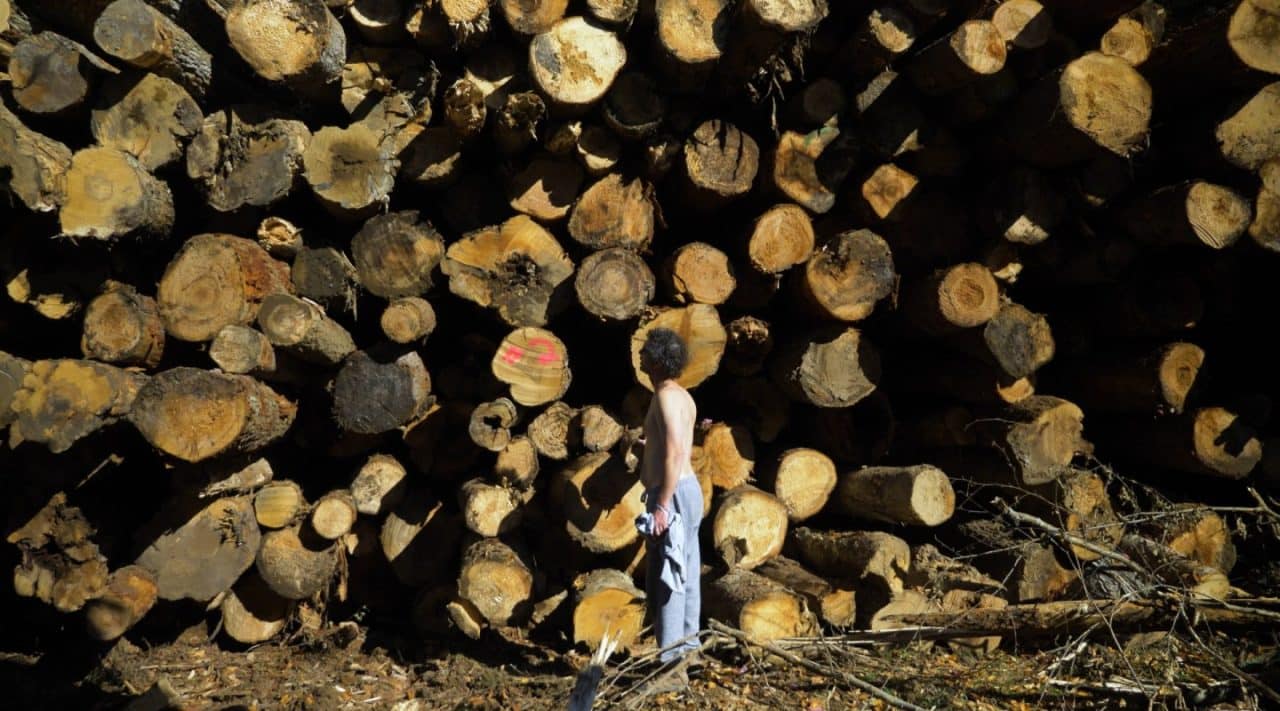
Logging has caused immense damage in North America. But could it also help our forests heal?
The Catholic church hall in Downeyville, Ont., comes alive with song and dance on St. Patrick’s Day as residents gather to celebrate the rich musical heritage of their Irish ancestors, who settled in the region in the early 19th century.
At one recent concert, community members sang “The Backwoodsman,” a colonial folk song that tells the tale of a wayward lumberman who neglects his work and travels from Omemee, Ont., to Downeyville for a dance.
Thought to have been written in Treaty 20 territory in the mid-19th century, “The Backwoodsman” is one of many extant colonial logging songs, and it’s the focus of a new short film of the same name that debuts at the Reframe Film Festival this weekend. The film, which was directed by retired journalist Nick van der Graaf, ends with scenes from the Downeyville celebrations, a nod to the continued relevance of the song today.
Lumbering was integral to the colonial economy in the 19th century, according to musician and historian Al Kirby, who is featured in the film. But logging was hard work, and so in their time off lumbermen often sought relief in music.
“In the shanties afterward you kind of tried to mellow out a little bit and sing some songs about your working life, your friends,” says Kirby in the film.
“They sang songs that they had learned in Ireland and Scotland,” Kirby says. “And they wrote new songs.”
The film follows Kirby and his bandmates as they resurrect the song and perform it at local events such as the Peterborough Folk Festival.
Band member Rob Niezen says “The Backwoodsman” is concerned with two fundamental human experiences: working and partying. Van der Graaf’s film captures nicely how a 150 year-old song portrays those two themes, and why the song continues to resonate, especially in local Irish communities.
Deforestation was central to local colonization efforts
With a runtime of just 15 minutes, The Backwoodsman necessarily keeps its focus narrow. Absent from the film are any discussions of the destructive impacts of logging in Upper Canada or the ways it was connected to the settler-colonial project.
Deforestation was central to early colonization efforts in the area, according to Phil Abbott, a lecturer and PhD candidate at Trent University whose research focuses on the impacts of early settlement in Treaty 20 territory.
Abbott said that after Treaty 20 was signed, Europeans started changing the local landscape to more closely resemble England, and that meant cutting down trees.
“They wanted to see fields,” Abbott said of the early settlers. “If you read early settler accounts, they’re often talking about the evil, dark, gloomy forests.”
At first, the trees that early colonists felled had no value in themselves, Abbott explained, because there was no way to get the wood to market. Forests were originally logged to open up farmland and to “civilize” the landscape and its original inhabitants, he said.
But by the second half of the 19th century, once railroads and the Trent Severn Waterway had opened up transportation routes, logging became lucrative. Settler-colonial societies often rely on extracting resources from occupied land, Abbott explained, and trees were the biggest resource at the time.
That’s not to say colonial logging maximized its use of those resources. Loggers prioritized only the biggest trees and left other harvested wood to rot, according to Abbott. “It was an extraordinarily wasteful industry,” he said.
Deforestation had a profound effect on the Treaty 20 landscape, Abbott said. Forest fires erupted on cleared land. Crucial habitats were lost. Soil eroded into surface water, impacting fish and aquatic plants such as wild rice. Sawdust from mills clogged the local waterways. And logs scoured the bottoms of rivers as they were sent downstream. Logging “completely altered the landscape” and eliminated the region’s old growth forests, he said.
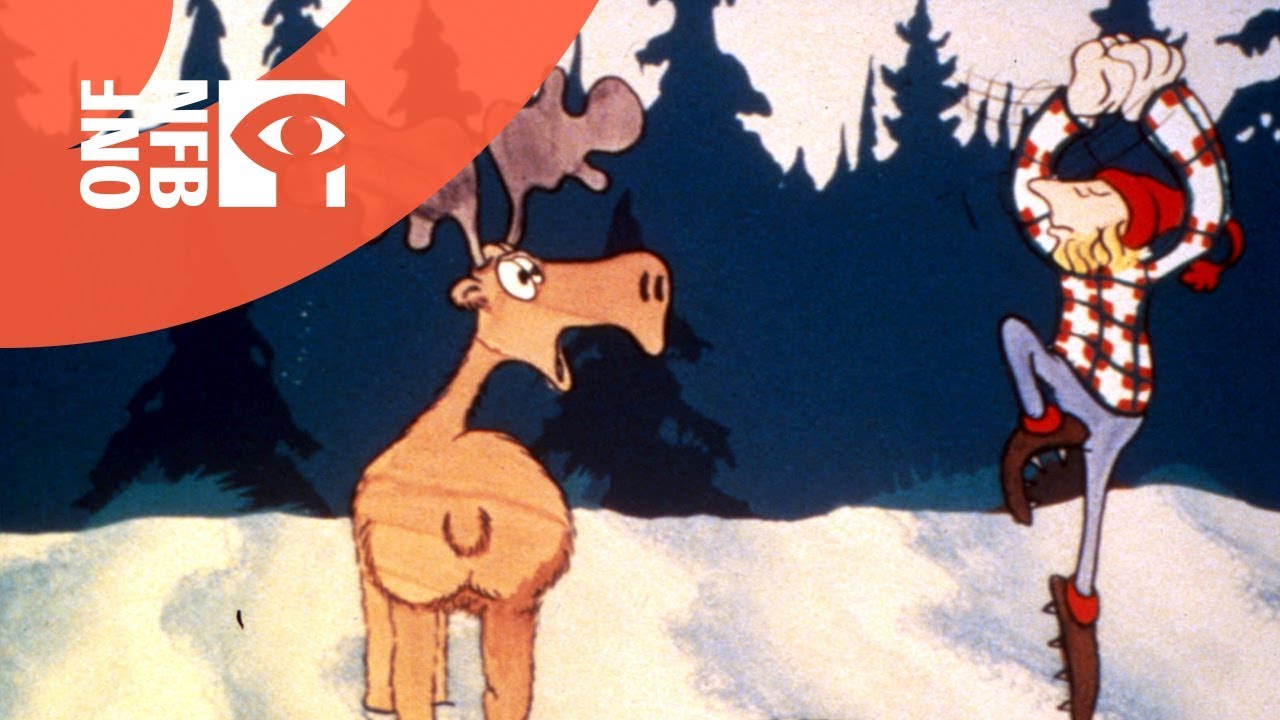
As a young boy, Abbott remembers being taught to celebrate the “ingenuity and perseverance” of early settlers and loggers. He learned to admire loggers through cultural representations such as The Log Driver’s Waltz, another logging folk song that was made famous by the NFB.
Now, though, Abbott feels differently about it all. “When you start to think about what impacts that process had, I think we get to a point where we’re going to feel sad and angry,” he said.
Algonquin Park preserved forests for logging
North of Treaty 20 territory, Kirby Whiteduck’s ancestors also felt the impacts of colonial logging. Whiteduck is a former Chief of the Algonquins of Pikàkanagàn First Nation.
In Logging Algonquin, which will screen immediately after The Backwoodsman at Reframe, Whiteduck describes how colonial encroachment pushed his ancestors onto a small reservation in the 19th century. They were denied one particular plot of land because it was prioritized for logging, he says in the film.
“Wives and children were dying because [of] the constant fires and the cutting down of majestic forests,” Whiteduck says.
But the progress of deforestation in Whiteduck’s territory was slowed in 1893, when Algonquin Park was founded to preserve the area for future logging.
“The point of the park was to continue the area as forest so there would be a continuing supply of wood as opposed to cutting it all down for agriculture which happened to most of southern Ontario,” observes Ontario’s former environment commissioner Diane Saxe in Logging Algonquin.
Algonquin has since evolved into a park with many uses, including continued logging. “That initial tension between logging and wildlife and recreation was present at the beginning and continues to be present to this day,” Saxe says.
Logging Algonquin features interviews with environmentalists who advocate for an end to logging within the park’s boundaries.
About 65 percent of the land in Algonquin Park is open to logging, though only about one percent of the park is logged in any given year, the film notes.
In one scene, old-growth forest expert Mike Henry visits an Algonquin hemlock stand and determines that some of the trees there are hundreds of years old — potentially some of the oldest hemlocks in the province.
“Old-growth forests in this kind of age class [have] almost been completely wiped off the landscape,” Henry says, surrounded by the trees. He points out that Algonquin’s remaining old-growth trees are carbon sinks that help fight climate change. “This is storing a huge amount of carbon,” Henry says of the hemlock stand. “And logging it disturbs and releases a lot of that carbon.”
Henry notes that the hemlocks are in an area of Algonquin that is open for logging. “This is an important forest,” he says, “and it’s unprotected.”
“Really great forestry”: Peterborough-based forester says logging in Algonquin can help the forest ecosystem
What Logging Algonquin fails to do is engage with any of the science that informs sustainable logging practices, leaving viewers unaware that there are alternative viewpoints on how to steward the Algonquin forest than the ones presented in the film.
The film does interview two supporters of the logging industry: Liam Murray, a fourth-generation mill worker, and John Yakabuski, Premier Doug Ford’s former environment minister. Both focus on the economic benefits of logging and the jobs the industry creates.
But the benefits of forestry in Algonquin go beyond dollars and cents, according to Fraser Smith. There are ecological benefits too, the Peterborough-based forester told Currents.
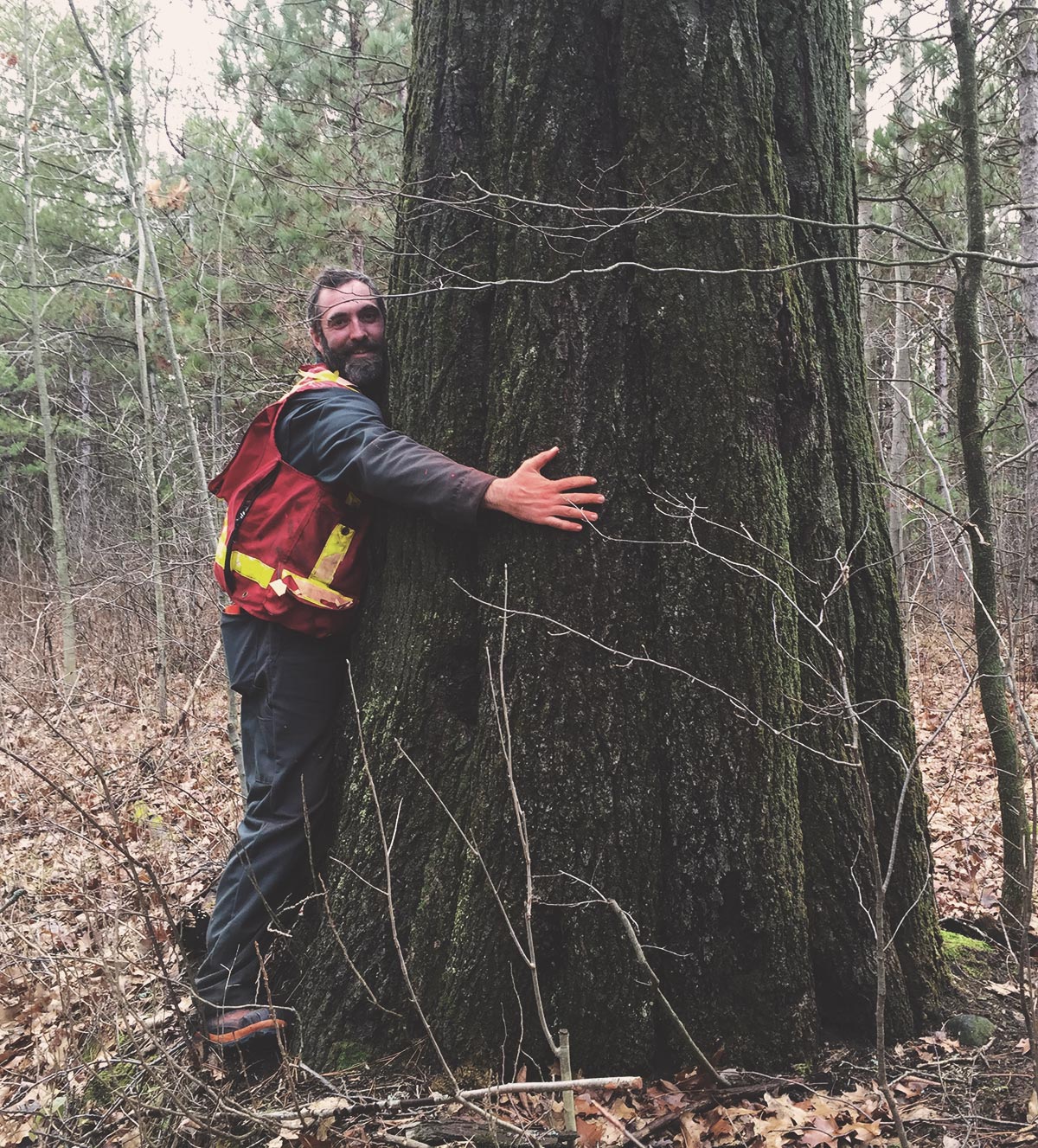
In the summertime, Smith loves to travel to Algonquin Park with some fellow foresters for a weekend of fishing. Often, the group books accommodations in one of the park’s historic logging cabins, he said.
Smith said he appreciates the “big, beautiful oaks and pines” that grace the Algonquin landscape. And he says the forest is healthy there — precisely because of the park’s forest management practices, which include logging.
“Honestly, Algonquin is one place where they’re doing some really great forestry,” Smith said. “I can show you examples of very poor forestry practices in Ontario. Algonquin isn’t one of them.”
More than 95 percent of logging in Algonquin is done with partial harvesting systems, according to the Algonquin Forestry Authority, the crown agency responsible for forest management in the park. That means the land isn’t clear cut — some trees are chosen for logging, while others are chosen to remain.
Smith described how partial harvesting systems help to “steer landscapes in a certain direction” by removing some trees so that healthier and more genetically-diverse trees have more space to flourish.
Oaks and pines “do not regenerate in a solid canopy,” Smith said. So, thinning out the canopy through logging helps ensure the next generation of trees can take root. Thinning out a forest also helps to mimic the effects of natural disturbances such as forest fires. Humans have mostly eliminated fire from the Algonquin landscape, but many species rely on the increased sunlight and other resources that follow a fire, Smith said.
The process of selecting which trees to log and which to remove is called tree marking. Smith called it a “really rigorous process” that was “birthed in Algonquin.”
When done well, tree marking improves a forest stand, according to Smith. “You’re not so much selecting those trees that you want to take. You’re mostly selecting those trees that you want to leave,” he said.
In a recent episode of the Canadian environmental podcast Future Ecologies, the hosts interview several forestry professionals who are embracing selective logging as a means of rejuvenating degraded forests. In the process, these foresters are charting “a middle path between leaving forests alone and managing them like tree farms,” the hosts say.
One of the foresters featured on the podcast is Ethan Tapper, whose new book, How to Love a Forest, describes how Tapper came to own a 175-acre woodland in Vermont and then realized that selective felling of some trees was in its best interest.
At first that was counterintuitive for Tapper, who had previously held the opinion that loving a forest meant leaving it alone. Deciding to take a more active role in the management of his forest required “trading simplicity for complexity, trading a tidy vision for one that is true,” he writes.
In one scene of Logging Algonquin, the environmentalists come across a large pile of harvested trees in an active logging zone. “It looked like someone had set off bombs in there,” observes one of the environmentalists, Mark Friesen. “That was a tough thing to see. It makes me feel sad.”
“Logging operations are messy,” Smith concedes. “And they make for great clips.”
But sustainable forest management often aims for results decades and even centuries into the future, and those video clips fail to show foresters’ long-term vision, according to Smith. “Going to see a logging operation without context is kind of like going and seeing a renovation at your friend’s house right after the demolition phase, without looking at the blueprints for what they’re going to build,” he said.
So … what’s best for the Algonquin forest? As a journalist with no environmental science training, this reviewer can’t say. But it seems clear there is a divergence of opinion among people who are equally committed to the health of the forest, and you wouldn’t know it by watching Logging Algonquin. By flattening the terms of its argument, the film limits viewers’ opportunity to learn about a complex topic.
Peterborough Currents is happy to publish this story about the 2025 Reframe Film Festival. As a sponsor of the festival, Currents committed to providing coverage of it, but we maintained editorial independence over our content throughout.
Author

Related Articles

Mikey and Corm’s sober song
Cormac Culkeen and Michael Cloud Duguay share a deep musical bond that was “reshaped by recovery.” Here’s how quitting drinking brought them back to Peterborough — and back to their friendship.
Citing burnout, the creative minds behind Peterborough’s Theatre on King will take a final bow this spring
Ryan Kerr and Kate Story are resigning their roles at TTOK, but the black box theatre will continue under new leadership
