
Pushing for change through creative expression
Currents spoke with three local artists who use art as a form of resistance
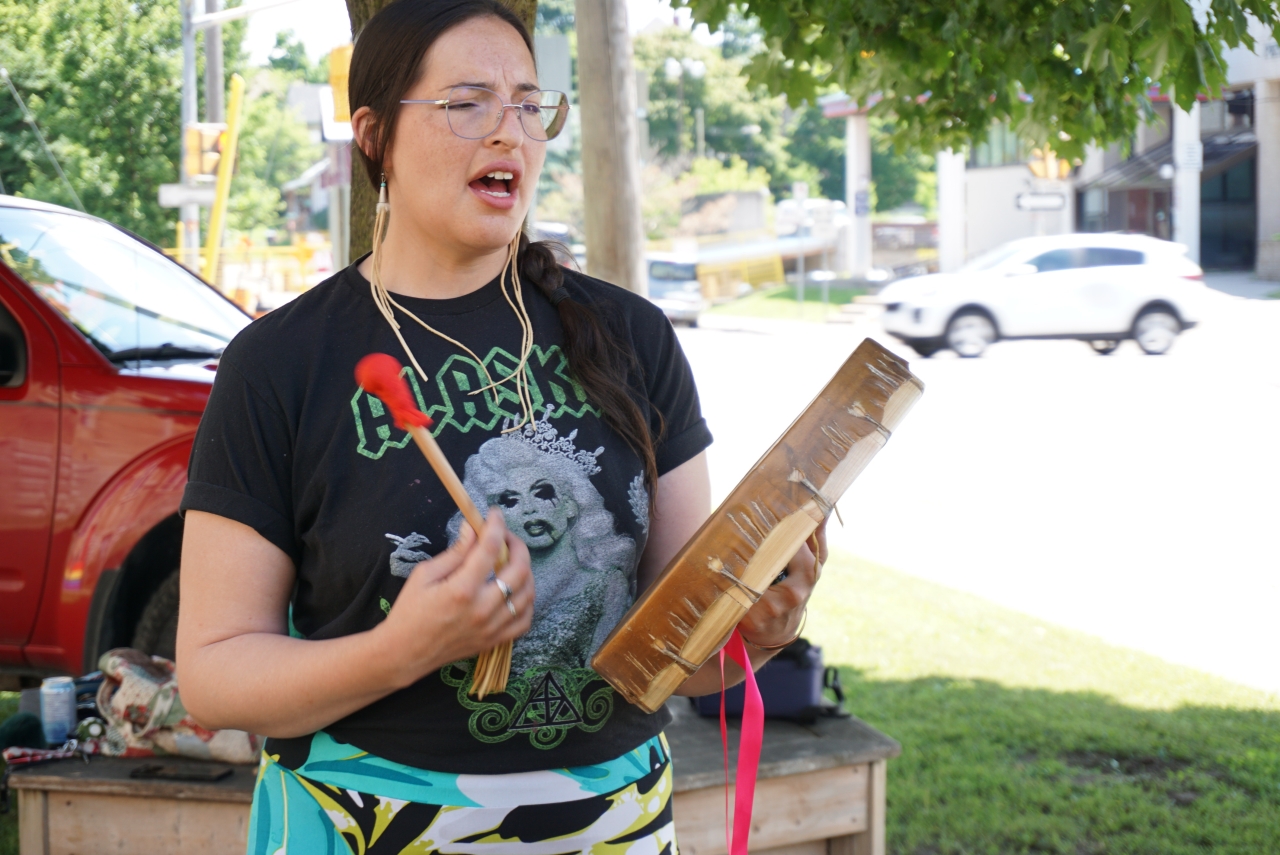
When Mshkiki Gitigaan, Serene Brennan, and Mkwa Giizis arrived at Chris’ Garden, a collection of raised garden beds on the south lawn of Emmanuel United Church, they were expecting to raise their drums and their voices in song as they always do on Fridays.
What they found there made them pause, however. Someone had recently torn plants out of the garden, which is stewarded by Giizis and other close friends and loved ones of the late Christopher Garvey. The group took time before drumming to carefully replant the mugwort which had been pulled up by its roots and discarded on the ground.
“This is medicine,” Giizis said, while patting soil over the roots and adding fresh water. “Just throwing it out and wasting it is not okay.”
The group discussed with church staff how to communicate to others the significance of the garden; perhaps a sign could be put up to make it clearer that it is a memorial, for example.
Then, they stood in the garden and started to sing. They harmonized and drummed as they sang “Wildflower,” written by Indigenous Elder and musician Barbara Hooper.

“This song is good medicine,” said Gitigaan, whose name means gardener in Anishinaabemowin. “We sing it when we see an injustice that needs to be addressed.”
She explained that activism and the arts are fundamentally connected in her personal life, and in her daily practice of art-making. “It’s kind of in my blood,” she said. “My ancestors, my family, all are very artistic people – from beading, painting, jewelry making.”
“Myself and so many other multidisciplinary artists use these traditions to express our discomfort and anger towards what’s going on in the world,” she added. “And sometimes someone’s eyes will be caught by a piece of art, and that’s what stops them and starts the conversation where otherwise a conversation wouldn’t have happened.”
She recalled another time that she used the arts as a tool for social change, when in October of 2022 she stopped to pick some cedar at Barnardo Park on her way to a rally for missing and murdered Indigenous women.
“A white man stopped me and told me I couldn’t pick medicines on his property, but it was a public park,” she said. “He acted out a rifle motion, so it was really scary. But the same day I was able to make a poem to express how I felt in that moment and I was able to share it at the march. It felt really powerful to do that.”
Gitigaan continues to perform and advocate for her community. She sang and drummed at Trent Radio’s Rise Against the Machine event this June. That was a night of music by social activists held at Jethro’s Bar and Stage and broadcast live across Peterborough.
Another artist on the roster for that evening was Karol Orzechowski, also known as Garbageface. He played songs from his newest record, Enantiodramia. The title refers to the principle popularized by psychiatrist Carl Jung that there is a tendency for things to shift slowly towards their opposites, he explained.
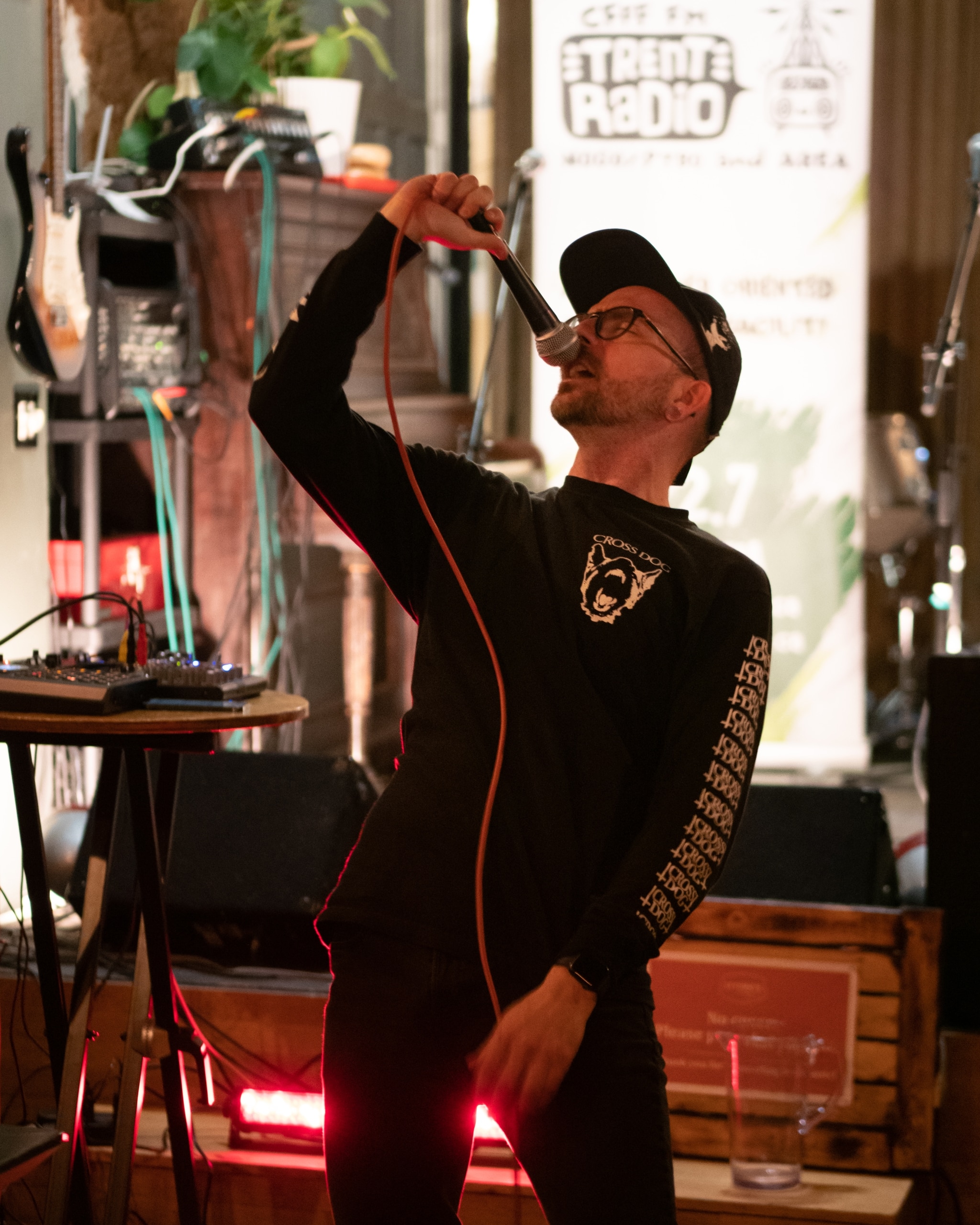
“The way I talk about it on the record a lot is the way people sort of drift from being politically conscious to becoming more conservative, from being spiritual to kind of losing faith, or even in the opposite direction from being very closed minded to being open minded,” Orzechowski explained. “I’ve really focused on the idea of what social progress means.”
Orzechowski delivered his political messages through musical alter ego, Garbageface. The artist rapped, screamed, and sang into the mic while moving through the audience at Jethro’s, sharing intimate moments of reflection while heavy bass blared around him. He described his record as doom-rapper industrial-soul music, focused on the themes of technological progress and how it is presented in western society.
“We hear a lot that the industrial revolution was supposed to make work easier, that technology was supposed to give us more leisure time,” he said. “Especially in the current time, we’re being sold a lot of things like the promises of AI and how it will eliminate jobs but mean lighter work. I think we’ve seen that enough times to know it’s not true.”
Orzechowski said that as a teen, he was deeply affected by political music and often felt driven to learn about the issues behind the song lyrics. Now, he uses his own music to introduce audiences to new ideas.
“I’ve heard people say that the things you believe when you’re 20 are the things that you’re going to believe forever, and I don’t think that’s true. I do think the potential to change people’s minds exists very much. It’s always possible.”
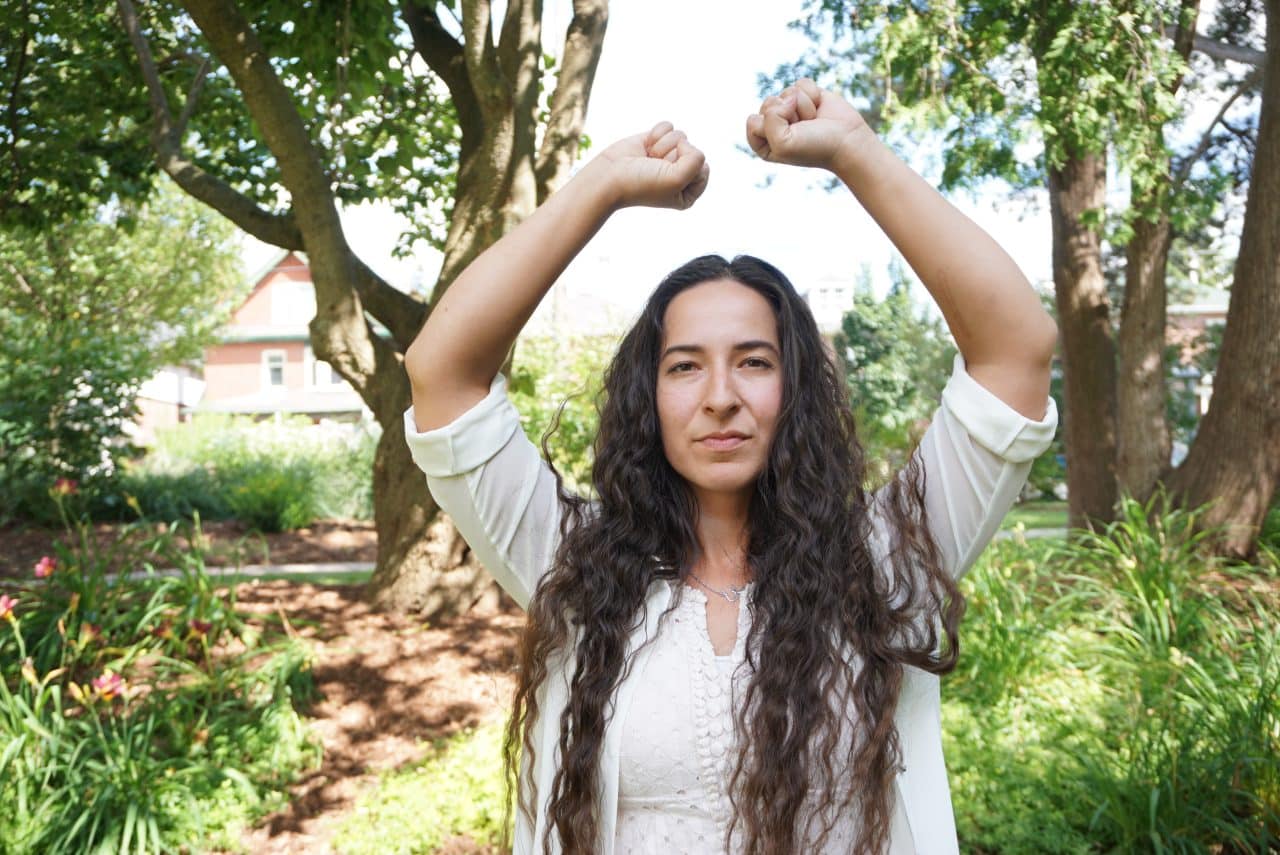
For Sara “Shahrazi” Shahsavari, art is less about changing minds and more about making connections, both within herself and across the arts community.
“I’ve always been artistic, like growing up drawing and singing,” she said. “I had way too many feelings for the world, and reactions that I just didn’t understand, so I’ve taken years to figure out and untangle and unwind and unravel it all through my art.”
Shahsavari is a painter, singer, belly-dancer, and musician. Over the past decade, she helped bring a rock camp for girls to Peterborough, created a music group for refugee families accessing services at the New Canadians Centre, and founded Borderless Music and Arts Festival and Borderless Records.
Since 2016, Borderless has offered marginalized artists across all disciplines paid opportunities to showcase their work in Peterborough. “The mission of Borderless is definitely to empower marginalized artists to take up space, build their artistic practice, connect with others, and use art as our healing and our resistance,” Shahsavari said.
“I wanted to independently organize to see more organic and authentic diversity and inclusion, raise awareness of social issues, put women, queer, neurodivergent BIPOC artists at the forefront as headliners and leaders, try to decolonize our community, and get more people mixing with each other.”
In her art, Shahsavari explores themes related to diaspora and separation, the pain of migration, seeking connection, spiritual exploration, building a home, and decolonization. She also focuses on women’s rights and violence against women here and in Iran, where her father immigrated from.
“I feel so lucky to use my voice here. Women in Iran can’t sing, they can’t dance. And thanks to my dad, I’m here now,” she said. “It’s no coincidence that I’m an artist and that I’m putting myself out there. I’m really in allyship with women across the world struggling against oppression.”
Author

Related Articles
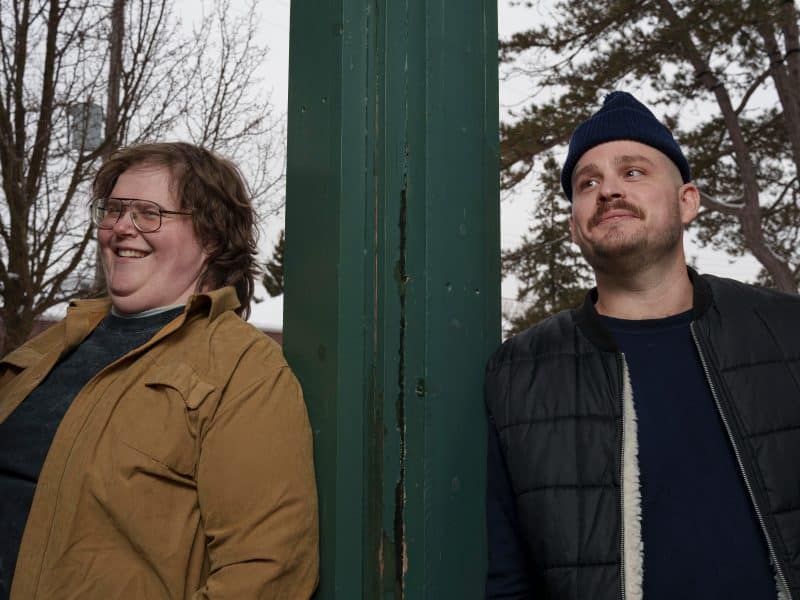
Mikey and Corm’s sober song
Cormac Culkeen and Michael Cloud Duguay share a deep musical bond that was “reshaped by recovery.” Here’s how quitting drinking brought them back to Peterborough — and back to their friendship.
Citing burnout, the creative minds behind Peterborough’s Theatre on King will take a final bow this spring
Ryan Kerr and Kate Story are resigning their roles at TTOK, but the black box theatre will continue under new leadership

This one-woman show was a model for accessible performance
Attending “Blind Dates” by Vivian Chong was “very rewarding,” according to John Morris, who attended the production along with other members of the local blind community.
