
“We have some work to do”: More diversity needed in Peterborough Public Library’s collection, CEO says
An audit of books for children and young adults found a shortage of titles by racialized, LGBTQ+ and disabled authors
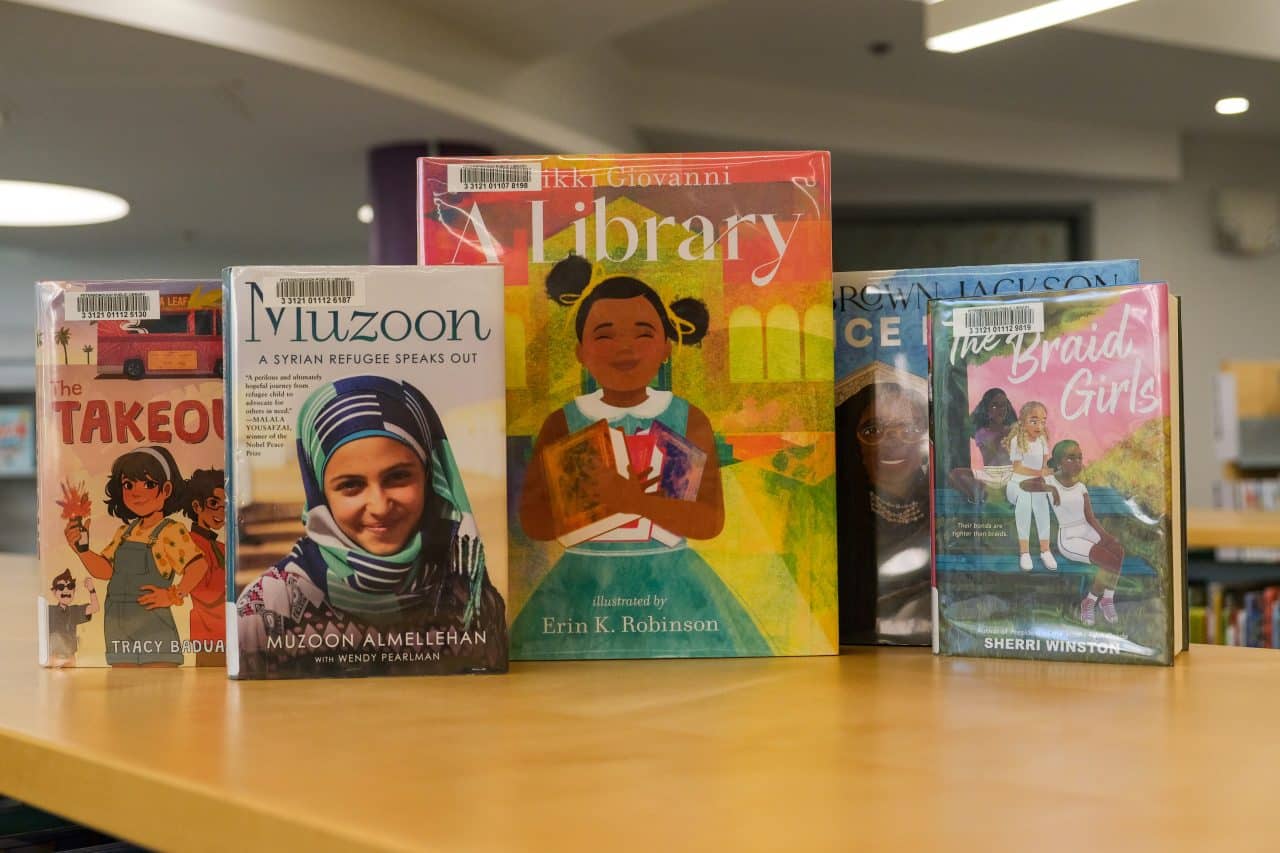
The Peterborough Public Library’s book collection needs to adapt to reflect the city’s growing diversity, according to a recent report by library staff.
The report states that only 11 percent of children’s fiction and 16 percent of young adult fiction books are written by a diverse author, according to a partial audit of the library’s print collection.
A diverse author is someone who is other than “white, cisgender, heterosexual, nondisabled [or] neurotypical,” states the report, which was submitted to the library’s board of directors this month.
“We want to make sure that we make our collection more diverse,” library CEO Jennifer Jones said. “We have some work to do.”
Staff have only audited the children’s and young adult collections so far; next up is the adult collection. However, collections software the library uses estimates that only 1.7 percent of the library’s entire print catalogue is considered diverse – below the Ontario average of 2.5 percent, the report notes.
Jones said librarians haven’t heard many complaints about a lack of diversity on library shelves, however they have received requests for more books that reflect the experiences of people in the LGBTQ+ community specifically. That feedback led staff to start acquiring more LGBTQ+ titles in recent years, Jones said.
“We want to have books that make you feel welcome and that make you see yourself in the collection,” she said. “You want to know that you’re not alone.”
The library has also made strides in adding more titles by Indigenous authors in recent years, though there is still a lack of other racialized voices in the library catalogue, Jones said.
Graphic novel collection most diverse
The report notes that only about 15 percent of children’s fiction books feature non-white characters. Characters with different racial and ethnic backgrounds are more prominent in the young adult section, where racialized characters can be found in 35 percent of titles.
“Young adult fiction titles also have a higher percentage of characters that have mental health and addiction concerns, body diversity, LGBTQ2+ [identities], and non-traditional family structures than children’s fiction,” the report states. “In some of these cases, low percentages are to be expected as there are likely few children’s titles that are about some of these subjects in publication.”
Additionally, children’s holiday picture books mainly reflect Judeo-Christian traditions and characters with a disability are scarce within both children’s and young adult titles, the report states.
Jones also noted that the library’s overall collection lacks titles that deal with substance use and addiction. That’s something the library needs to improve on because of the huge impact the toxic drug crisis is having on Peterborough, she said.
Diversity is highest within the graphic novel collections for both children and young adults. Slightly more than 21 percent of children’s graphic novels and almost 44 percent of young adult graphic novels are written by a diverse author, according to the report. Meanwhile, racialized individuals are featured in 78 percent of biographies and memoirs in the young adult section.

Potential to offend is not a reason to remove books from collection, CEO says
The report recommends that diverse titles should make up 10 percent of every book order the library makes going forward, with a goal of increasing the diversity of the overall collection by two percent each year. But Jones said that does not mean the library will toss books from the existing collection that are not considered diverse enough.
“We don’t usually throw fiction books out unless they’re physically old and gross [or] not being used,” Jones said. Titles can also be withdrawn from the collection if they are “out-dated, unreliable, or misleading,” if “more current materials on a subject become available” or if “space is required for new materials,” according to the library’s materials selection policy.
The policy notes that many materials in the collection “are controversial and that any given item may offend some patrons.” Just because some may find a book offensive does not mean it should be culled from the collection, Jones said.
She gave the example of the Little House on the Prairie book series, which includes racist depictions of Native American and Black characters.
While the books “can be offensive,” they also offer “a pretty good representation or snapshot of how people in the 1800s treated Native Americans,” Jones said.
“Do we throw it out? That’s the question,” she said. “Our answer is no. No one’s upset about the book. No one has complained about the book. It’s not factually inaccurate, which would be a reason to throw the book out.”
In another case, Jones said the library did remove a book, whose name she did not recall, that included depictions of scalping because it was “misrepresenting the Indigenous cultures of the area and it was factually inaccurate.”
Peterborough is rapidly becoming more culturally and ethnically diverse, with the number of racialized people in the city growing by 59 percent since 2016, according to 2021 census data. “Visible minorities” now make up 9.4 percent of the population.
Author

Related Articles

Mikey and Corm’s sober song
Cormac Culkeen and Michael Cloud Duguay share a deep musical bond that was “reshaped by recovery.” Here’s how quitting drinking brought them back to Peterborough — and back to their friendship.

Citing burnout, the creative minds behind Peterborough’s Theatre on King will take a final bow this spring
Ryan Kerr and Kate Story are resigning their roles at TTOK, but the black box theatre will continue under new leadership
