
Mikey and Corm’s sober song
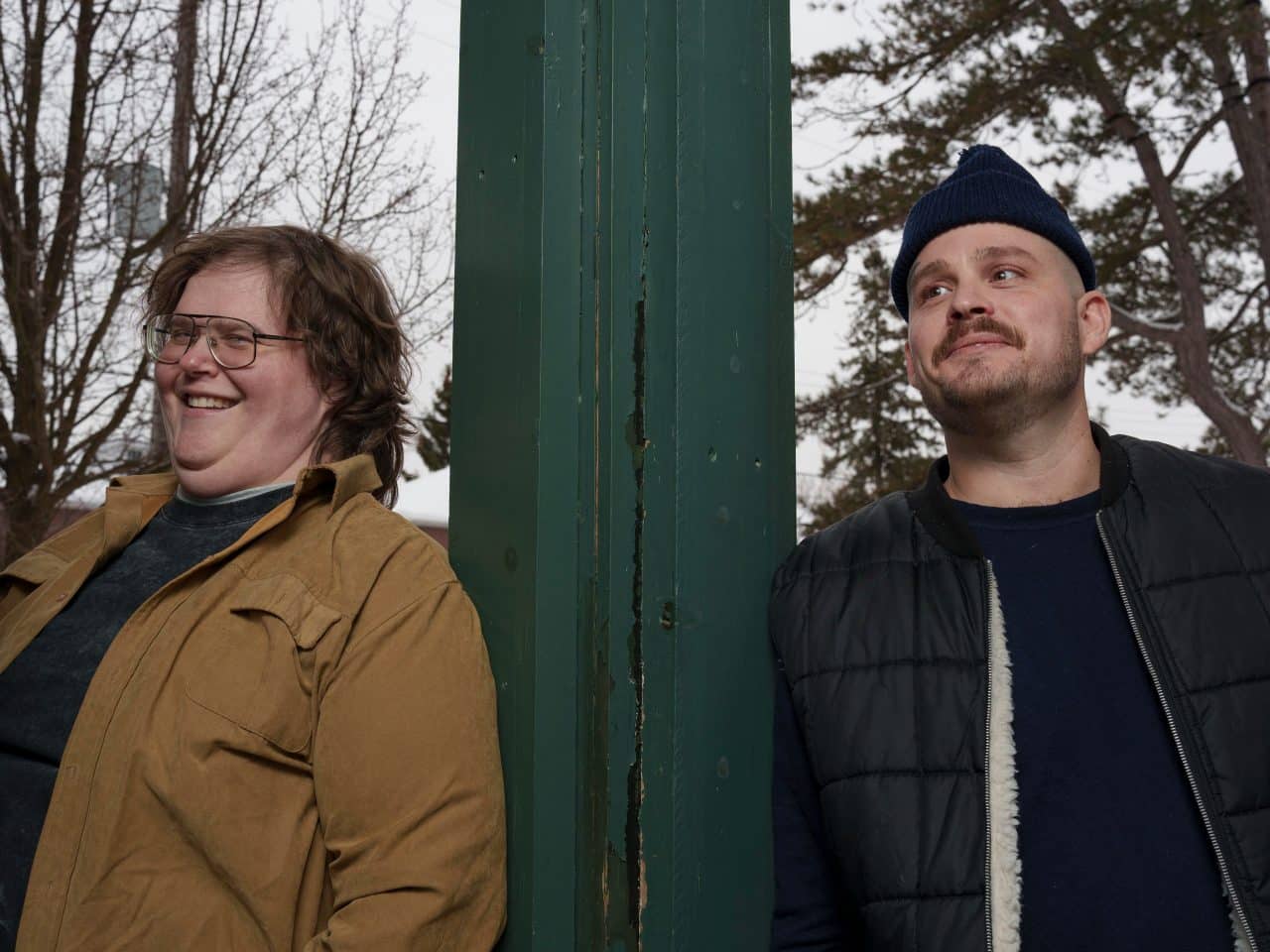
Cormac Culkeen and Michael Cloud Duguay share a deep musical bond that was “reshaped by recovery.” Here’s how quitting drinking brought them back to Peterborough — and back to their friendship.
This article was originally published in the Spring 2025 issue of the Peterborough Currents Magazine, which Currents released on May 12, 2025. The magazine is free or pay-what-you-can, so if you prefer to read long, in-depth stories such as this one in print, feel free to grab a copy. More information here.
Like many in Peterborough, Michael Cloud Duguay remembers the first time he heard Cormac Culkeen sing.
It was more than 15 years ago, and Culkeen was working as a barista at Natas Café, where they would spend their days singing out loud while they served customers at the counter.
“They didn’t even try to stop me,” Culkeen laughed. “I was giving the people what they needed — caffeine! So no one ever complained.”
Duguay is sure his jaw dropped when he first heard Culkeen’s voice at the Café. “Nobody else sounds like Corm,” he said.
Others echo that sentiment. “Holy” is how local poet and artist Esther Vincent described Culkeen’s voice. “Cormac seems to just draw spirit out of the ground and it radiates everywhere they go,” Vincent said.
For Duguay, the voice was unforgettable. It “got sort of implanted in my brain as a constant theme and companion,” he said. “Whenever I write music with lyrics… I hear Corm singing it.”
Today, Culkeen and Duguay share a friendship rooted in respect and creative camaraderie. They record and gig together across the country. And they encourage each other as they go form one success to another. Culkeen earned a Polaris Prize nomination for their 2022 album with the drone-hymn duo Joyful Joyful and Duguay’s recent record, Succeeder, landed on a year-end list of the best Canadian music of 2024.
But it wasn’t an easy path from Natas to now.
The friends came up together as two “ambitious and reckless young people” in the “small, freaky incubator” that was Peterborough’s late-2000s music scene, as Duguay put it. They made records, shared stages, and even launched a short-lived art venue. But they also drank a lot — and their struggles with alcohol nearly ended their careers and their friendship. They stopped speaking to each other and they left town to walk separate, sometimes dark, paths for several years.
Eventually, though, friendship and sobriety brought them back to music, back to each other, and back to their hometown.
Coming of age in Peterborough’s freewheeling music scene
“We were young,” Michael says of his and Cormac’s first experiences playing music in downtown Peterborough. The friends remember biking to concerts with instruments strapped to their backs and hanging from their handlebars, picking up as many gigs as they could to hone their craft.
Back then, there were more opportunities for young musicians to learn and perform, according to Michael. “There was a lot of cross-pollinating,” he said. There were often open invitations to jam and bands would swell and shrink based on musicians’ availability.
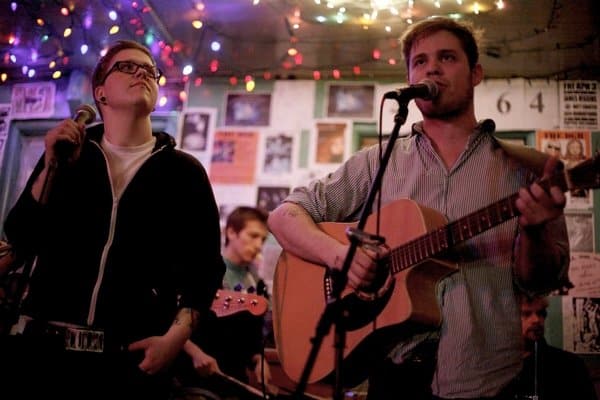
The size of the stage was the only limit to how many people could be in a band, Cormac joked.
A lot of factors contributed to the fertile scene. Cormac and Michael credit access to low-barrier venues, lower living costs, and the presence of PVCS and Trent’s downtown colleges as some of the big ones.
“The campus, the high school downtown, all ages venues; they were all synchronized in a way,” Michael said. “It certainly doesn’t feel that way anymore.”
Cormac remembers playing all-ages concerts at the now-closed bar and café The Spill with their band Candle Cave Ensemble, which was “the zeitgeist band of PCVS at the time,” they said. “Those shows were crazy, because there was like one bajillion high school kids just losing it… just loving the music.”
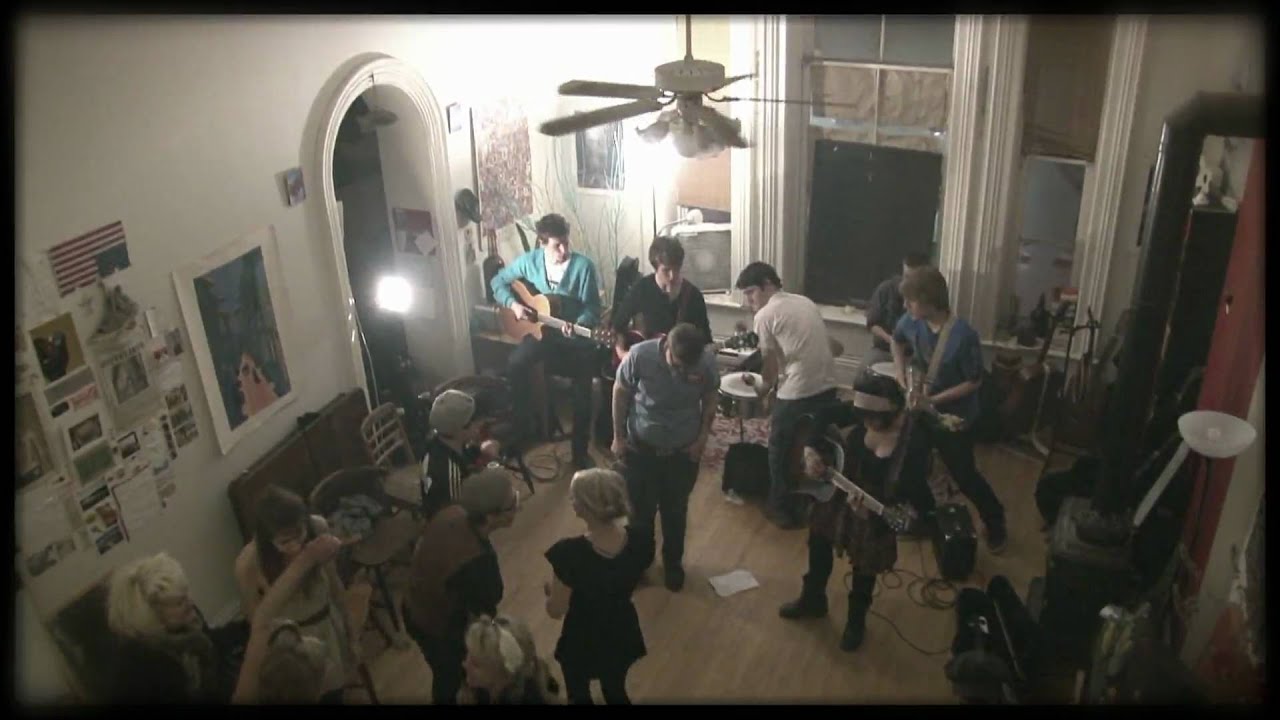
Sometimes, the music migrated to private spaces. A YouTube video posted in 2010 and still viewable today documents a Candle Cave jam at Cormac’s downtown loft apartment. More than a dozen musicians and attendees sing and stomp until a stern-faced man shows up at the front door. “Ladies and gentlemen,” Cormac tells the group, “the police are here.”
Another video depicts a dozen people, including Cormac, crammed into Michael’s downtown Hunter Street living room to record vocals on what would become Michael’s first album, Heavy on the Glory.
“We just recorded all day, every day,” Michael said. “And there was a lot of people coming and going and contributing freely.”
The freewheeling vibe was formative for Michael, who to this day thrives by inviting large groups of artists to collaborate.
“To be faithful to your own musical vision, you need to incorporate a lot of people,” Cormac said to their friend. “It speaks to the strength of you as a leader… that you’re like ‘I need every cook in this kitchen now.'”
The welcoming approach is appreciated today by local guitarist Ryan Perks, who played on Succeeder and collaborates with Michael in the local rock band Valleyspeak. “He really wants everyone to be themselves and to feel comfortable, and empowers people to be the best version of themselves,” Perks said.
Friends ran a short-lived downtown venue that was “overflowing with creativity”
The two friends were egging each other on. When Michael came to Cormac and said he wanted to open a combination music venue, art supply store, and gallery on Hunter Street, Cormac was all-in, too. The Cannery Art Centre opened in September 2010.
“We spent all this time planning our grand opening,” Michael said. “It was unequivocally successful. Everyone in town came. It was super, super fun.”
But the next morning, Michael opened the shop for the first real day of business. “I remember going in, turning on the lights, and sitting down, and just going: ‘Fuck. What were we thinking?'”


Today, Michael and Cormac are proud of the art they showcased at the Cannery. But they both acknowledge opening the venue was a mistake.
“It was the sort of thing that only two very ambitious and reckless young people in a town this size could pull off or even see as an opportunity,” Michael said.
“Michael and Cormac just created a space together that was about the art community,” said local musician Dave Tough. “There was no kind of ulterior motive. It was all about music and visual art, and just sort of overflowing with creativity.”
But Tough warned the two friends from the beginning that running the venue would be a challenge.
“It couldn’t survive without some sort of predictable money-making aspect,” he said. “As it was, it had a liminal, untroubled feel to it. It barely existed.”
“I really saw alcohol as part of the image”
It didn’t help that by this time the two friends “were both active alcoholics,” according to Cormac.
The duo recounted fond memories of partying and shared “funny, hilarious memories.” But Cormac, who today is a youth worker at All Saints’ Anglican Church, now looks back on some aspects of the late-2000s arts scene through a more critical lens.
“In retrospect, I’m really aware of some of the things that weren’t acceptable,” Cormac said. “There was a lot of underage drinking, and I thought that was very, very normal.”
Cormac recalled Michael getting served as a teenager playing in bar bands alongside adults. “Those weren’t actually good environments,” they said.
“There was this thing where it’s like if you could play good enough, potentially, it didn’t matter that you were underage,” Cormac said.
To Michael, drinking just seemed to be a part of what it meant to be a musician. “I really saw alcohol as part of the image,” he said. On one occasion when he couldn’t get away with drinking on stage because he wasn’t 19 yet, Michael filled a wineglass with grape juice just to fit in, he said.
Later, Michael’s first priority when counting his bands’ gig money was often ensuring there was enough to buy himself drinks, he said.
Less than a year after the Cannery opened, Cormac and Michael were out of money and refusing to speak to each other. A co-op student was delegated to pass messages between them as they ended their business partnership. “It was like a bad divorce,” Cormac said.
In the months that followed both Cormac and Michael left Peterborough and tried to start over, but their addictions followed them.
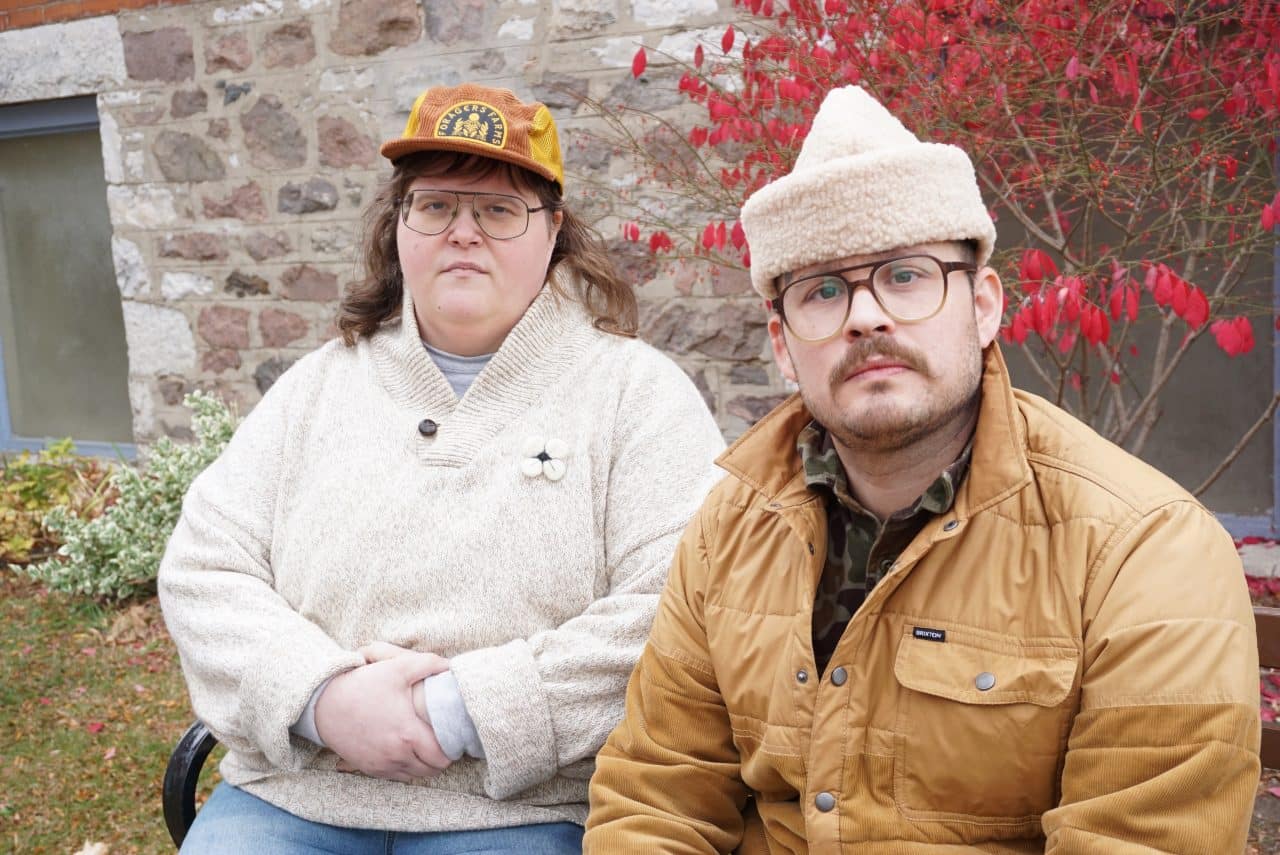
“The hard thing about being a musician and being in the middle of an addiction is that you stop being able to do the things that are absolutely necessary for being successful,” Cormac explained. “You need to be able to answer a phone call; you need to be able to show up for a sound check; you need to be able to pay your bandmates and not spend all the money on liquor. Even if I can sing my head off, it doesn’t matter if I can’t be trusted to show up and be professional.”
So, they both stopped getting calls to perform, and they stopped playing music. Cormac continued working in a coffee shop in their new Toronto neighbourhood, supported by nearby friends and loved ones.
Meanwhile, Michael shared that “the scaffolding fell off of my life completely for a long time,” after he moved to New Brunswick in 2012.
“I moved to a province where I knew nobody,” he remembered. “Two years later, I was incarcerated. I was hospitalized for a month and a half at one point, and I just wound up being spit out of that with nowhere to go.”
Michael said that he received treatment at addiction rehabilitation facilities five times as he traveled from coast to coast, often having no place to stay after completing the rehab programming.
“Music wasn’t on the table at all,” he said. “I wasn’t listening to music, I wasn’t playing music. There were years where I was completely underground and I couldn’t think straight about anything.”
Cormac turned to Michael in the empty All Saints’ Church and choked up as they listened to Michael sharing the painful memories. “I think about that version of you and it’s so sad because it’s difficult to think about who you are without music,” they said. “It really underscores how sick you were because you’re a musician. This is all you’ve ever done.”
A relationship that was “reshaped by recovery”
From their new cities, Michael and Cormac “tried to patch it up a little bit,” Cormac said. But they both got “sicker,” they said, and the friendship stayed on the rocks. A phone call from Michael in 2015 changed the trajectory. He reached out to tell his friend that he had enrolled in a rehab program for the first time.
“The fact that Mikey was getting sober at rehab was crazy, because I just didn’t know it was possible,” Cormac said. Inspired, they followed Michael’s lead. “I wouldn’t have gotten sober if Mikey hadn’t gotten back in touch with me around then,” they said.
Cormac stopped drinking in February 2015 and found that they could once again “write music with a clear head.” They formed their new band, Joyful Joyful, with their friend Dave Grenon just a month later. The drone-hymn duo’s signature sound is defined by Cormac’s soaring vocals mixed with their bandmate’s rich electronic ambience.
Although Michael faced more pitfalls and stumbling blocks along the road to sobriety, he landed on his feet in 2019. Cormac had just moved back to Peterborough that September. “Corm and I had been in touch again more and more,” Michael said. “I would say our relationship was reshaped by recovery.”
At first, Michael was wary of music, which he associated with his old lifestyle. “I was nervous,” he said. But eventually he got back on stage, joining Joyful Joyful on a short tour that Cormac said proved to themself they could “be relied upon.”
“I think getting out on the road together around that time was probably a little bit to demonstrate that to one another too,” Michael said. “We were able to show each other that we were capable of doing this thing, and there was validation in that.”
It was all the encouragement Michael needed to dive back into songwriting. During the COVID-19 lockdowns he wrote a set of songs about his experiences coming of age in Peterborough, songs about “bar bands, rural fields, late-night kitchen parties, many voices joined in song,” as he put it.
When it came time to record the material, it was clear it had to be done in Peterborough. Michael arranged with Cormac to record at All Saints’, and Cormac’s voice is prominent throughout Succeeder, the 2024 album that resulted from the sessions. The two friends organized a huge cast of creatives to contribute to Succeeder, and they did so with a level of attentiveness and professionalism that didn’t go unnoticed by their collaborators.
“I see them as two very focused people,” said Ryan Perks, who played on the record. “It’s probably not unrelated to the fact that they’re two sober people. They practise sobriety in a very active way… and through lots of practice over the years have cut out a lot of distractions that would otherwise kind of take away from their art.”
Michael said working with Cormac and other local musicians to make Succeeder was pivotal. During the process, he found himself “pining to be in Peterborough again.”
Last few years have been Culkeen’s and Duguay’s “most fruitful time” together as musicians
Michael moved back to Peterborough in 2023. Now, both are home in the city that shaped them, and the two friends have become “serial collaborators” again. The last few years have been their “most fruitful time” together as musicians, Cormac said.
After Succeeder, the friends joined forces with Grenon from Joyful Joyful and Halifax’s New Hermitage Collective to form an experimental ensemble called SCIONS. Their 2024 record, To Cry Out In The Wilderness, fuses jazz, ambient folk, and other elements into a brooding suite of sound journeys punctuated by Cormac’s plaintive articulations of loss and hope amid the climate crisis.
The record features 23 different musicians and was recorded using a portable solar powered studio in Halifax. “The projects aren’t getting any less ambitious,” Michael quipped.
At home in Peterborough, Michael works behind the scenes to animate the local arts community. His Miracle Territory concert series brought together artists from Peterborough and across Canada to play intimate all-ages shows in unexpected local venues throughout 2024.
“Community is at the centre of my practice,” Michael said. “Community is the antidote and antithesis of the fear and isolation of active addiction.” He explained that he chooses to play and program events in unorthodox venues like book shops and churches to make his little corner of Peterborough’s music scene more accessible to everyone.
But things have changed in Peterborough over the last few decades. The downtown feels “hollowed out” and the crushing cost of living has made music less accessible for young people, the friends point out. Venues have closed, and those that remain have to be “more careful” in their booking policies to ensure they can pay their rent.
Despite all this, “it’s still a magical town for music,” Cormac said.
That magic was on display this winter during Highly Likely, a four-day festival organized by Michael and the owners of Take Cover Books. During a matinee on the festival weekend, Cormac performed as King Spatula, a royal alter-ego with a shaggy green beard who delighted children with zaney songs.
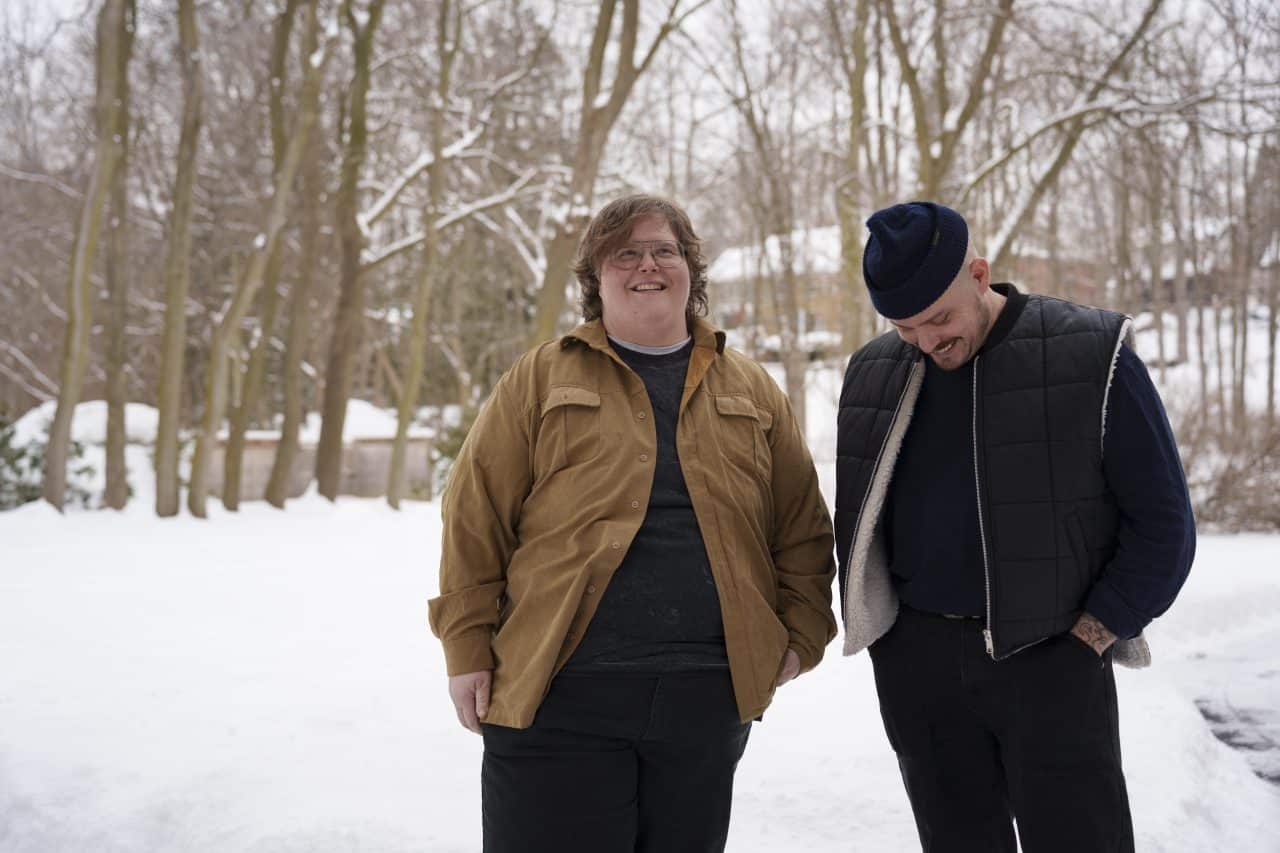
Some things haven’t changed since the late-2000s. Cormac’s voice still cuts through the din and arrests attention. Michael still gathers diverse artists for unexpected collaborations.
The difference, though, is the duo’s increased capacity to realize their talents and vision. “You hit a ceiling,” as a drinker, and your career can’t move past it, Cormac said.
Now, the musician and youth worker is “proud to be a leader in this community,” and to advocate for others living in desperate situations.
“Addiction is not a moral failing. And sobriety is not a moral victory,” Cormac told Peterborough city council members in December 2022.
As for Michael, today he takes pride in paying invoices and answering emails quickly. Gone are the days when he’d skim money off the top to feed his addiction — he loves budgeting and strives for transparency.
“Healing is in a spreadsheet!” Cormac laughed. “I’m just really glad to be able to be around for this part of your life where you’re ambitious and honest and forthright and accountable,” they told their friend.
If you or a loved one are struggling with alcohol use, there are people in the community who want to help. Consider reaching out to the local branch of Alcoholics Anonymous, which has volunteers on-call seven days a week.
Author

Related Articles
Citing burnout, the creative minds behind Peterborough’s Theatre on King will take a final bow this spring
Ryan Kerr and Kate Story are resigning their roles at TTOK, but the black box theatre will continue under new leadership

This one-woman show was a model for accessible performance
Attending “Blind Dates” by Vivian Chong was “very rewarding,” according to John Morris, who attended the production along with other members of the local blind community.
