
Archaeologists unearth foundation of 19th century church on George Street
The foundation was buried under a parking lot, but the frame structure of the church that once stood there was preserved in the 1990s
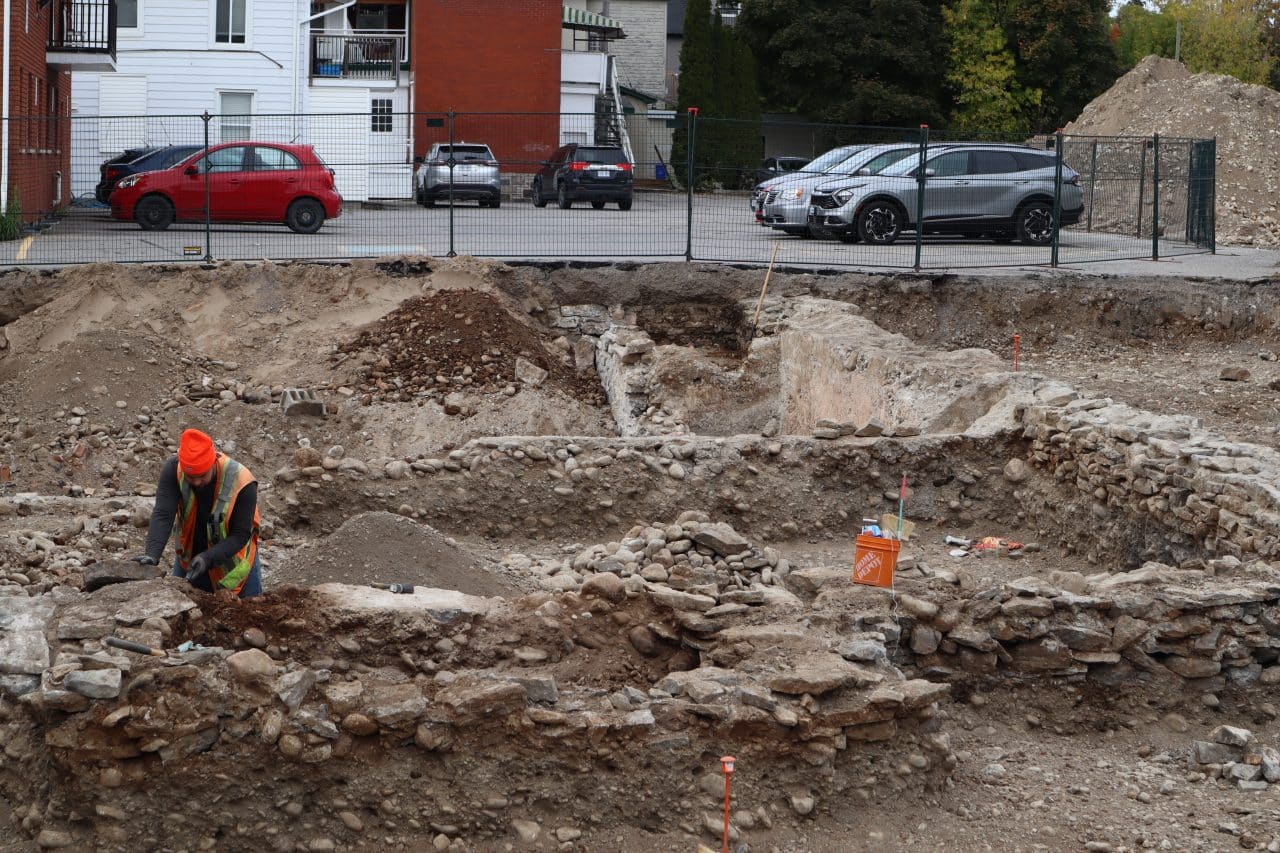
Archaeologists have unearthed a stone foundation belonging to one of Peterborough’s earliest churches near the corner of George and McDonnel streets.
The discovery was made just beneath the parking lot of the former Kaye Funeral Home and Memorial Chapel, at 539 George St., a member of the archaeological crew at the site told Peterborough Currents last Wednesday.
Dan, an archaeological field director who declined to give his last name, said the fieldstone foundation dates back to 1843. According to Peterborough historian Elwood Jones, it’s the remnants of a small house of worship where local Methodists gathered until the much larger George Street Methodist Church was built across the street in 1875. That newer building still stands today as Emmanuel United Church (formerly George Street United Church).
The city ordered an archaeological assessment of 539 George St. last year after the current owner of the property, Toronto developer ZZY Property Group, applied to build a six-storey apartment building there.

Dan said he and his team are using hand tools to “fully expose everything” on the site, including the entire 181-year-old church foundation and any artifacts that might be buried nearby. So far they have found English and European ceramics and glass, the remnants of an old boiler, and the bones of livestock and deer, he said. The team is in contact with Williams Treaty First Nations, including Curve Lake First Nation and Hiawatha First Nation, in case they find any artifacts of Indigenous origin, which so far they have not, said Dan. He declined to give the name of the company he works for.
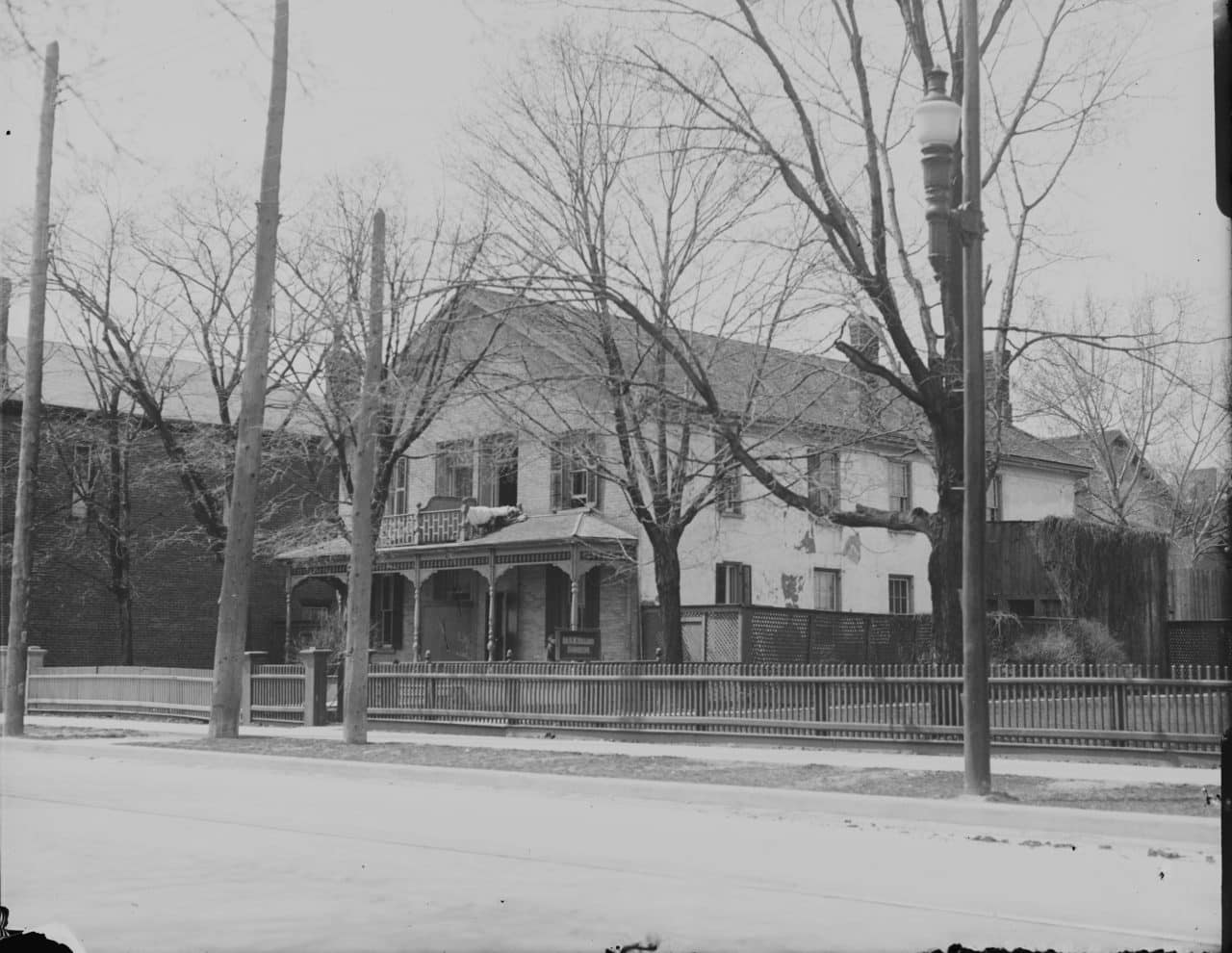
The 1843 church remained standing until the 1990s, when it was torn down to allow Kaye Funeral Home to expand its parking lot, according to Jones. But the frame of the historic structure – made of large wooden timbers – was saved and can still be seen at the top of Armour Hill today, he said.

At the insistence of the Peterborough Architectural Conservation Advisory Committee, the frame was carefully dismantled and then reassembled to become the Heritage Pavilion in Ashburnham Memorial Park, next to the Peterborough Museum and Archives, Jones said.
“If you look, you can get a chance to see what 1843 construction would look like,” he said.
The former church served other purposes after the congregation moved across the street in 1875. At some point it was converted to apartments, according to Jones. In the 1920s, a local surgeon ran his practice out of the building, said Jon Oldham, the city’s archivist.
Patricia Hanly stopped on George Street last Wednesday afternoon to watch workers brush dirt and debris away from the fieldstone foundation, which was laid several years before Peterborough was first incorporated as a town in 1850.
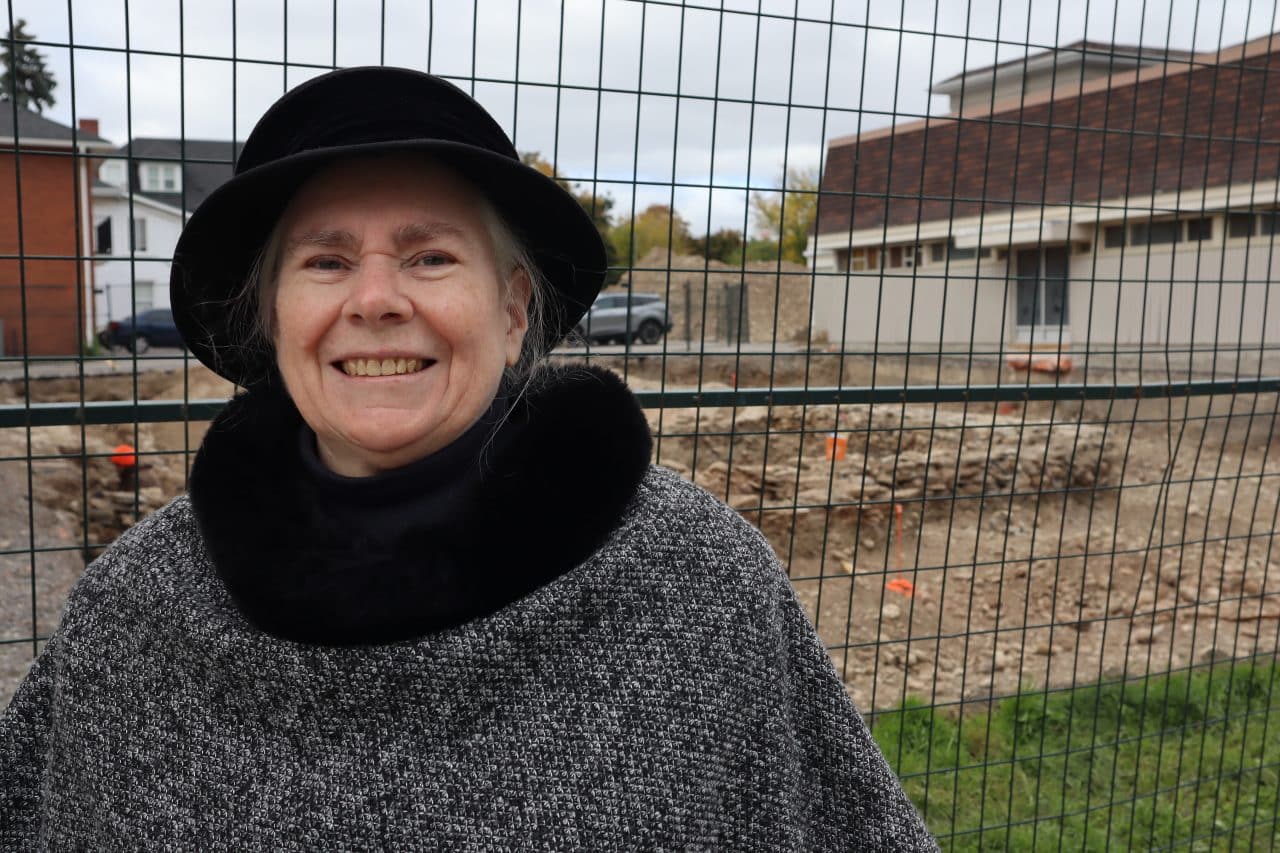
“It’s quite fascinating,” said Hanly, who studied archaeology at Trent University in the 1990s. She said she was pleased to find out that this slice of local history is being “well documented” by archaeologists. “I’ve been walking past here and wondering whether real work was being done or whether they were just going to bulldoze the site and not record it.”
Dan, the archaeologist, said everything he and his team uncover has to be photographed and documented before development can proceed on the site. A final report of their findings will be submitted to Ontario’s Ministry of Citizenship and Multiculturalism, he said.
“The goal is essentially to identify and record anything that dates back to 1900 or earlier,” Dan said.
He said there may be remnants of an even older church on the site. Methodists built an earlier, smaller meeting house on the property in 1837, according to a history of the George Street Methodist Church written by local journalist and historian Francis Hincks Dobbin in 1925. This “small chapel” became “a dwelling house for the use of the preacher” when the new church opened right beside it in 1843, Dobbin wrote.
When it opened, the 1843 church was “the largest and most commodious” house of worship in the small settlement that would later become Peterborough, according to Dobbin.
The large timber beams used to frame the structure — and which now stand at the top of Armour Hill — came from the woodlots of farmers in the congregation, who hauled them “over the snow roads of the winter” to the construction site, Dobbin wrote.
Author

Related Articles


Mikey and Corm’s sober song
Cormac Culkeen and Michael Cloud Duguay share a deep musical bond that was “reshaped by recovery.” Here’s how quitting drinking brought them back to Peterborough — and back to their friendship.

Citing burnout, the creative minds behind Peterborough’s Theatre on King will take a final bow this spring
Ryan Kerr and Kate Story are resigning their roles at TTOK, but the black box theatre will continue under new leadership
