
Community rallies to defend arts and social services from cutbacks
Dozens of local non-profits are facing 25 percent cuts to their municipal funding

Around 250 people packed onto the lawn outside City Hall on Tuesday, November 12, to raise their voices against proposed cutbacks to municipal funding for local arts and community service organizations.
Peterborough’s 2025 draft budget proposes making a 25 percent cut to the city’s community grant programs, a reduction that will impact as many as 75 local non-profit groups ranging from the Peterborough Folk Festival to the New Canadians Centre.
“I am really pissed off about this,” said Dylan Radcliffe as he addressed the gathered crowd. Radcliffe said he was “sick and tired” of having to convince city councillors “that the things that make this community special are the things that are worth keeping.”
“Our community is worth standing up for,” Radcliffe shouted over the din of the rally.

Altogether, the proposed 25 percent cut to 17 organizations’ community service grants, in addition to a 25 percent cut to the overall budget for the community project grant and community investment grant funding streams, will save the city $298,153 next year. That works out to a total savings of about $7 on next year’s tax bill for the median-assessed residential property, according to an analysis by Peterborough Currents.
The draft budget is part of an effort from city staff to respond to city council’s direction to cap next year’s property tax increase at five percent. However, even with the 25 percent reduction to community grant funding and other cuts proposed elsewhere in the budget, the tax increase remains at 7.8 percent.
Budget documents state that $2.1 million of spending cuts are required to achieve a one percent reduction to the tax increase. That means councillors would need to find $5.9 million of additional cuts to reach their target of a five percent increase. (And even more cuts would be necessary if the Peterborough Police Service is granted its full budget request of $38 million.)
Staff have created a list of options for further cuts that councillors might consider, and one of the options presented is to defund the Art Gallery of Peterborough (AGP) entirely, which could reduce the city’s annual expenditures by $771,000, according to the draft budget.
According to the budget, if the city chooses this option the AGP’s board of directors would then need to determine whether they could continue to operate, offer programming and run youth camps without city funding. If not, AGP would need to move out of the city-owned gallery building and find a new home for its art collection.
In a written statement responding to the proposed cut, AGP board chair Debby Keating said the gallery “cannot continue” to provide its services as a “cultural cornerstone in Peterborough” without the city’s ongoing support. The gallery welcomed 18,374 visitors in 2023 and is expecting about 22,000 visitors in 2024, according to a press release.
At the rally, a giant grim reaper puppet wielding a scythe floated above the crowd. “I’m here with the rest of the people to protest the cuts and give some visibility to the enormous slashing that they’re proposing to do,” said the puppet’s handler, Brad Brackenridge. “At 25 percent, half of these organizations that they’re looking at will probably fold.”

Star Fiorotto was also at the rally. She has worked for One City Peterborough and currently serves on PARN’s KT6 Crew, an advisory group advocating for harm reduction, inclusion, and belonging for marginalized community members.
“The arts are so important for us,” Fiorotto said. “They’re a radical movement that keeps us connected.”
Heath Morris, a third-year social work student at Trent University, voiced a plea for councillors to “keep in mind the most marginalized and oppressed people in our community and what they actually need.”
A common frustration expressed by speakers at the rally is that the Peterborough Police Service is asking for an 8.8 percent increase to its municipal funding while arts groups and social service agencies are facing a cut.
“When I was sexually assaulted, I did not go to the police. I went to KSAC,” said Rhea Shahe, referring to the Kawartha Sexual Assault Centre, which stands to lose $3,750 in municipal funding if the cuts go forward.
Shahe is the co-coordinator of the Community Race Relations Committee, which organized the rally and which is also facing a funding cut.
When Shahe was homeless, there was “no intervention” from the police that she could seek, she said. Instead, she went to the Community Counseling Resource Centre. “They got me housing within the month,” Shahe said.

Earlier in the day, Peterborough’s police chief Stuart Betts made a presentation to city councillors and explained why his organization needs an 8.8 percent budget increase. The increase would cover the addition of six new positions including two mental health crisis intervention team (MCIT) members, two 911 communicators, and two training staff, as well as scheduled raises for existing police staff based on their collective agreements.
Betts said the MCIT team members “are the folks the community says we want intervening with people in mental health crisis, not the police officers with the guns on the hip.”
Betts explained that the new Community Safety and Policing Act, which came into effect on April 1, 2024, comes with more stringent requirements that will be more costly to adhere to. The provincial government passed the Act, but Betts said “the expectation is that the local municipalities would pay for that transition” to it.

The police are asking for $3 million more from taxpayers in 2025 compared to 2024, which would bring the municipal contribution to the police force up to a total of $38 million. More than half of that increase ($1.7 million) is to pay for raises outlined by the force’s collective agreements and the annualization of positions hired for midway through 2024, according to a report from Betts to the Police Services Board.
That report stated that the force could maintain its required delivery standards with a smaller budget increase of $2.5 million. However, the police service would have to redeploy personnel and potentially discontinue the Community F.I.R.S.T. property crime unit if it received the smaller increase, according to the report.
Later in the evening inside council chambers, a general committee meeting where citizens had the chance to address members of council lasted until around 10:30 p.m. — well after the rally outside dispersed.
“Do not give the police the budget they have requested,” appealed community member Rob Hailman during that meeting. “The police have already outlined publicly an option below the funding they have requested. Surely, they are not so cynical as to present an option to the public that they do not believe is adequate or effective.”
Representatives from many of the community groups facing budget cuts also made presentations to councillors during the general committee meeting.
Some used their time to break down what the intended funding cut would mean for them.
Peterborough Folk Festival board chair Rob Davis explained that most of the costs to run the festival are non-discretionary and can’t be negotiated. In fact, costs to put on Canada’s longest running free-admission folk festival continue to climb, he explained. Mandatory policing costs tripled to $4,000 this year, insurance costs doubled to over $6,000 over the last two years, and hotels for artists are more expensive year after year as well, he said.
Davis shared that the only way the festival can lower costs is to pay artists less. “When funding decreases and we get squeezed, then it goes directly to our artist performance fees and the number and quality and caliber and renown of the artists that we are able to bring to this town,” he said.
The Peterborough Folk Festival is facing a $6,514 cut to its grant from the city.
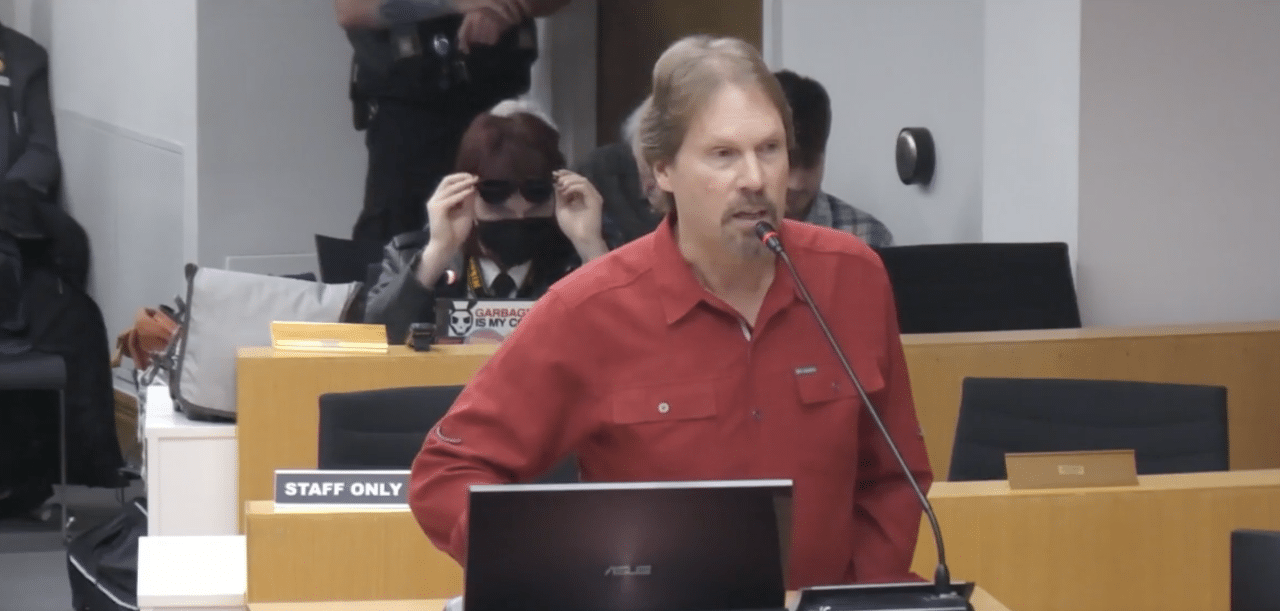
Two delegates representing Peterborough GreenUP, Sue Sauve and Ray Dart, raised concerns about what funding cuts would mean for energy conservation, climate protection, water waste reduction, and healthy transportation initiatives in Peterborough.
“Over the last few years, GreenUP has worked to respond to the rising urgency of climate change,” Sauve said. “With reduced funding from the city, however, we will have to scale back our programming at a time when action is needed most.”
Other delegates used their five minutes to express to councillors that they believe the tax dollars given to local non-profits is money well spent.
“We are proud to live here. We love it here. So please raise our taxes,” said Cormac Culkeen. “It’s worth it for a town that is worth living in.”
The 2025 budget isn’t finalized yet. City councillors will sit for budget meetings on November 18 and 19, where they will go through the budget page by page and vote on whether they want to make changes or not. The final budget is expected to be tabled by Mayor Jeff Leal on December 9.
Calculations
Our high school math teachers always told us to “show our work.” Here’s how we came up with the number $7.
- The city’s budget book (p. 10) states that cutting $2.1 million in tax-supported spending achieves a 1% decrease to the all-inclusive tax rate. Therefore, a $298,153 decrease in tax-supported spending achieves a 0.142% decrease to the all-inclusive tax rate.
- A presentation delivered by finance commissioner Richard Freymond stated that the proposed 7.8% increase to the all-inclusive tax rate translates to a $378.46 increase to the 2025 tax bill for the median-assessed property. Therefore, a 0.142% decrease to the all-inclusive tax rate would translate to a tax bill reduction of $6.89.
Over a period of 12 days, Currents sent six emails, made one phone call, and made two in-person requests to city finance and communications staff for guidance on how to perform this calculation. We did not receive an answer, which is why we are showing our work here.
Authors


Related Articles

Mikey and Corm’s sober song
Cormac Culkeen and Michael Cloud Duguay share a deep musical bond that was “reshaped by recovery.” Here’s how quitting drinking brought them back to Peterborough — and back to their friendship.
Citing burnout, the creative minds behind Peterborough’s Theatre on King will take a final bow this spring
Ryan Kerr and Kate Story are resigning their roles at TTOK, but the black box theatre will continue under new leadership

This one-woman show was a model for accessible performance
Attending “Blind Dates” by Vivian Chong was “very rewarding,” according to John Morris, who attended the production along with other members of the local blind community.
