
How else could we spend our pickleball money? A guide to Peterborough’s 2025 capital budget.
Facing service cuts and higher taxes, some citizens have questioned the value of Peterborough’s $4.4 million Bonnerworth Park redevelopment. That’s fair, but it’s best to compare the pickleball cost with other capital projects, not operating expenses.
Back in September, an attendee of a town hall on policing costs asked Peterborough’s Police Chief Stu Betts a question. “You’re looking for how many millions of dollars next year as an increase?” he said.
Betts responded that the police would likely ask for somewhere between $2.5 million and $3.4 million more in 2025, compared to 2024. (The official request, released a few weeks later, was for $3 million more.)
The town hall attendee responded by pointing out that the City of Peterborough is spending $4.4 million on its controversial plan to install 14 pickleball courts and other recreational amenities at Bonnerworth Park. “So if we don’t do your pickleball, you get your raise,” he told the police chief.
The room burst into a chorus of cheers and applause at the speaker’s comment. More than 8,000 residents have signed a petition to express their opposition to the city’s plans for Bonnerworth Park.
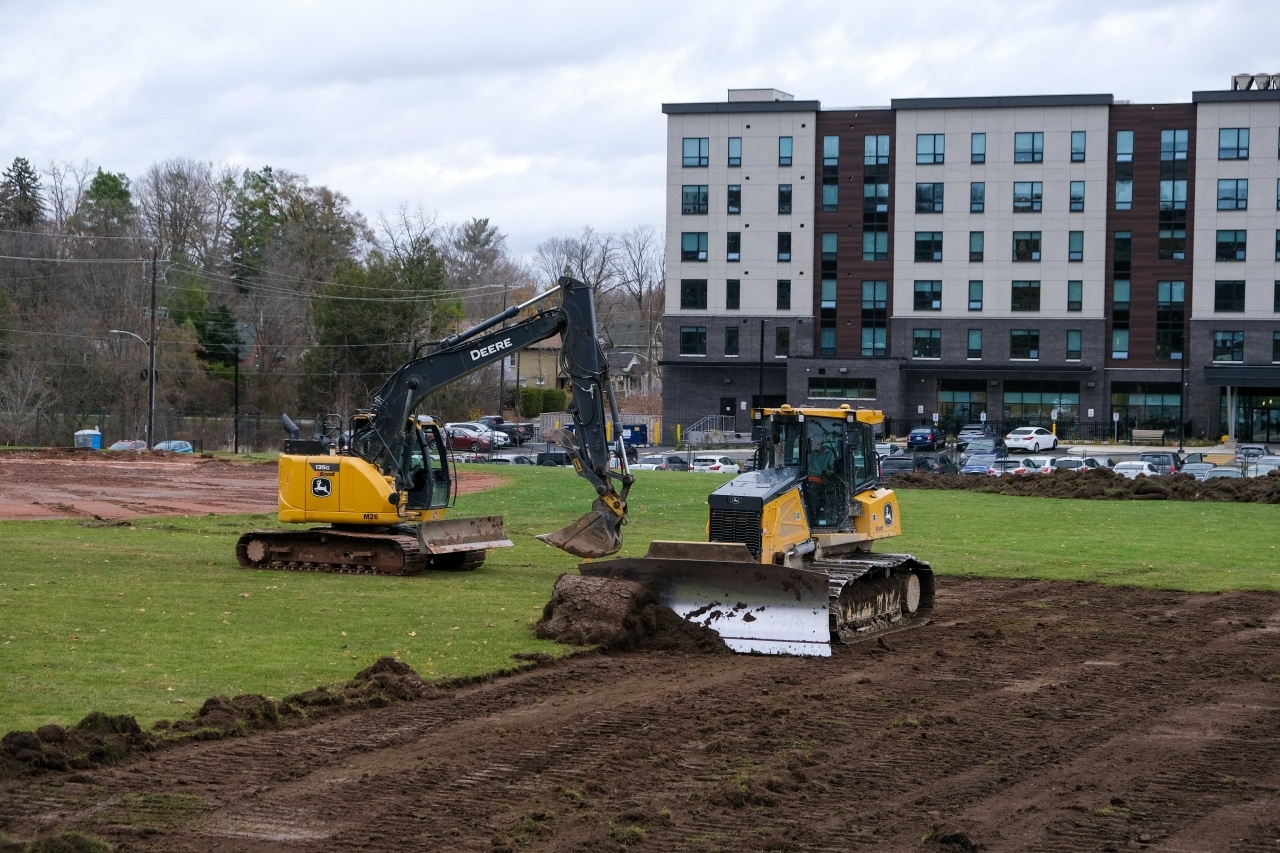
Municipal funding for the $4.4 million Bonnerworth Park redevelopment has already been approved. That happened last year during the 2024 budget deliberations, even though the full plan had yet to be revealed at that time. During those deliberations, councillors voted to dedicate $2 million from the city’s 2024 capital budget toward the project and also pre-commit $2.4 million from the 2025 capital budget for it. Not all of that money is for pickleball — the 2025 phase of the project will involve building an expanded skatepark and a new bike pump track at Bonnerworth.
Now, almost a year later, another budget season is upon us and the cost of pickleball seems to be a popular lens to view the budget process through.
Currents reported last week that the city’s draft 2025 budget proposes slashing grants to local non-profits and eliminating municipal funding for health benefits for people on social assistance while still hiking the property tax rate by 7.8 percent. The draft budget states that even deeper spending cuts will be necessary to bring the tax increase down to 5 percent, which is the number city councillors previously voted to pursue.
After we published that news, the most common response we heard from readers had to do with pickleball. During a time of municipal belt-tightening, citizens are asking: What else could we have done with that $4.4 million?
Capital projects are paid for over time
So … what could the city have done with that money if it hadn’t pursued the Bonnerworth Park redevelopment? It’s a valid question. Any capital project should be weighed against other municipal priorities. But to answer the question accurately, we need to account for the different ways the city pays for its capital and operating expenses.
The key difference is that one is debt-financed and the other isn’t.
Let’s start with operating expenses. These are costs such as wages and benefits for city staff, vehicle fuel for transit buses, or rent subsidies for low-income residents. They don’t buy anything that lasts — they’re the kinds of things that get used up as we pay for them. And we pay for them again every year.
Unlike provincial and federal governments, municipalities aren’t allowed to run operating deficits. They must plan to raise enough revenue through property taxation to cover their net operating expenses in any given year.
Capital expenses are different. Municipalities use debt-financing to pay for capital projects over a long period of time. That means the annual cost to taxpayers for a project like the Bonnerworth redevelopment is actually a fraction of its total cost.
“Simply eliminating the improvements to Bonnerworth Park is not going to provide the monies for the police services budget,” said finance commissioner Richard Freymond in response to a question from Currents at a budget briefing last week. “All it would alleviate to the taxpayer is the principal and interest of one year of the debt associated.”
Think of this like a mortgage for a house. You might be in a position to get a mortgage to purchase a house that’s worth $500,000. But if you forgo that purchase, it doesn’t mean you have $500,000 to spend on other immediate priorities right away.
To be clear: municipal taxpayers will, eventually, spend a total of $4.4 million on the Bonnerworth redevelopment. Taxpayers are still paying off old capital projects, too. The City of Peterborough currently owes about $74 million in tax-supported debt, according to the budget.
But axing a $4.4 million capital project doesn’t free up anything close to $4.4 million for operating expenses. All it would free up is the annual cost of paying back that loan.
Currents asked city finance staff for an estimate of the annual cost of servicing $4.4 million worth of debt, but we didn’t hear back. It’s safe to assume the figure would be in the low hundreds of thousands of dollars.
Peterborough faces big infrastructure backlog
Freymond made two other points during the budget briefing.
First, Peterborough’s infrastructure backlog is so deep that eliminating one capital project would likely result in shifting its funding to another capital project.
Earlier this year, Peterborough released an update to its asset management plan that pegged the city’s annual capital shortfall at $135 million. To put that a different way, the report stated that to adequately maintain Peterborough’s infrastructure and build new infrastructure to accommodate growth, the city would have to spend an additional $135 million on capital projects — every single year.
The asset management plan also stated that 21 percent of the city’s current infrastructure is in poor or very poor condition, and it would cost $1.3 billion to replace it all.
A 2022 study estimated that Peterborough had more than $900 million worth of transportation infrastructure to build by 2051.
As a result of the city’s funding shortfalls, certain infrastructure projects are continually being deferred.
The reconstruction of Sherbrooke Street in the city’s west end is still years away, for example, and until then pedestrians will continue navigating the thoroughfare without any sidewalks, something the local crossing guard called “treacherous” last year.
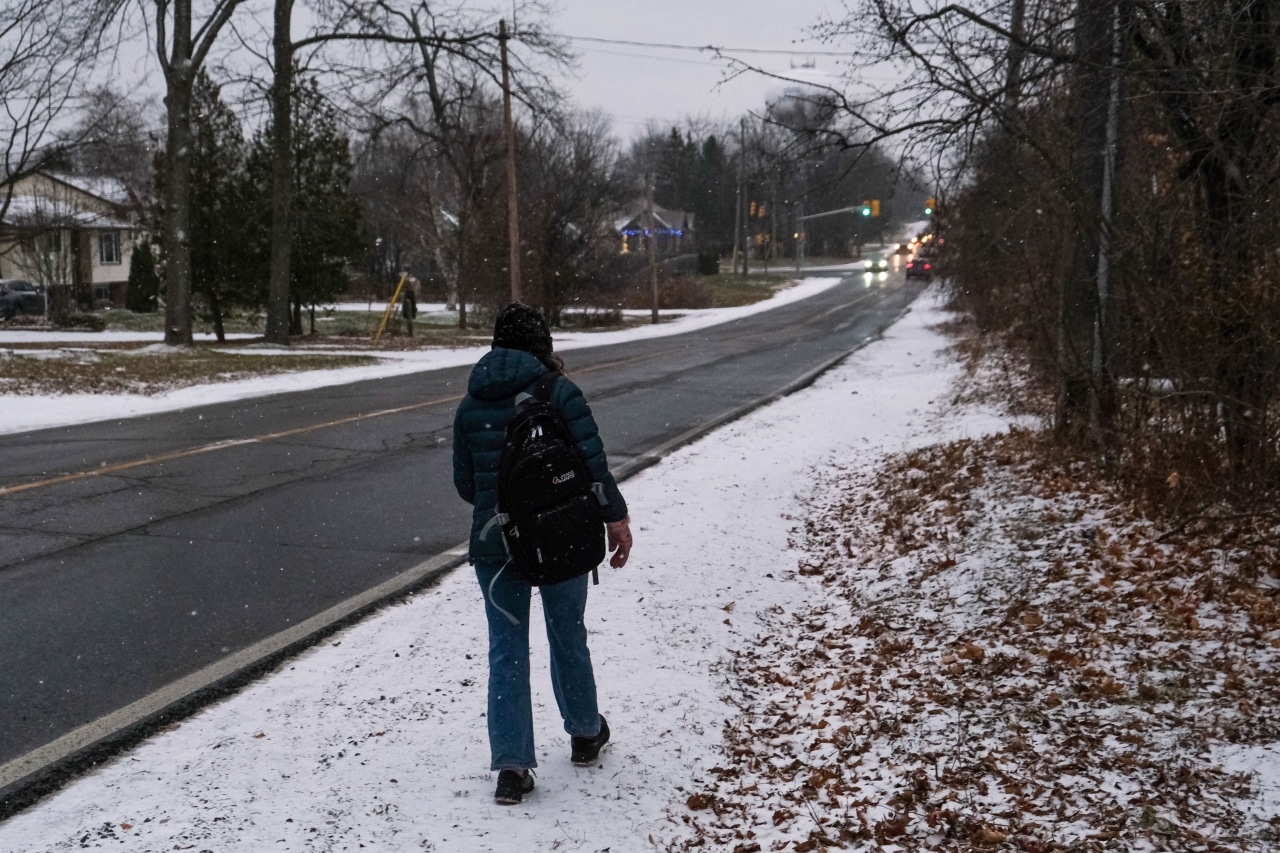
Even some projects that received pre-committed funding for 2025, such as the Otonabee River Trail project, were deferred to 2026 in this year’s draft budget.
“If it wasn’t the improvements in one park or one project, chances are council may elect to take that capital financing and put it to other projects because they’ve already been deferred,” Freymond said.
Secondly, Freymond pointed out that the city’s capital program has its own revenue sources that the operating budget doesn’t. Development charges, for example, are fees charged to developers when they build new housing to cover the infrastructure upgrades that are necessary to serve the community as it grows.
Development charges must be used to pay for “growth-oriented” capital projects, Freymond explained. “Development charges do not keep the lights on at city hall.”
So, while it’s not impossible to weigh capital and operating expenses against each other, it isn’t a perfect apples-to-apples comparison, either. For curious citizens asking how else the city could have spent its pickleball money, it’s best to look at other capital projects it could have gone toward.

What are Peterborough’s capital priorities in 2025?
The city’s draft budget for 2025 recommends $147 million in capital spending, including the $2.3 million pre-committed for Bonnerworth Park.
The biggest price tag on the list is $14.6 million to begin work on the construction of a new transit garage at 910 Monaghan Road — the property formerly occupied by the Canadian Canoe Museum. The total cost of that project, including remediation of the contaminated site, is estimated to reach $62 million by the time it’s complete. (The provincial and federal governments will kick in funding for this project, the budget notes.)
Then there’s the cost to build a new police station at 1421 Lansdowne Street W. The draft budget commits $13 million in 2025 for that purpose and envisions another $35 million being spent in future years. This capital spending is in addition to the $38 million in operational spending the police are requesting in 2025.
The third most expensive project in the draft budget is the continued reconstruction of Brealey Drive between Lansdowne and Sherbrooke. This project is expected to cost $20.7 million in total. About half of that cost was included in the 2024 budget, and the remaining $10.6 million was pre-committed for the 2025 budget.
Other capital projects in the 2025 draft budget include:
- $1.6 million to replace about 3.8 km worth of aging sidewalk. This works out to about one percent of the city’s entire sidewalk network.
- $500,000 to plant new trees to replace ones the city has uprooted due to construction and other activities. The budget points out that this will not be enough to meet the city’s replanting obligations as outlined in the city’s own tree bylaw.
- $2 million to buy four new (non-electric) transit buses
- $10 million to keep roads in a state of good repair
- $3.5 million for a new aerial fire truck
What capital projects are being deferred?
The 2025 budget documents note that the capital projects city staff wanted to get done in 2025 “far exceeded the available funds.” So, staff made “difficult decisions” and deferred some projects to future years.
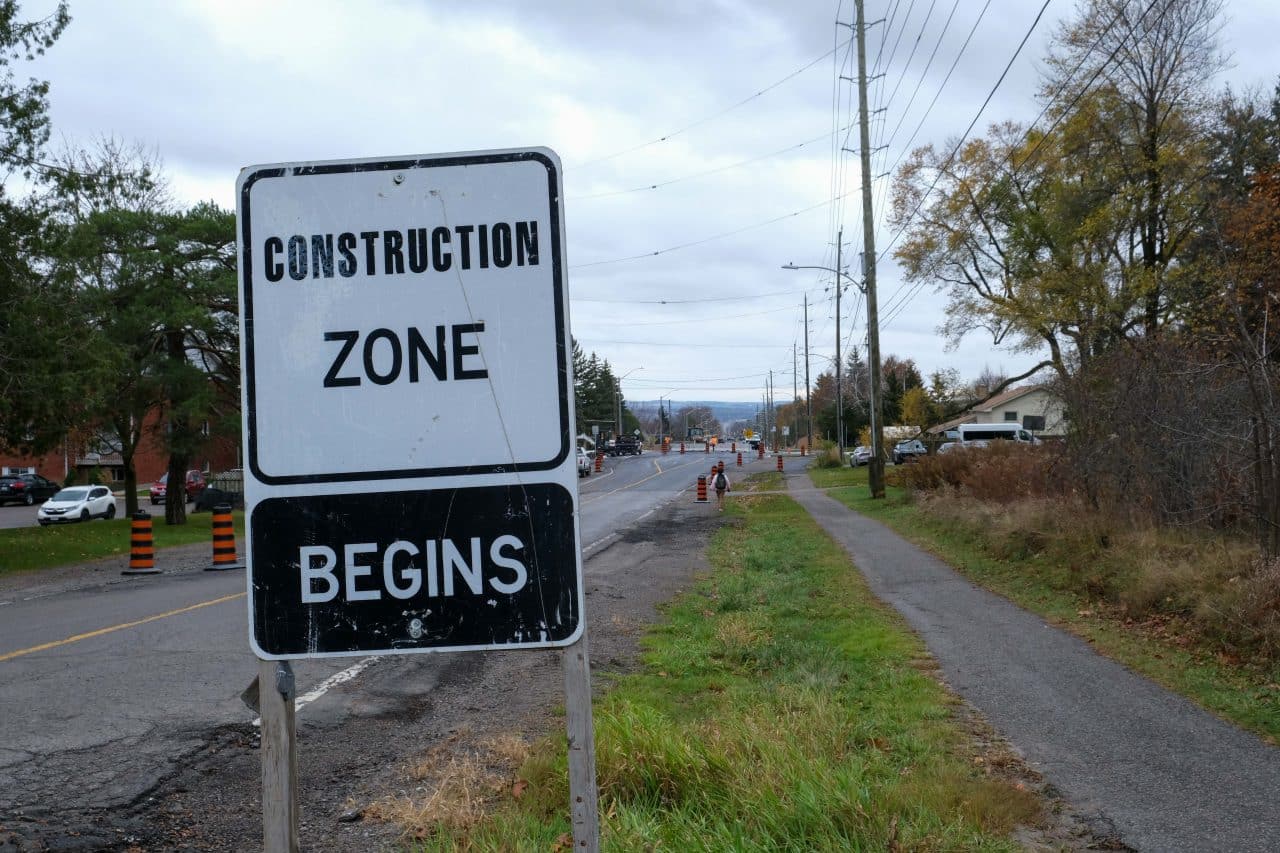
The reconstruction of Lansdowne Street West between Spillsbury and Clonsilla is one of those projects. Staff recommend deferring its pre-committed funding to 2026. This project would improve various intersections, install multi-use trails along either side of Lansdowne, replace aging sewers, and install a mid-block signalized intersection to improve pedestrian safety, the budget states.
Work on The Otonabee River Trail, which would be a recreational route encircling Little Lake, has been deferred, too.
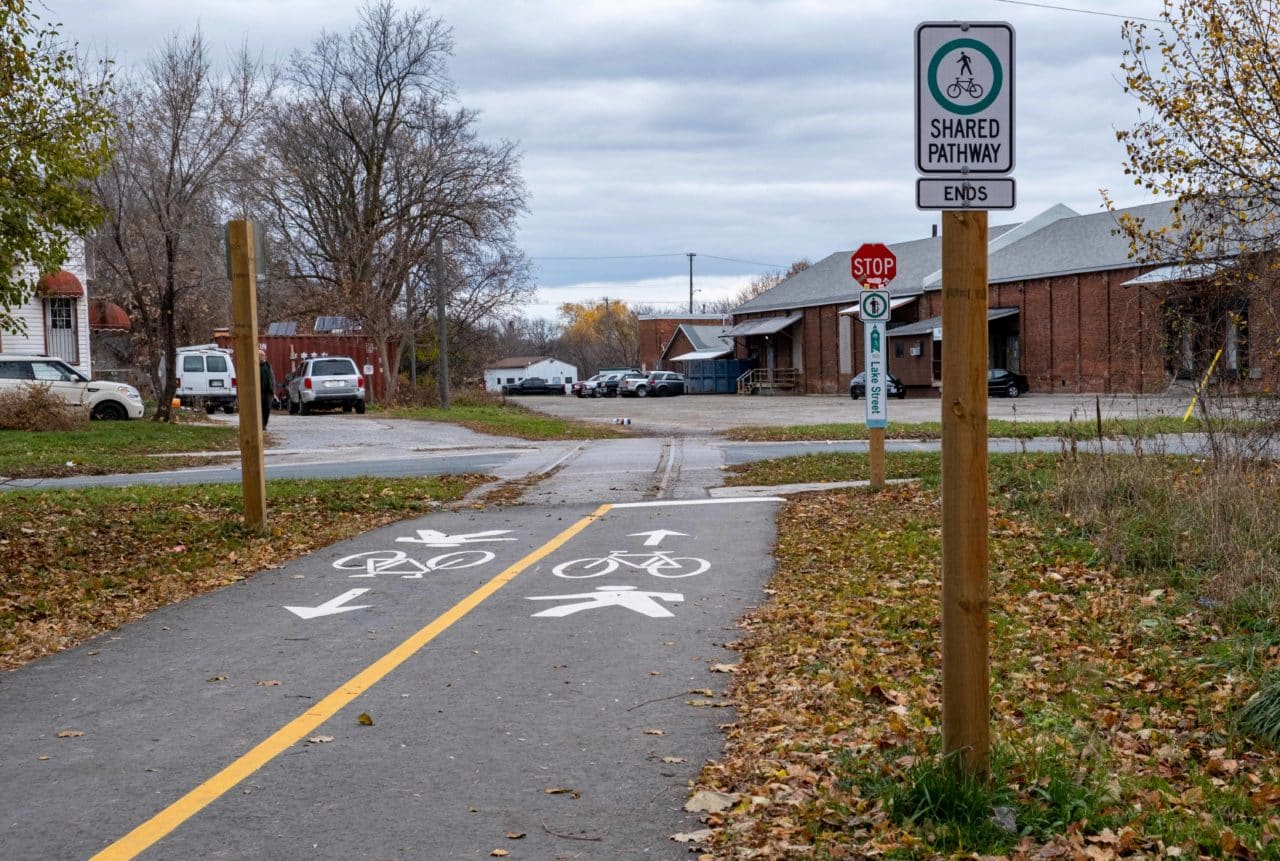
Another active transportation project, the completion of the Crawford Trail to link Lansdowne Place to the downtown for cyclists, has languished unfunded for more than five years. Two blocks of the trail were built in 2019, but the rest was never finished.
The city has hundreds of other capital projects that have been proposed but are still awaiting funding. Here’s a partial list, drawn from the 2025 draft budget:
- Watershed improvements to reduce flood risk in various neighbourhoods
- Major road reconstruction projects such as rebuilding Television Road, realigning Armour Road, and reconstructing Chemong Road
- Urbanizing Water Street north of Nassau Mills Road
- Planting trees to replace those lost in the 2022 derecho storm
Choosing which projects to prioritize “continues to grow in complexity given the pressure to move projects forward and the limited capital financing funding available,” the budget states.
Looking to future years, Peterborough is not currently on a path to catch up on its infrastructure deficit. The budget notes that “there is not sufficient financing” to fund the upcoming capital requests from 2026 to 2029.
How could we start catching up? Staff recommend raising taxes higher starting in 2026. Each year, a portion of the tax increase is earmarked for capital financing. Under the previous council, that number was reduced to zero percent for three years in a row, meaning taxpayers were not increasing their investment in the city’s capital program.
City staff recommend including a two-percent increase to the tax rate in 2026 and a three-percent increase in 2027 to start catching up on the infrastructure backlog.
Update: This article was updated on November 12, 2024 to include more detail about the recreational amenities proposed for Bonnerworth other than pickleball and to correct mischaracterizations of the Bonnerworth Park redevelopment as being solely about pickleball.
Author

Related Articles
What happened to the social service workers at the Peterborough Public Library?
Former CEO’s reports suggest the idea was a qualified success
Peterborough’s police budget has grown almost 50 per cent in four years. Does that make sense?
What goes into a police budget? And is it the best way to improve public safety?
Why the GE demolition plan could hurt Peterborough’s tax base
With fewer buildings on it, the GE property will likely be taxed less. That would mean higher bills for everyone else.
