
Why the GE demolition plan could hurt Peterborough’s tax base
With fewer buildings on it, the GE property will likely be taxed less. That would mean higher bills for everyone else.
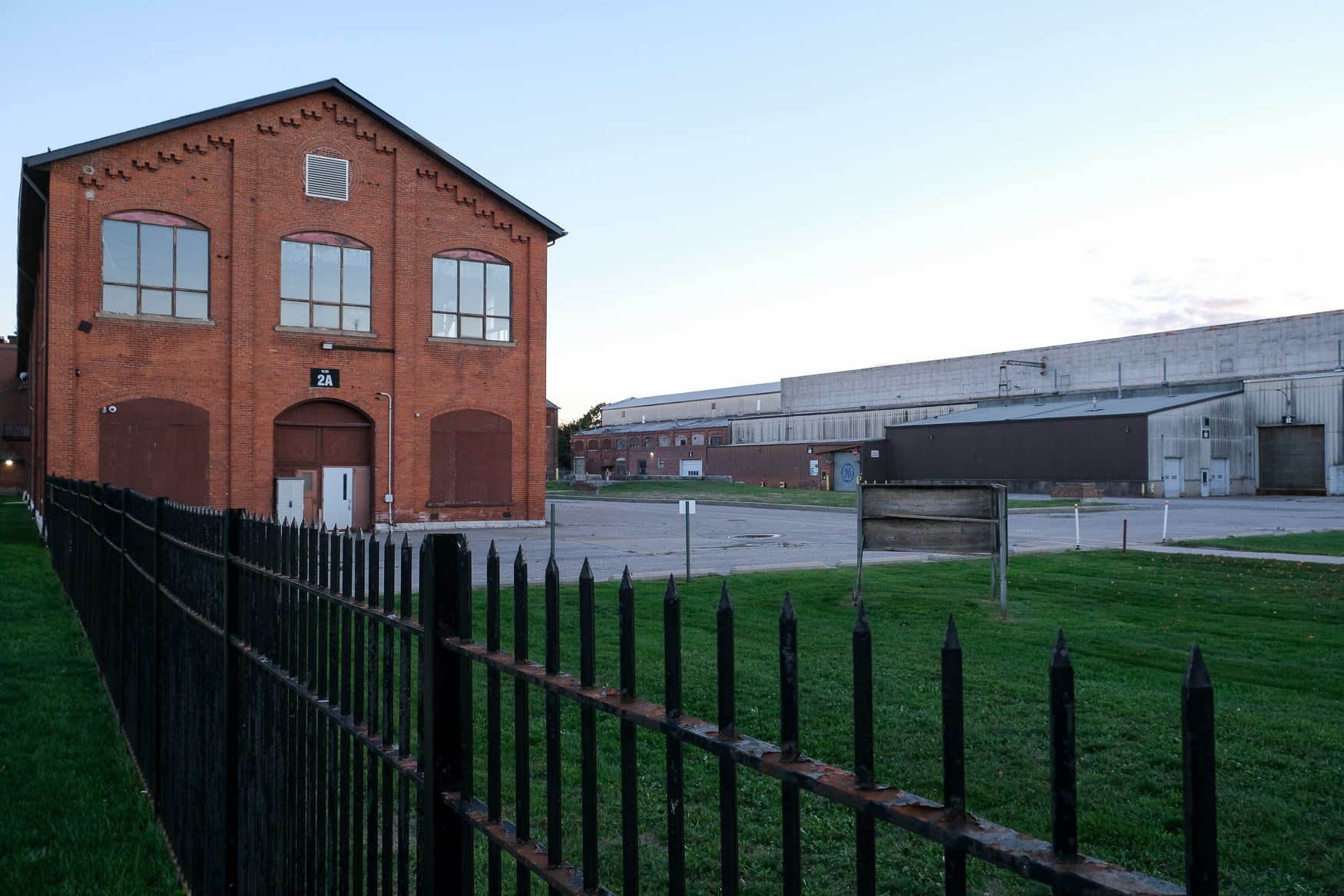
City council voted not to pursue a heritage designation for many of the buildings on the historic General Electric site on Monday night. If given final approval next week, council’s decision will clear the way for the buildings to be demolished by GE Vernova, the company that owns the approximately 50-acre property near downtown Peterborough.
Councillors generally focused on two issues during their debate on Monday. First, they discussed whether they can ensure the contaminated site gets cleaned up without taxpayers footing the bill. And second, they discussed whether the buildings proposed for demolition should be reviewed by Peterborough’s architectural conservation advisory committee to determine if the buildings have heritage value. The Peterborough Examiner has published an account of those discussions.
But there’s another issue at play here that has gotten a lot less attention: property taxes.
The GE site at 107 Park Street had an assessed value of about $17 million in 2024, according to assessment roll data publicly available in-person at city hall. That translated to a property tax bill of $567,000 in 2025.
In Ontario, property taxes are calculated as a proportion of a property’s value, and that value is determined through an assessment process carried out by the Municipal Property Assessment Corporation, or MPAC. The more MPAC thinks your property is worth, the more taxes you pay.
Demolitions lead to lower assessments, which lead to lower tax bills. “When structures are demolished, MPAC receives demolition permits from the municipality, notifying us of the change,” an MPAC spokesperson told Currents earlier this year. “MPAC reviews and updates our records to reflect the new state and condition of the property.”
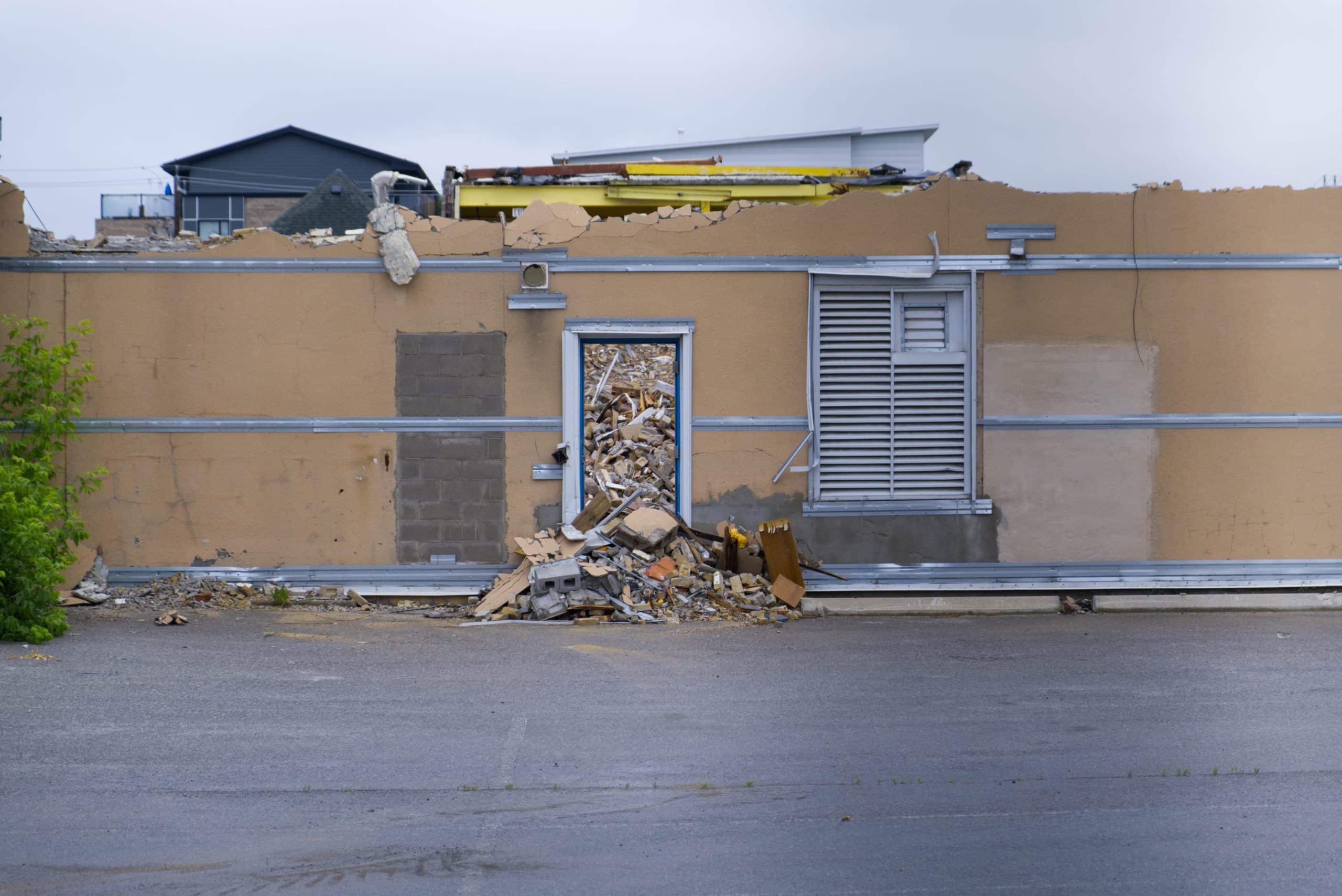
In Peterborough, at least two owners of other former industrial sites have received reductions to their MPAC assessments after demolishing buildings in recent years. As Currents reported this spring, the assessed value of 375 Aylmer Street dropped by 80 per cent (from $978,000 to $188,000) after the former Baskin Robbins factory was demolished on the site around 2020. The property’s tax bill was $6,211 in 2025.
And MPAC’s assessed value of 843 Park Street dropped from $1.6 million to $574,000 after the historic Ovaltine building was demolished on that site in 2019, according to the roll data at city hall. That property was billed $18,966 in property taxes in 2025.
How much might GE Vernova’s property tax bill drop if its buildings get demolished? Coun. Keith Riel put that question to the city’s finance commissioner Richard Freymond during Monday night’s general committee meeting. Freymond didn’t give an answer, instead saying that it would be up to MPAC to carry out a reassessment of the property’s value after demolition.

The change to GE Vernova’s assessment likely won’t be as dramatic as the 80 per cent decrease seen at the Baskin Robbins property or the 65 per cent decrease at the Ovaltine property, because GE Vernova is proposing to keep some of its buildings on the site.
But it could still be significant. During the city’s 2025 budget deliberations last fall, council heard that for every $2 million of additional city spending, a one per cent increase to property taxes is required. Lost revenue has the same impact on overall tax rates as spending increases do.
If the GE property’s assessed value and associated tax bill dropped by 50 per cent, for example, that would roughly translate to a 0.13 per cent increase in property taxes city-wide, according to Currents’ analysis. (Check our math.) If it dropped by only 25 per cent, that would translate to a 0.06 per cent increase in taxes city-wide. Councillors have spent considerable time debating tax increases or decreases of those sizes during their annual budget deliberations.
Last fall, Mayor Jeff Leal told Currents he wants to limit the property tax burden facing residential land owners in Peterborough by boosting the overall commercial and industrial assessment base. At the moment, commercial and industrial properties comprise about 20 per cent of the city’s assessment base; Leal said he’d like to see that rise to at least 30 per cent, so that businesses shoulder an increased share of the city’s tax burden.
The city isn’t headed in that direction, according to last year’s budget documents. The 2025 draft budget predicted the total value of Peterborough’s commercial property assessments would drop by 0.8 per cent between 2024 and 2025 while residential property assessments were expected to increase by 1.3 per cent.
If Peterborough’s existing commercial and industrial properties continue to be devalued in MPAC’s eyes by demolition, it’s going to take even more economic development activity on properties elsewhere in the city to reach Mayor Leal’s goal.
Check our math:
The tax bill for 107 Park Street was $567,000 in 2025. A 50 per cent reduction would be $283,000. The City of Peterborough says $2.1 million is equivalent to a one per cent tax increase. $283,000 / $2,100,000 = 0.13
Author

Related Articles

What happened to the social service workers at the Peterborough Public Library?
Former CEO’s reports suggest the idea was a qualified success

Peterborough’s police budget has grown almost 50 per cent in four years. Does that make sense?
What goes into a police budget? And is it the best way to improve public safety?

Fact-checking the MPP on Peterborough’s budget
Dave Smith claims Peterborough overspends on services compared to other municipalities. Is he right?
