
Meet Marjorie, the giant Newfoundland dog spreading joy at a Peterborough retirement home
“I think dogs are nicer than most people,” said a Royal Gardens Retirement Residence resident who looks forward to the therapy dog’s weekly visits.

Every time Kim Meekin walks in the front doors of the Royal Gardens Retirement Residence, on Clonsilla Avenue, the faces of residents and staff immediately light up. But it’s not Meekin they’re so happy to see. The smiles are for Marjorie—the gentle giant who pads along beside her.
Marjorie is a massive black Newfoundland with soft, shaggy fur and a blue bib fastened around her neck, embroidered with the words “Therapy Dog.” On most days, she’s a regular family pet who loves to swim in pools and lakes, or simply lounge at home with her owners. But every Monday morning, she has an important job to do. Her visits offer comfort, distraction, and lasting joy to those she meets at Royal Gardens.
The contributions of therapy animals were celebrated across the country this week, as part of National Therapy Animal Day. Held on April 30 every year, the day is dedicated to raising awareness and recognizing the impact these animals have on the people they serve. In Peterborough, the organization East Central Therapy Dogs (ECTD) trains and certifies dogs like Marjorie—and supports the handlers who bring them to those in need of connection.
“I think dogs are nicer than most people,” said Bozena, a Royal Gardens resident who keeps treats on hand for Marjorie’s visits. She smiled as she scratched behind the dog’s ears and shared stories of other dogs who’ve held a place in her heart over the years. “No matter what you do, they love you,” she said.
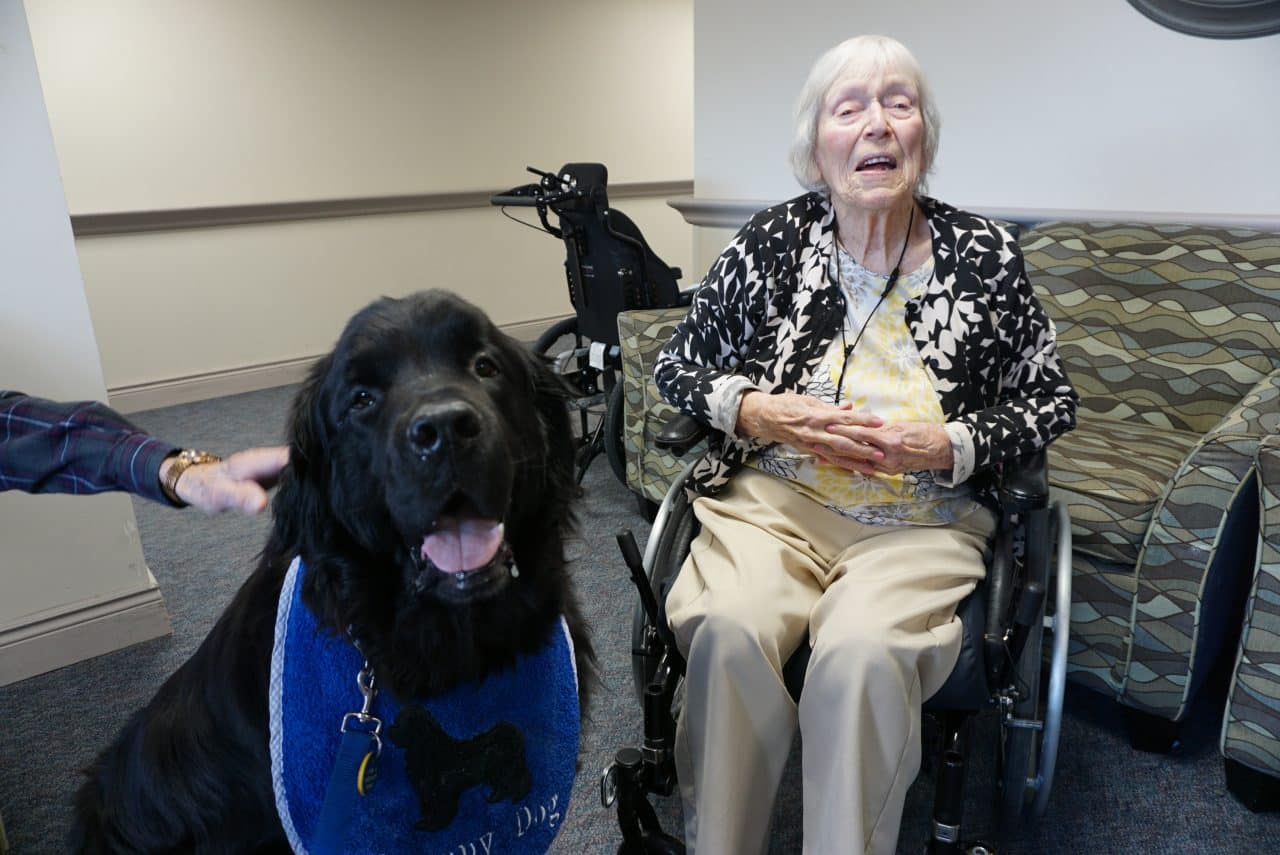
Bozena isn’t the only one who feels a special connection to Marjorie. Partway through a recent visit, Meekin and Marjorie turned a corner and came upon a group of residents doing seated exercises. The session came to an abrupt halt when a 98-year-old woman named Barbara called out, “Marjie!”
Marjorie trotted straight toward her, as Barbara reached out from the side of her wheelchair.
“She’s my friend,” Barbara said, laughing after Marjorie drooled in her lap. “She needs to diet, but maybe we can find some low-cal biscuits for her.” Barbara is already planning her 100th birthday party and said she intends to invite Marjorie and give her a special collar to mark the occasion.
Faith Wager, Royal Gardens’ activity director, offered Marjorie a cup of water before returning to lead the group’s exercise session.
“It makes their day a lot better just having some furry friend there with them,” she said. “Seeing Marge actually can calm them down and help with their behaviour as well.”
Marjorie has been a beloved regular at Royal Gardens for more than three years now. Her gentle demeanor made her a prime candidate to become a therapy dog. And she isn’t the only local therapy animal making a big impact.

For more than two years now ECTD volunteer Jeff Pass and his golden retriever, Yukon, have visited patients and staff at the Peterborough Regional Health Centre (PRHC) twice every week. They wander around the building, stopping at the cancer unit, the ICU, the palliative ward, and other departments to help bring people moments of calm and connection.
“We go from laughter to tears,” Pass said. “We don’t ask questions. We’re just there to chit chat, and they pet the dog and I carry on the conversation with them.”
But while he chats with patients, the real star is Yukon. “You know, I have a name tag,” Pass laughed. But “nobody knows my name, and that’s the way it should be.”
Pass said he will never forget one encounter he and Yukon had with an elderly woman who chose to have a medically-assisted death. The woman’s son and his wife approached Pass in a hallway of the hospital one day, saying the man’s mother only had 20 minutes left to live.
When they arrived in her palliative care room, her family was gathered around the bed. “She was calm, content,” Pass remembered. “We chatted for a bit and she stroked Yukon and told me her love of dogs. We left her with a huge smile on her face and she couldn’t thank us enough. In the end, Yukon gave this woman so much pleasure in the last twenty minutes of her life.”
Because of the sensitive situations and critical healthcare environments that therapy dogs encounter, each dog and handler pair need to undergo a rigorous assessment to ensure they are suited to the work.
Pass explained that therapy dogs must remain calm, confident, and responsive in unfamiliar environments. They need to accept attention from strangers, stay relaxed amid noise and crowds, and remain unfazed by mobility devices like walkers or wheelchairs. For safety, they must be well trained in basic commands and able to resist jumping up.
Pass shared the story of the evaluation Yukon underwent to become a therapy dog. “We ended up meeting in the basement of a church,” he said. He explained that about ten dogs and their handlers stood in a big circle and each dog was brought into the middle of the room one by one.
“The examiner comes and introduces themselves to you… They bend down, start petting the dog. They pet their ears, their tail, their paws, to make sure they’re not sensitive to that. And then there is a noise. So they have a bag of cans, and they drop it behind the dog to see how it’s going to react.”
“Of course, he passed with flying colours,” Pass smiled.
East Central Therapy Dogs evaluates new volunteers twice a year, in the spring and fall. Dogs must be at least one year old to qualify for testing, and handlers must complete a vulnerable sector check.
For more information about therapy dogs in Peterborough, visit www.ectd.ca.
Author

Related Articles

What do transit users think of the transit system?
Most voters in Peterborough never ride the bus
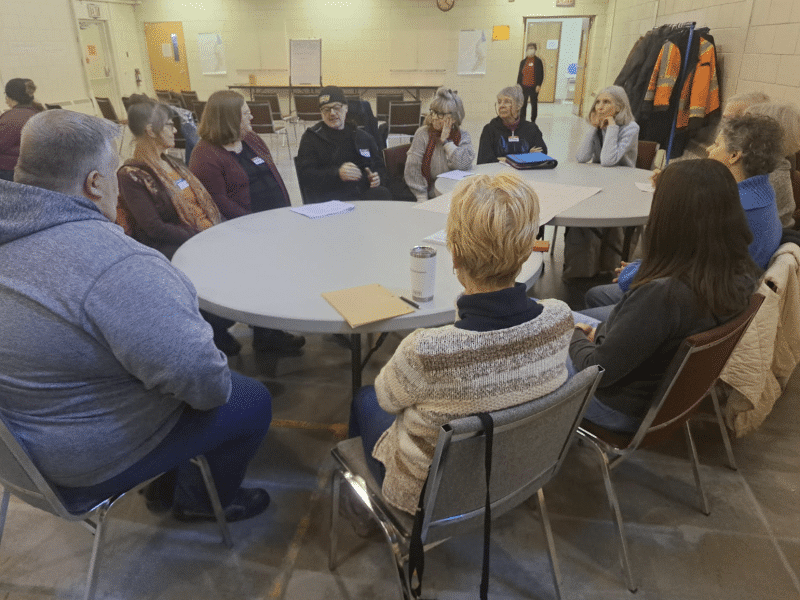
Promoting preparedness in East City
A grassroots movement aims to help neighbours out in the next big storm
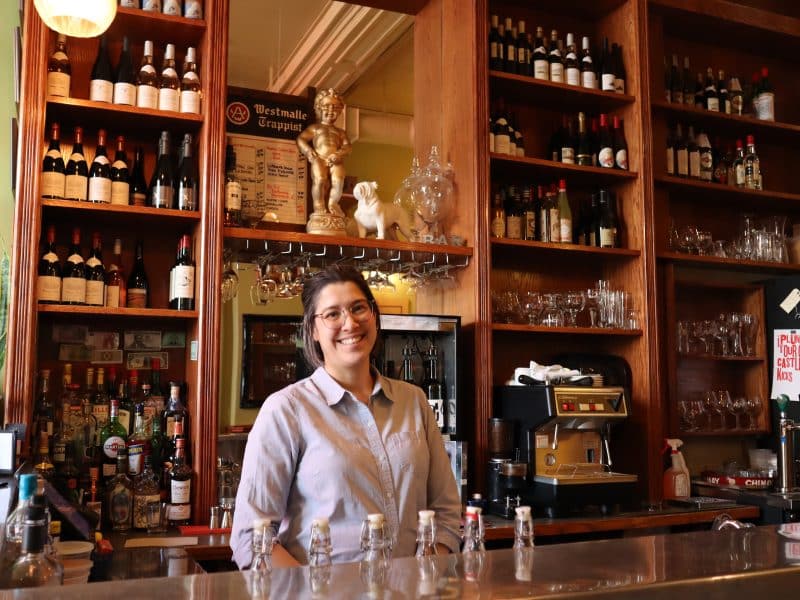
A century on, descendants of early Chinese restaurant owners still run businesses in Peterborough
Local restaurateur and bar owner Shannon Mak’s great grandfather ran a downtown Chinese restaurant starting in the 1910s
