
“A very important election”: Peterborough voters say casting a ballot has never been more critical
U.S. threats are top of mind in this election, but other important issues are being overshadowed, local voters say

Janet and Greg Hayes had never been to a political debate before. But faced with “the most important election” of their lives, the local couple wanted to hear what the federal candidates for the Peterborough riding had to say, as they faced off during a debate at Lakefield College School on April 8.
“We really want to not be connected in any way to the U.S.-style politics that are happening right now,” Janet Hayes said following the debate, which focused on business issues. Hayes said she thinks the Liberals can best defend Canada against “U.S. influence.”
Many Peterborough voters agree that Canada’s relationship with its neighbour to the south is the top issue in this election, even if they are at odds over what party can best protect the country from trade turmoil and threats against Canadian sovereignty.
Kelly Winters, who lives in Peterborough’s west end, said Canada needs an economic “off ramp” from “our dependence on the United States.” But the Conservative voter said she fears if the Liberals are re-elected they will “keep our natural resources in the ground” and hold the economy back.
“I think it’s shameful that the United States had to remind us that we’ve allowed our military to almost dissolve and we’re not doing anything about drugs and crime,” Winters added.
“This is one of our biggest historic elections. I think people really need to step back with an open mind and look at where we were ten years ago [when the Liberals came into power],” she said. “And say, do we want more of this, or do we want to take our country back?”
Another local resident, Joe Oliver (not the former federal cabinet minister) said dealing with the trade uncertainty caused by U.S. President Donald Trump must take priority right now, even if it means putting other pressing issues temporarily on the back-burner.
“I’m an environmentalist kind of guy, but first and foremost [is] having to deal with the economic disruption with the Trump tariffs,” said Oliver. “Given the race that’s in front of us, that’s the first issue that I think has to get addressed.”
“The rest [of the issues] are really important,” he said. “They just have to follow based on the first.”
Oliver attended another local all-candidates debate, held at All Saints’ Anglican Church on April 9, which focused on housing and homelessness.
Peterborough resident Peter Laurie said he finds it troubling that the environment has fallen down the priority list in this election.
“One of my biggest issues, which is not even being talked about at all, is climate change,” said Laurie, who also attended the homelessness debate. “I find it quite disconcerting that it’s just not on the agenda in any significant way.”

Some experts have said tensions with the U.S. may drive higher voter turnout on April 28, compared to recent elections. A record-high two million people cast their ballots on the first day of advance polls last week, according to Elections Canada.
It was standing room only in the chapel of Lakefield College School for the business issues debate, a sign that many local voters are tuning into this election. Audience members squeezed together on wooden pews and extra seats had to be brought in to accommodate the crowd, but those quickly filled up, too.
Anne-Marie Kee, head of Lakefield College School, said the big turnout was a good sign for local democracy.
“I am thrilled that this place was packed with people,” said Kee. “It’s important for our community to see this kind of level of engagement, because we need great leadership.”
It was a full house at All Saints’ for the housing and homelessness debate the next night too. People from all walks of life came together to see how the major party candidates would respond to issues around housing insecurity.
“I’m putting party loyalty second to outcomes”: High stakes election has some residents voting strategically
Long-time NDP supporter David Wesley said he had to think twice about his vote in this election, partly because of U.S. hostility.
“I’ve always been a New Democrat,” said Wesley, after the homelessness debate. But he said he doesn’t think his preferred party has a shot at forming government, so he’s decided to vote strategically for the Liberals this time.
The Liberals hold a narrow lead over the Conservatives in national polls, according to poll-aggregating website 338 Canada. NDP support has hovered around nine percent in recent weeks, the site says.
“I’m putting party loyalty second to outcomes and results,” Wesley said. “The thought of a [Conservative Pierre] Poilievre government at the same time as there’s the Trump government is just too awful to contemplate.”
He thinks Liberal Emma Harrison is a “very good progressive candidate,” he said.
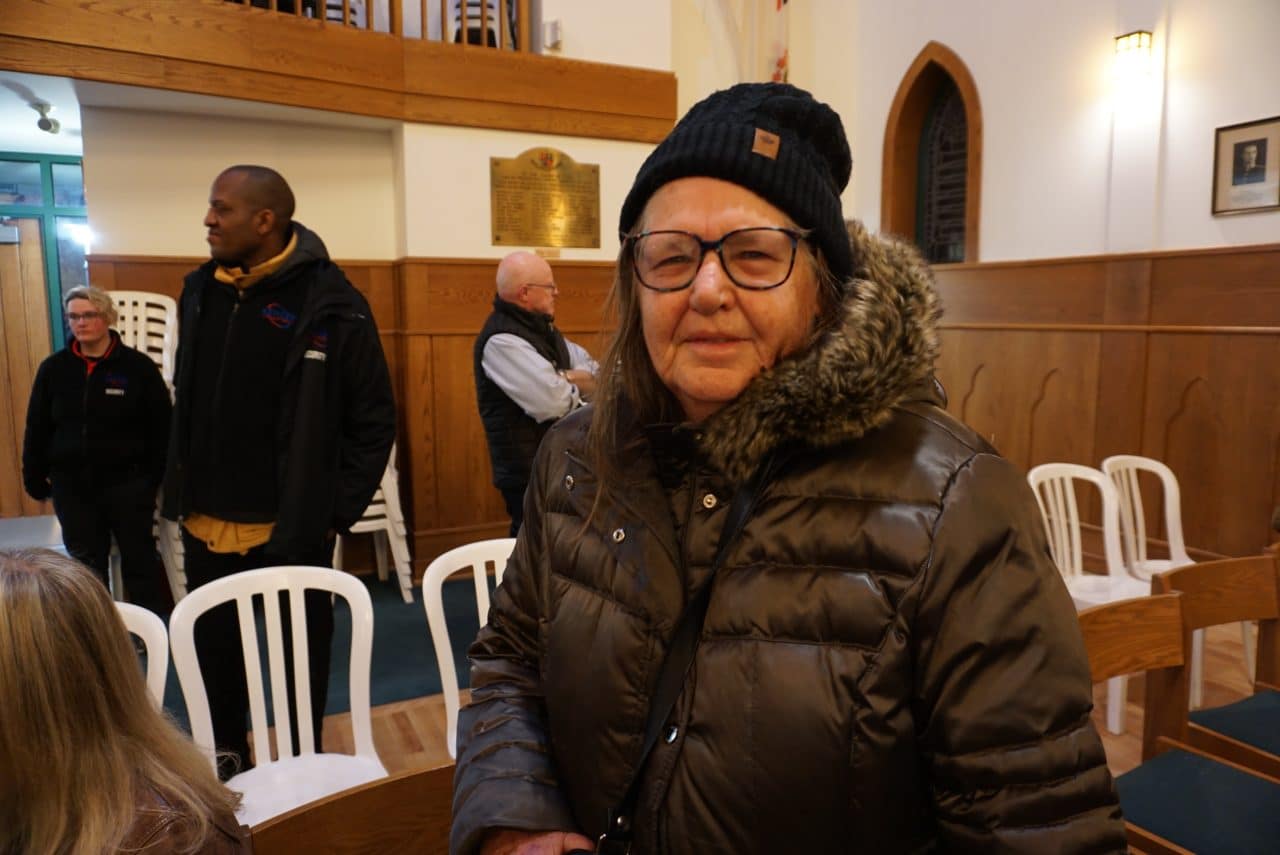
Senior Melanie Isaac said she was impressed by how Green Party candidate Jazmine Raine and NDP candidate Heather Ray performed in the business debate. But nonetheless, she said she plans to vote Liberal on April 28.
“In the Ontario election, I voted for the NDP,” she said. This time, she will vote strategically in order to “prevent Pierre Polievre from becoming the prime minister.”
Isaac said she gets dental coverage through the national dental insurance program the Liberals brought in with the support of the NDP. She’s worried that the dental care program, as well as $10-a-day child care, would be rolled back under a Conservative government.
Conservative leader Pierre Poilievre has pledged that if he becomes prime minister, those who currently have federal dental care, childcare and pharmacare coverage won’t lose it, according to CBC News.
Timothy Wilson said he has “been under a lot of pressure to vote for the Liberals to stop the Conservatives amongst my friend group.”
He said many of his left-leaning friends, who usually vote NDP or Green, are scared of a Conservative victory. But Wilson, who attended the debate in Lakefield, said he’s “getting tired of strategic voting.”
“I personally see the Liberal Party as being part of the corporatist structure,” he said. “I think that we’re dealing with mass extinction and a bio-cide, and I really am more in line with the Green Party’s view that we need a radical overhaul of taxation and how we do things.”
Chris Guerin, who also attended the business debate, said he was impressed with Ray, the NDP candidate. “She wasn’t using slogans or really reading off anything. She was just, I felt, speaking from the heart,” he said. “I don’t want to have a voice from Ottawa coming back here, or our representative coming back here, and just giving us the slogans from the party … You’re not elected to represent the party. You’re elected to represent the people.”
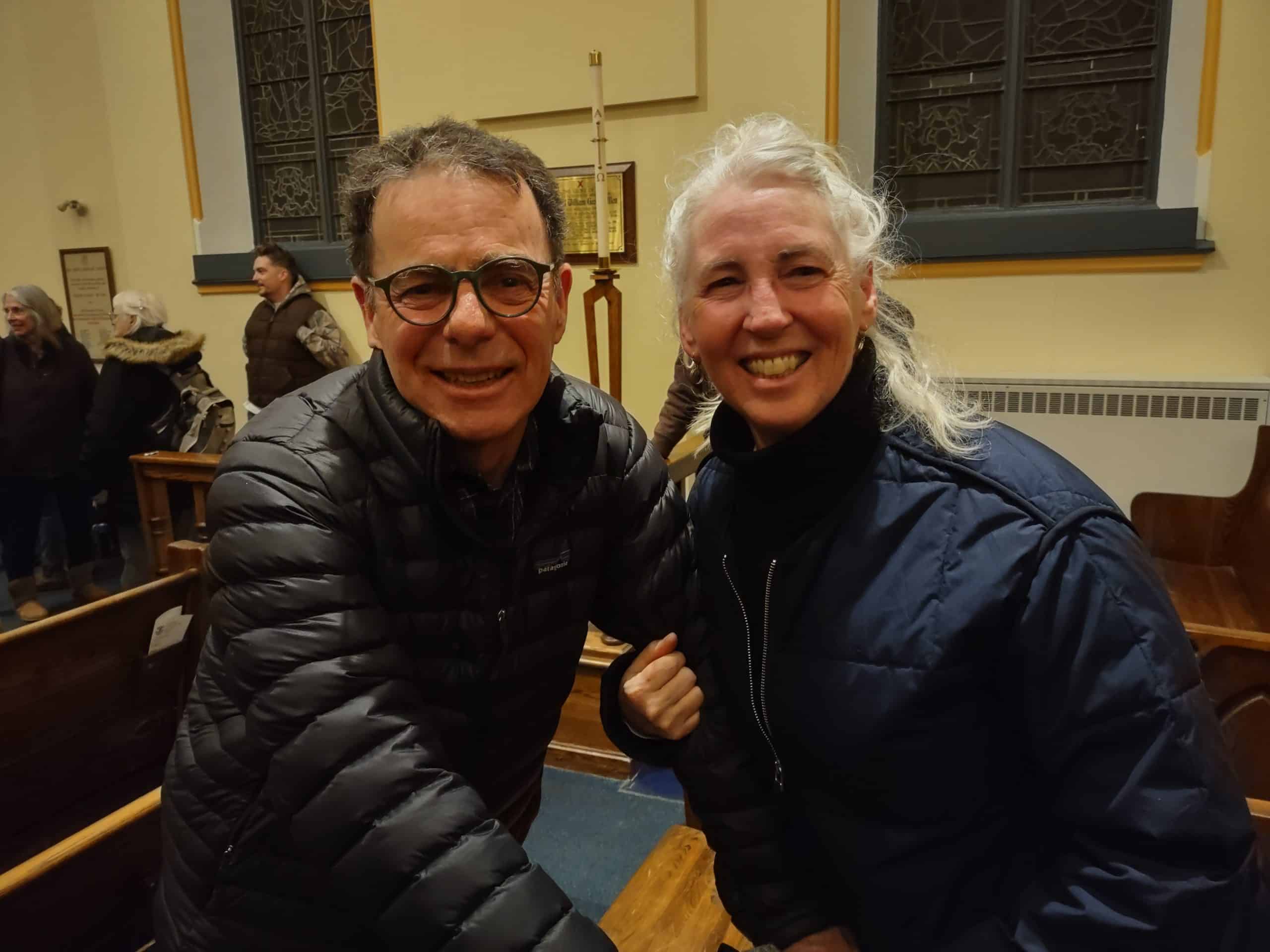
Sarah St. Pierre said she is trying to be vigilant for any misinformation in this election campaign, so she went to the homelessness debate in order to hear from the candidates first-hand, and be able to fact check their statements after.
“I need the information for myself so I made sure to come tonight,” she said.
St. Pierre also wanted to get a sense of “what kind of person” each candidate is, from seeing them interact with each other.
She said she was impressed that some of the candidates put partisanship aside to applaud one another when they made good points and made eye contact with one another at times.
“So that was something I was looking for, to see how they actually are behaving,” she said.
There’s a lot of value in events like all-candidates debates that bring people together to think about the challenges facing the local community and country as a whole right now, said Collin Chepeka, manager of Trent University’s Research for Social Change Lab, which co-hosted the homelessness debate.
“I think it’s a very energized and potentially divisive time right now in politics,” Chepeka said. “So I think it’s really important to actually come out and not just listen to the candidates, but talk to other people.”
Authors


Related Articles
Riel commits to investing in buses
Would support Transportation Master Plan as mayor, despite uneven record as councillor

What’s at stake for Peterborough in this week’s provincial election
A guide to some of the key provincial issues facing Peterborough — and what the major parties are saying they’ll do about them

Ontario’s snap winter election: On the icy campaign trail in Peterborough-Kawartha
We hit the streets with the Liberals, NDP and the Greens to see how they’re trying to sway voters in this rare winter election
