
Peterborough children’s aid society places kids in hotel rooms, office, amid province-wide shortage of foster and group homes
It’s the result of the provincial government “chronically underfunding” child welfare and other social services, union representing child protection workers says
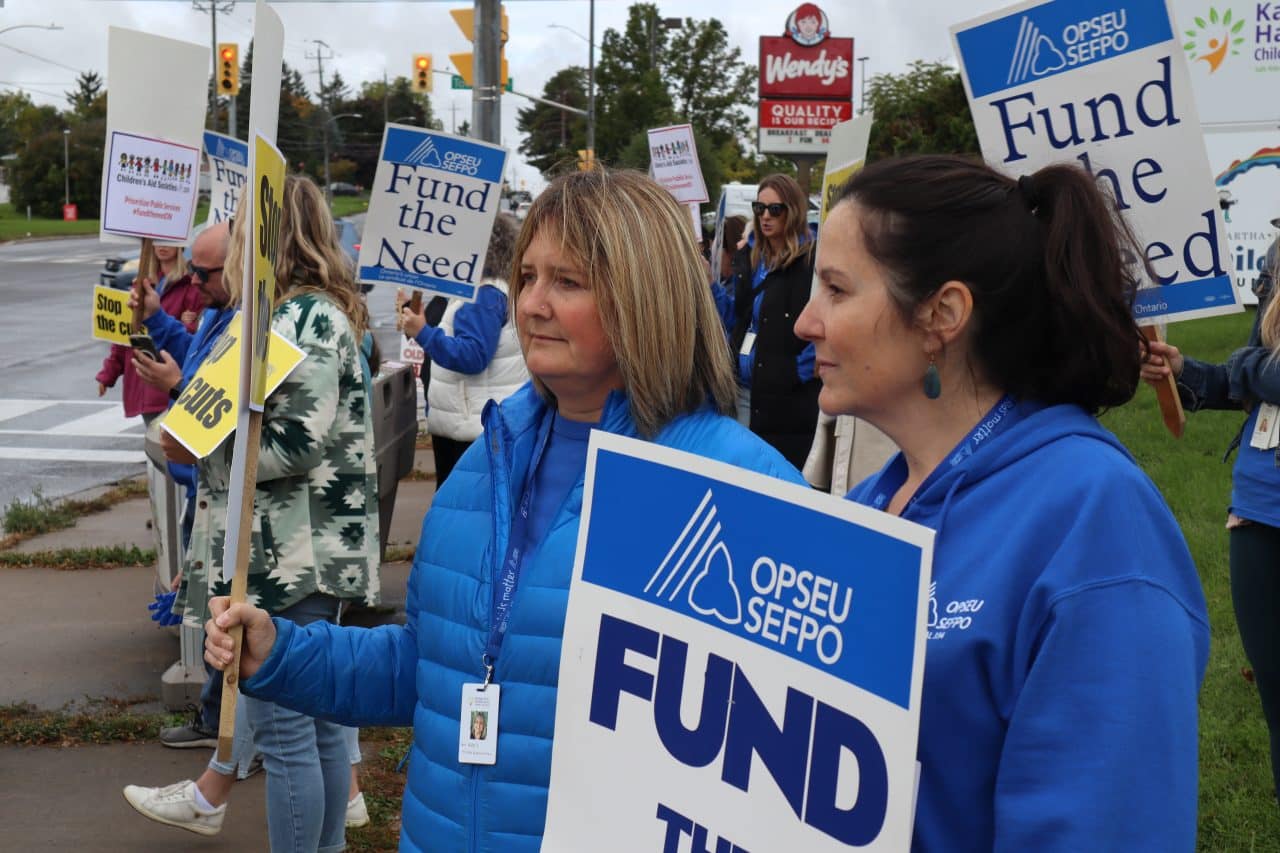
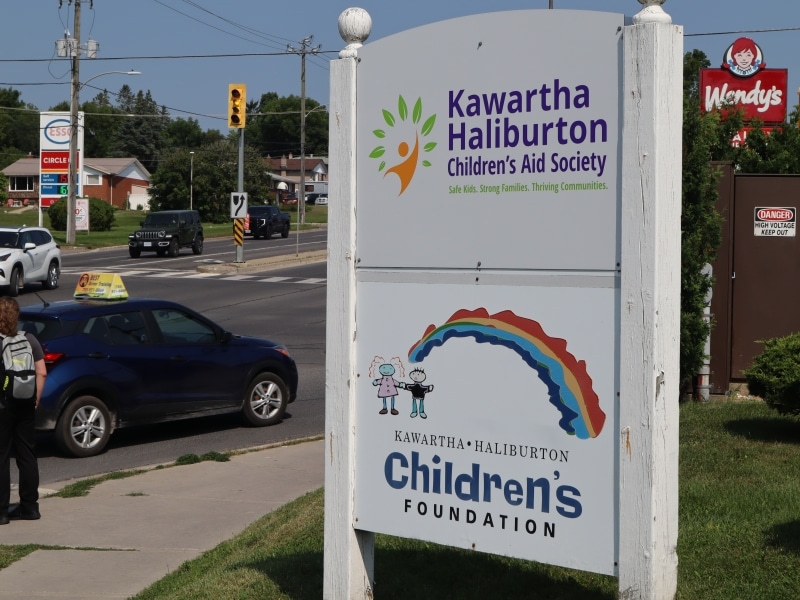
Peterborough’s local child welfare agency had to place two teens in a hotel for the first time late last year because there was no other safe place for them to go, according to the executive director of the Kawartha Haliburton Children’s Aid Society (KHCAS).
The teens, who both have “very complex needs,” spent about two months living in hotel rooms, Jennifer McLauchlan told Peterborough Currents.
Child protection workers had called group homes and treatment centres across the province but could not find placements for the teens, she said. The homes they contacted either had no beds available or said “the profile of the youth didn’t fit within their program,” McLauchlan said.
“We needed to have a place for them and so we had to make a really difficult decision to find a hotel,” she said.
A private company provided staff to supervise the youth around the clock and “ensure that they were safe,” according to McLauchlan. “In one instance, I believe it was three-to-one care, and then in the other instance, it was two-to-one care for the duration.” McLauchlan did not say if the teens received treatment while staying at the hotel.
Hotel placements can put youth at a greater risk of human trafficking, according to McLauchlan. “People are in and out frequently making it easier to prey on vulnerable youth,” she said.
KHCAS, which serves Peterborough city and county, Kawartha Lakes and Haliburton County, is not the only children’s aid society in the province to resort to placing children in hotel rooms. In other parts of Ontario, children and teens in care have also had to sleep in motels, trailers and offices. Child protection workers and youth advocates have said the situation is a sign of a child welfare system in crisis.
In September, Ontario Ombudsman Paul Dubé announced he was launching an investigation into the practice of children’s aid societies placing children in these unlicensed settings, saying in a press release that he was aware of “several incidents” of it happening across the province. Many of those incidents raised “serious concerns” about the “safety, privacy and comfort” of the children involved, he said.
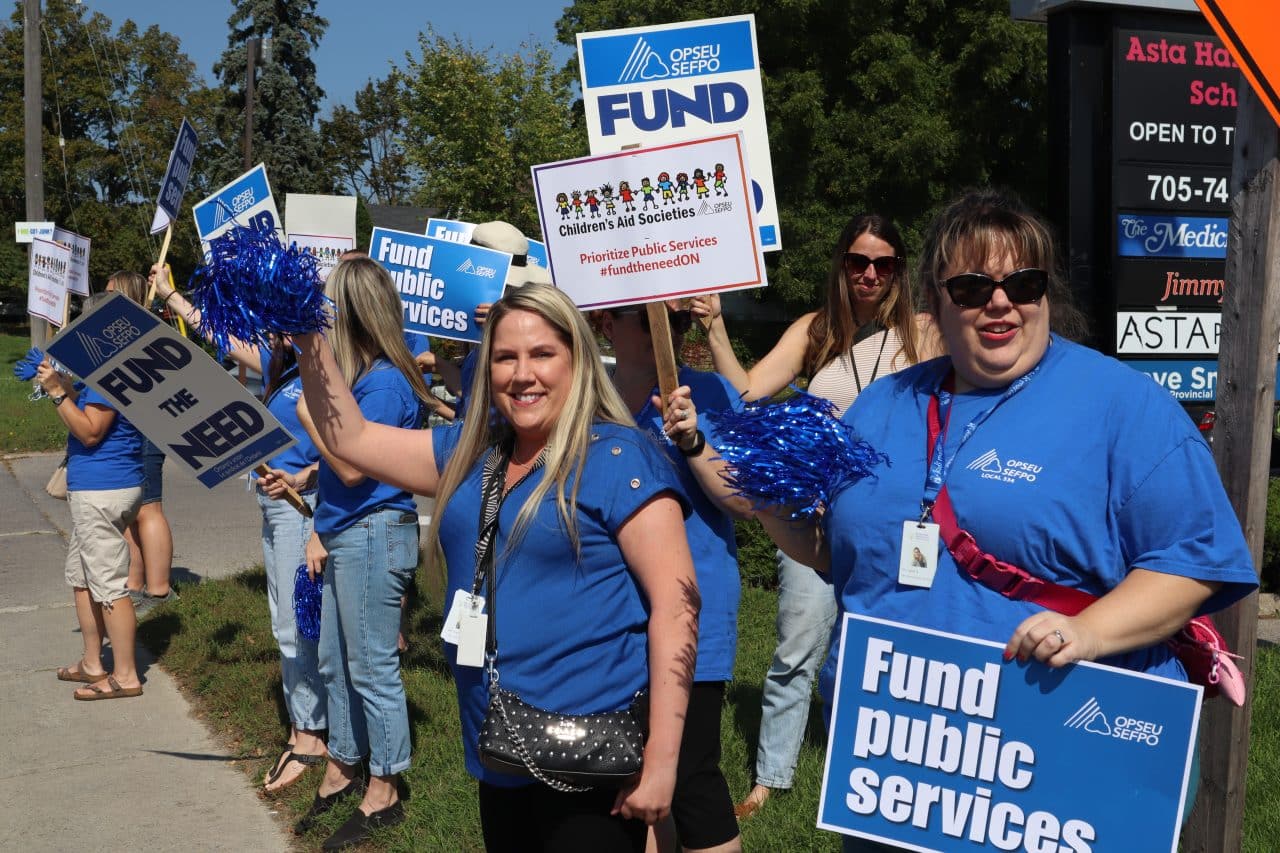
Children’s aid societies are turning to last-resort placements such as hotels out of “desperation” because of a shortage of foster parents, group homes and residential treatment beds, according to the union that represents KHCAS staff. The situation is the result of the provincial government “chronically underfunding” child protection and other social services for years, the union wrote in a letter sent to Ontario’s minister of children, community and social services, Michael Parsa, in early October.
“It is your responsibility to ensure the safety and well-being of children and youth, and you are failing them,” wrote Ruby Taylor, a child protection worker and the president of OPSEU Local 334.
Taylor told Currents in an interview that some children as young as five years old have had to sleep on a cot at KHCAS’s Peterborough office because there was nowhere else for them to go. Children and teens have “typically” only slept at the office for one night, McLauchlan said.
“This office is not a place for people to sleep,” Taylor said. “We’re running around trying to get even just blankets and pillows to use for the night.”
In an emailed statement, the Ministry of Children, Community and Social Services said the government does not “direct children’s aid societies on placement decisions.” However, the province does require that societies “ensure placements are safe, appropriate and meet the child’s needs.”
“That’s not an option: it’s the law,” the statement said.
The statement also said that provincial funding for children’s aid societies has increased by $129 million, or nine percent, over the last decade. Meanwhile, the number of children and youth in care has decreased by 30 percent and staffing at children’s aid societies has increased by approximately three percent, it said.
The province launched a review and audit of the child welfare system last week, which aims “to better understand the pressures children’s aid societies face and to ensure they remain focused on providing high-quality services and support while protecting children receiving services from societies,” according to the statement.
“A huge concern”: Reliance on unlicensed group homes grows as children’s needs increase
The union’s letter to Parsa acknowledged that the number of children and teens in care has decreased. But costs are rising because more of the children who are coming into care have complex needs – a result of the lingering impacts of the COVID-19 pandemic and “increases in substance use, homelessness, poverty [and] mental health challenges,” according to the letter.
When children are said to have complex needs, it usually means they have two or more behavioural, developmental or mental health conditions, and may show behaviours, such as substance use and self harm, that can put themselves or others at risk. These children are increasingly being placed in unlicensed settings because other homes won’t take them, according to local child protection workers Currents spoke to.
Under Ontario’s Child and Family Services Act, a group home can operate without a license as long as there are no more than two children living there.
There were five teens in the care of KHCAS living in unlicensed settings in September, despite “extensive” efforts to find more suitable placements for them, McLauchlan wrote in an email.
The growing reliance on unlicensed homes is a “huge concern,” said child protection worker Tanya Hayford. She said children with complex needs are “definitely not getting better” in these settings.
According to Hayford, unlicensed homes often hire inexperienced and under-qualified staff, a concern echoed by her colleague Sherri Lacey. “Most of them have not had a lot of experience working with youth and children with complex needs,” Lacey said.
Unlicensed homes are “a temporary solution until we can find something” better, Hayford said. “But we never know how long that will be, because of the limited resources across the province.”
The fees charged by unlicensed group homes are also “exponentially” higher than the cost of licensed homes, with some charging as much as $60,000 per month per child, according to McLauchlan. While the provincial government must approve the rates licensed homes charge, there is no limit to what unlicensed facilities can charge, she said.
Those high costs are straining KHCAS’s budget as the agency grapples with an almost $2.9 million deficit. The agency has blamed the deficit on “years of funding reductions” by the provincial government and a dramatic increase in the cost of residential care. The amount the agency paid to board children and teens in group homes, treatment facilities and foster homes rose by 48 percent, or more than $3 million, in the 2023/2024 fiscal year compared to the year before, according to the agency’s latest financial statement.
Local children being sent as far away as Windsor and Sudbury for care
Some local children and teenagers are being sent outside the region – as far away as Windsor, Sudbury and Ottawa – because of a shortage of foster parents, group homes and treatment centres in this region, according to McLauchlan.
In 2016, Peterborough city and county had 118 licensed group home beds for children and teens, according to publicly available data. Now there are only 45 beds, a number of which are reserved for children and youth with physical disabilities.
Meanwhile, the number of foster homes across the province has dropped by almost 34 percent since 2020, according to the Ontario Association of Children’s Aid Societies (OACAS). Many families “are grappling with the cost-of-living and housing crisis in Ontario” and do not have the financial means or physical space in their homes to be foster parents, a statement on OACAS’s website states.
With a lack of safe places for them to stay in their own communities, local children and teens are not only being removed from their families, they’re also being cut off “from their friends, from their schools, from any supports that they would have had in the community,” Lacey said. That has a significant impact on their emotional wellbeing, she added.
Leaving the region also means children needing mental health treatment wait longer for services, because they have to join a new waitlist in another community, Taylor said.
“There gets to be a breaking point”
The child protection workers said that children are often waiting two years or more to access mental health treatment. The wait-times are so long, some parents are being forced to voluntarily surrender their children to the children’s aid society because they can no longer cope, according to Taylor.
“There gets to be a breaking point where [parents] can no longer provide the care that their youth or child needs for them to remain in the home,” said Taylor.
Children’s aid societies are funded by the province to protect children under 18 who face abuse or neglect. But a report on KHCAS’s website states that in the year ending March 31, 2024, seven children were surrendered into care not because of maltreatment, but because their parents couldn’t access mental health treatment for them.
Parents might hope that once their child is in the child welfare system they will get mental health treatment faster, but that’s not the case, according to Hayford. “There’s that thinking that we can access things quicker, and we just can’t,” she said.
“We just do not have what we need in this province to meet the needs of kids who have faced trauma and other experiences throughout their life that really require [a high] level of care,” she said.
Peterborough psychologist Charlie Menendez often sees children and teens with “trauma-based and mental health-based behavioural issues” who need residential treatment, he said. But according to him, there aren’t enough treatment beds available.
Kinark Child and Family Services, the primary children’s mental health care provider in Peterborough, offers residential treatment services. But it only has six beds, provincial records show. There are far more children and teens than that who urgently need live-in treatment, according to Menendez. “These are life threatening conditions that kids are dealing with,” he said. “Too many of our kids are the ones who end up on the streets and victims of the overdose crisis and being trafficked.”
The ministry’s statement to Currents said the province “continues to increase funding to support children with special needs” and is “working towards easier, more coordinated access to services.” The statement pointed to a three-year, $97-million pilot project launched at three hospitals in Toronto, Hamilton and Ottawa in 2023, which is meant to support children and teens with complex needs. The ministry also said funding is “available for children with multiple or complex special needs in situations where there is immediate risk to their health and safety, and when their needs exceed the capacity of local services and their families.”
Ford government’s review of child welfare system a “smokescreen”: unions
The unions that represent children’s aid society workers have dismissed the Ford government’s planned review of the child welfare system as a “smokescreen” to distract from the province’s “failure to support children and families.”
The province began an overhaul of the child welfare system four years ago, with a focus on early intervention work and keeping kids with their families, but the government has nothing to show for its efforts, according to a joint statement from CUPE Ontario and OPSEU.
“Workers, advocates, and families have been sounding the alarm about challenges they face trying to keep children and young people safe for years. That Doug Ford is trying to lay blame on individual agencies shows just how insincere he is,” Fred Hahn, president of CUPE Ontario, which represents roughly 5,000 child protection workers across the province, said in the release.
A week before the details of the audit were announced, Premier Doug Ford claimed that children’s aid societies were misusing taxpayer money, telling reporters that he’s heard “nightmare stories” of agencies working in “Taj Mahals” that rent for $100,000, according to CBC News.
“The managers are giving themselves a bonus. All those managers that are giving yourself a bonus, not worrying about the kids, I’m coming for ya,” Ford said, in response to questions about a lack of beds for children in care with complex needs.
Costs are rising not because CAS managers are misusing funds, but because of “parasitic for-profit group home operators that charge exorbitant fees,” according to the statement from the unions.
“We need to end the for-profit models in all residential care facilities, and introduce province-wide licensing of group homes, to ensure our services place children at the centre of care,” said JP Hornick, president of OPSEU, which represents 3,200 child protection workers in Ontario.
Parsa said the review is part of work already underway to improve the child welfare system, according to CBC News. “This is all part of the process to make sure that their supports and the funding and the investments that are being made are utilized accordingly, appropriately,” he said.
Author

Related Articles
Queer refugees find community in Peterborough, as Canada tightens rules that helped them arrive
“My family, my government, my religion, and the whole country is against me for being gay.”
Tensions boil over into a strike at Community Living (and across the province)
Chronic underfunding and a wage cap lead to coordinated labour actions across the province

An uncertain path forward for Peterborough’s new arena project
What did council actually approve? Who will pay for it? And what happens next?
