
A world away from Palestine, Peterborough residents choose action over despair
For many locals, organizing against the war in Palestine helps to ease a sense of hopelessness. Protesting has “stabilized my sadness and heartbreak,” one organizer said.

Almost every day, Margaret Slavin checks her email inbox for news from her friend Mahmoud Abukhalid, who lives in Palestine. Lately, Abukhalid’s messages have described his family’s experiences living in a tent near Rafah, the city in southern Gaza where over a million Palestinians are estimated to have sheltered.
“I worry about them all the time and wonder if they are safe,” said the 85-year-old local writer and activist. “I think it’s really important that people engage with this on a personal level outside of all the convoluted politics. It informs us on a heart level that they are like us and just want safety for their kids.”
Slavin’s commitment to the Abukhalid family goes back a long way. She’s part of a small group of women who have provided financial support to the family for over 15 years. Since October 7 of last year, Slavin has continued to send bank transfers to help Mahmoud and his family purchase increasingly scarce necessities, she said.

In the early days of Israel’s retaliatory offensive against Palestine last fall, Abukhalid became worried about his family’s home, which Slavin’s group had helped him buy, Slavin said.
“He was nervous about the apartment … because the building was filling up with Hamas officers and he knew it would be destroyed when Israel did their next bombing,” she said. “Thankfully, a small house in a safer part of Gaza City came up for sale and we raised money to help them seal the deal.”
They moved into the new house, and the children arranged stones in the garden to spell out the word “Love” as a way of thanking the group, Slavin said. “It was really touching,” she said.

It didn’t last. “Now, the house we helped them buy has been bombed out,” Slavin said, beginning to choke up. “It’s completely gone.” Slavin described feelings of despair and hopelessness as she shared the story of the Abukhalids’ house getting destroyed.
Despair. It’s a word used by many in Peterborough who are organizing in support of Palestine and calling for peace in the Middle East.
“Most days I can’t get out of bed,” Peterborough’s poet laureate Ziysah von Bieberstein told city councillors in February, describing a depression that they said “grinds my bones to dust.”
As they reflected on the months since October, von Bieberstein said they have been through “the whole gamut” of emotion, noting that they have felt “depressed, paralyzed, mobilized, inspired, guilty, proud, grateful, and despairing.”
“In October it was a struggle for me, figuring out how to engage in this work as a bridge between Palestinian activism and Jewish community. I clearly stand against the ethnostate of Israel, AND my heart carries so much compassion for Jews I love who see things differently,” they emphasized in an email to Currents this June. “I was in really tough conversations with friends and relatives.”
After taking some time to move through their own processes of grief and confusion, they began speaking publicly at rallies and inside City Hall, and gathered a group of fellow-Jews to attend protests holding signs and repeating the refrain of “not in my name.”
“Even though our actions could never be enough, we needed to do something.”
As images and descriptions of the suffering in Palestine continue to reach people in Peterborough, some are asking what their role is in the conflict. What can people who live in a small city 9,000 km away from Palestine do? Is it worth the effort, when the situation feels so hopeless?
Many have decided it is. They’re organizing protests, writing letters, educating themselves, passing around Palestinian poetry, selling Palestinian goods, and mourning the lives lost.
“I remember an incredible amount of despair as we were getting started, and feeling like even though our actions could never be enough, we needed to do something,” reflected one person who has helped to organize local protests in support of Palestine since October 7. The person, who organizes with the group Nogojiwanong2Palestine, requested their name not be published.
“Our mission was to call attention to and condemn the atrocities happening in Palestine,” the organizer said.

Nogojiwanong2Palestine isn’t the only group organizing locally in support of Palestine. But their tactics have tended to be the most disruptive. The group briefly shut down the Hunter Street Bridge one morning this spring. And they’ve descended on the downtown branch of Scotiabank on multiple occasions to protest the bank’s reported investments in Elbit Systems, an Israeli weapons company.
“The reasoning behind that particular kind of disruptive action is no business as usual while genocide is happening,” said the organizer with Nogojiwnaong2Palestine. “There is no comparison between the way we are disrupting things and the way the lives of Palestininans in Gaza have been disrupted.”
“Coming together gives me hope and strength”
Other groups are finding different ways to channel their despair into action. One group, the Coalition to Prevent Genocide in Gaza (CPGG) has hosted weekly peace vigils outside of city hall.
CPGG organizer Micky Renders, a retired art teacher and longtime peace activist, said she feels “compelled” to show up every week, even though she called it “exhausting.”
And while Renders noted the same “sense of despair” that others have pointed to, she said the weekly routine of the vigils helps dispel that. “Coming together gives me hope and strength, and I think that’s very important in this very dark time,” Renders said.

Marisa Barnhart has attended several of the Monday night vigils. “You do what you can, where you can,” she said. “So, what I can do here is show up and be a witness every week.”
Barnhart also sees the protests as a way to teach her children about their responsibilities as citizens in the world. She brings her eldest child, who is eight, to the Monday gatherings. “I’m hoping that she learns that standing up and taking a side for peace is important, even when it’s hardest,” she said.
Barnhart said she’s “met some really wonderful, clear-sighted people” at the protests who can have conversations “across generations” and speak compassionately against violence.
Renders noted the ethnic, age, and class diversity of the people taking part in the local actions in support of Palestine. “We have built a community,” she said. “It’s a very diverse community.”
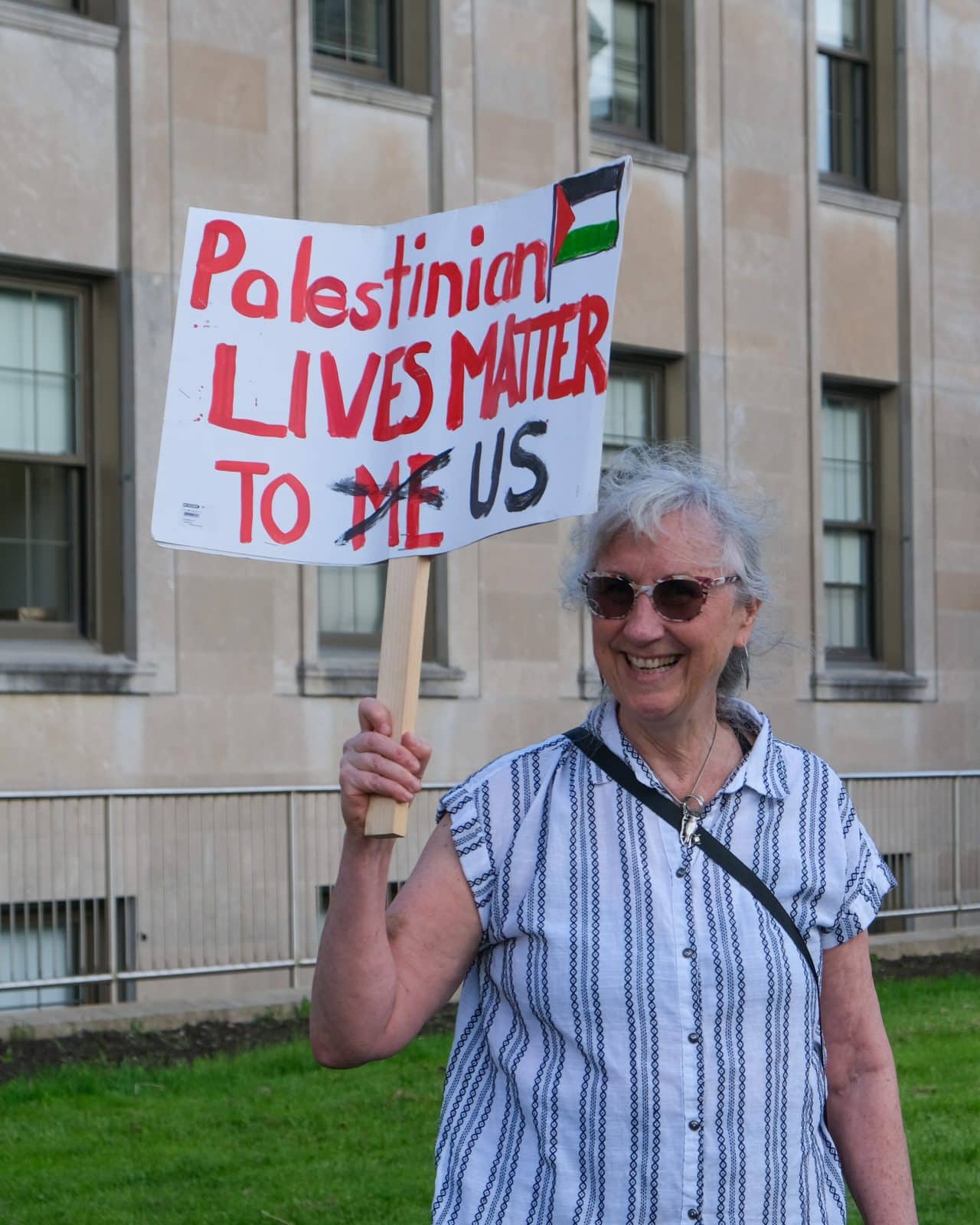

For Megan Tapajna, a Trent student originally from Hamilton, the anti-war protests have been her first experiences with activism.
“I’ve met a lot of new people that I feel like I wouldn’t have met if I hadn’t come out,” she said.
Tapajna said that she “feel[s] a little bit helpless” when she scrolls through the news on her phone. “But when I’m able to attend these vigils on Monday, I’m able to see there’s so many other people within the town that I’m living in who feel the same way.”
Tapajna also participated in the student sit-in at Trent University in May, and the experience made a big impact on her.
“Before that day, the idea of community, I don’t think I’d ever truly felt that,” she said. “I feel like that was the first time that I felt a part of something.”
“A generational exchange”
Margie Sumadh is another local retiree with a dedication to social justice. She said the fellowship she feels at the Monday gatherings is unlike any other community space in Peterborough. “I’m thrilled and honoured to be included in the group,” she said. “I really feel that they respect and treasure what I do. It’s a generational exchange.”
Since arriving in Peterborough six years ago, Sumadh has entrenched herself in local activism, taking part in rallies, attending workshops and speaker panels, and using her appearance as an elderly woman with mobility challenges to break down barriers. Recently, she’s also been selling Palestinian dates and olive oil.
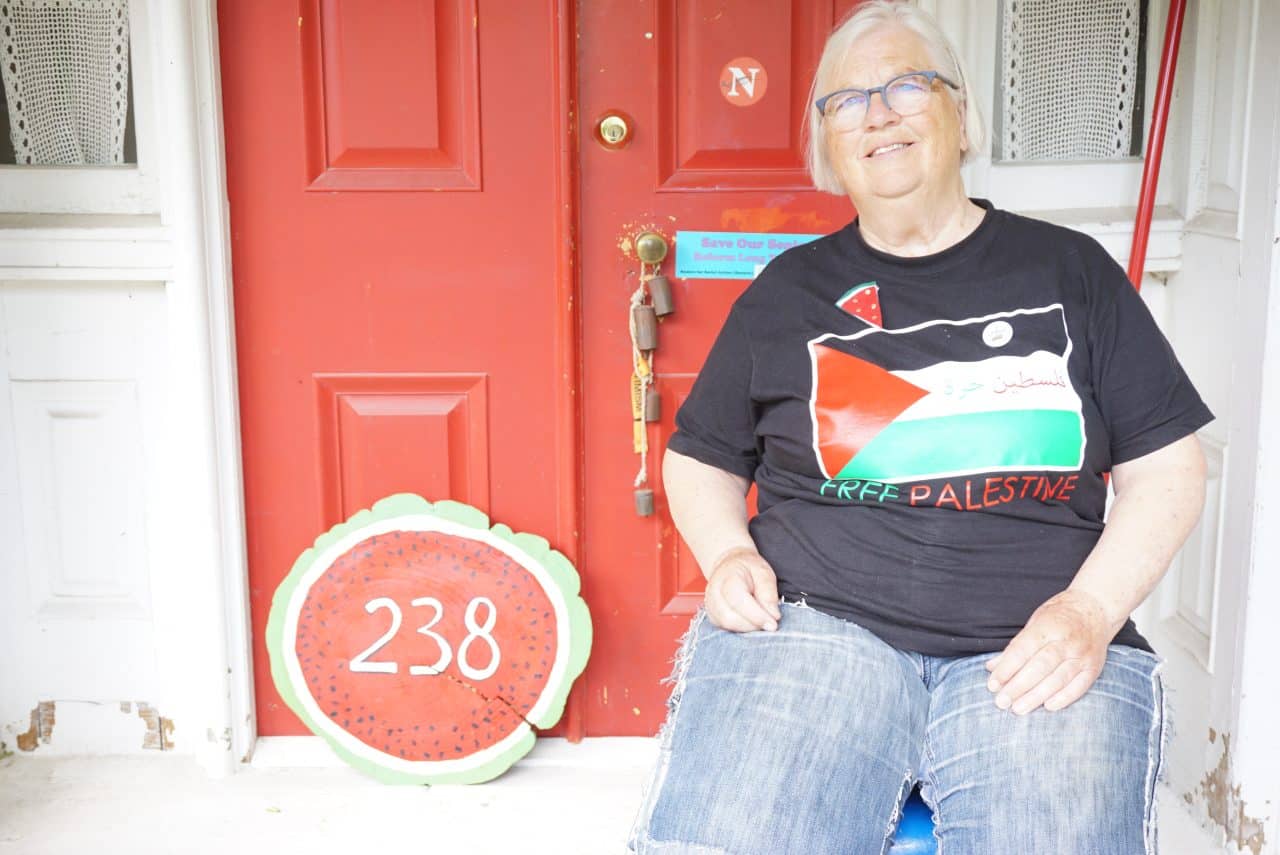
Sumadh uses her walker when she attends rallies, and she said her appearance helps her to start conversations where others might not be able to. “I can go along and give out info and people aren’t afraid of me because I’m old,” she said. “I think it gives me a lot of clout with people who wouldn’t necessarily listen to the message coming from someone else.”
She said she used this approach to have candid conversations with Peterborough Mayor Jeff Leal and MP Michelle Ferreri.
“I bumped into the mayor at the farmer’s market and asked him, why aren’t we as a city calling for a ceasefire? Why can’t you call for it?” she said.
She also recalled an action at the MP’s office where Ferreri spoke one-on-one with her but not with the other protesters. She described this as a particular strength in her activism, and one way that she hopes to help spread awareness.
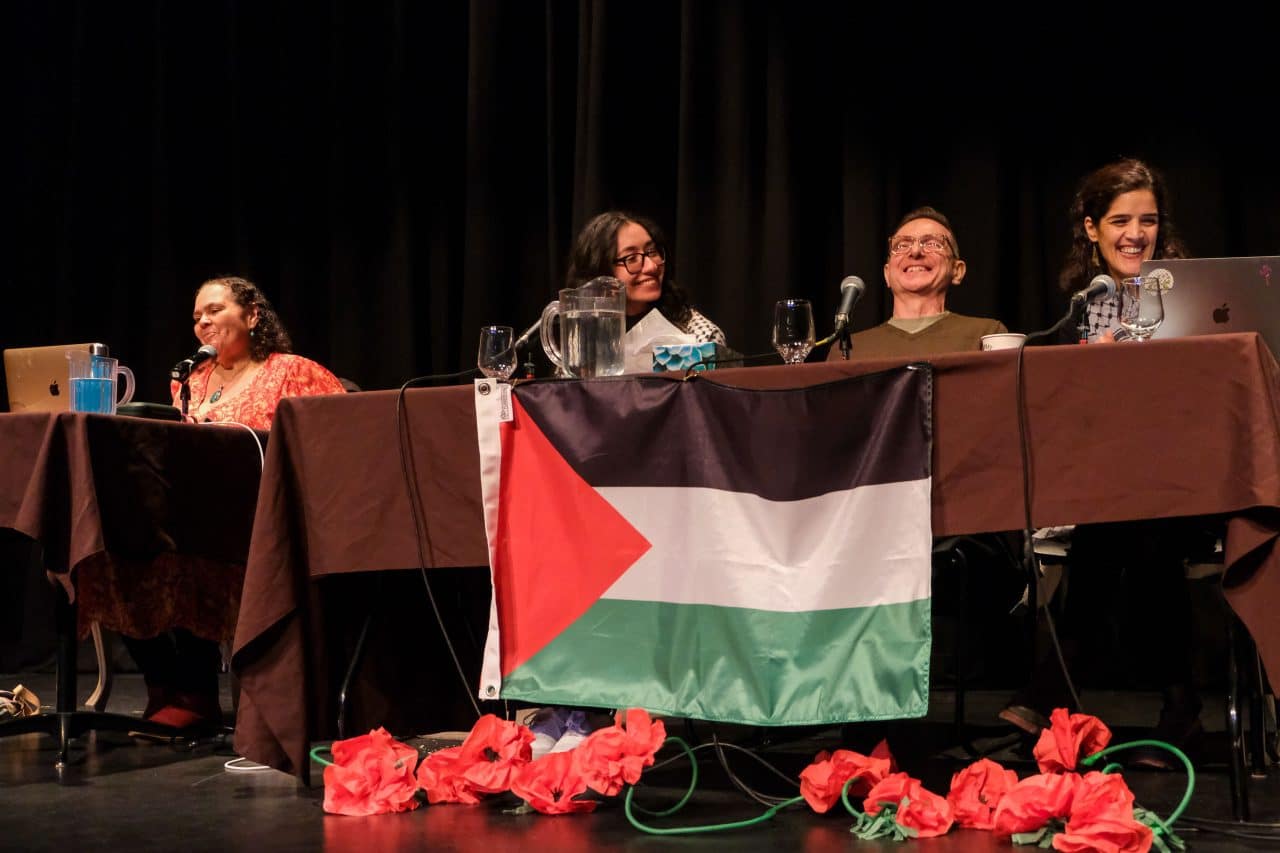
Educating and spreading awareness is also the focus of Zainab Amadahy’s activism. The local Indigenous author, community organizer, and educator speaks at panels and hosts workshops about resisting settler colonialism. On April 19, 2024, she moderated the Talking Olive Trees and Sweetgrass event at Market Hall. It was an opportunity for Palestinian community members to share their personal stories, poetry, and discussion.
In educating people about the destruction taking place in Palestine, Amadahy draws parallels between the war taking place in the Middle East today and the destruction of Indigenous communities by European settlers to establish Canada.
“The less Indigenous people there are, the more land gets freed up for settler exploitation,” she said. “That’s the logic, here and in Palestine. Most folks understand that colonization happens through massive, brutal violence. We can shake our heads and judge what was done in the past to establish Canada and the US but we don’t recognize that the same thing is going on in Palestine.”
“My sense of isolation … evaporated”

On June 13, a group of protestors gathered outside MP Michelle Ferreri’s office to demand she sign a letter calling for an arms embargo on Israel. Ferrari wasn’t present, so the group’s spokesperson Stephanie Benn recorded a message for the MP instead.
After she recorded her message, Benn explained what’s motivating her to keep protesting the war. “For me, it’s the only thing that has kind of stabilized my sadness and heartbreak and outrage around this,” she said.
“I’m an elementary school teacher and I have been teaching Palestinian children,” Benn added. “And so I’m hearing from their families about how thankful they are just to see that people care about what’s happening; that this isn’t happening on our watch without any reaction from us.”
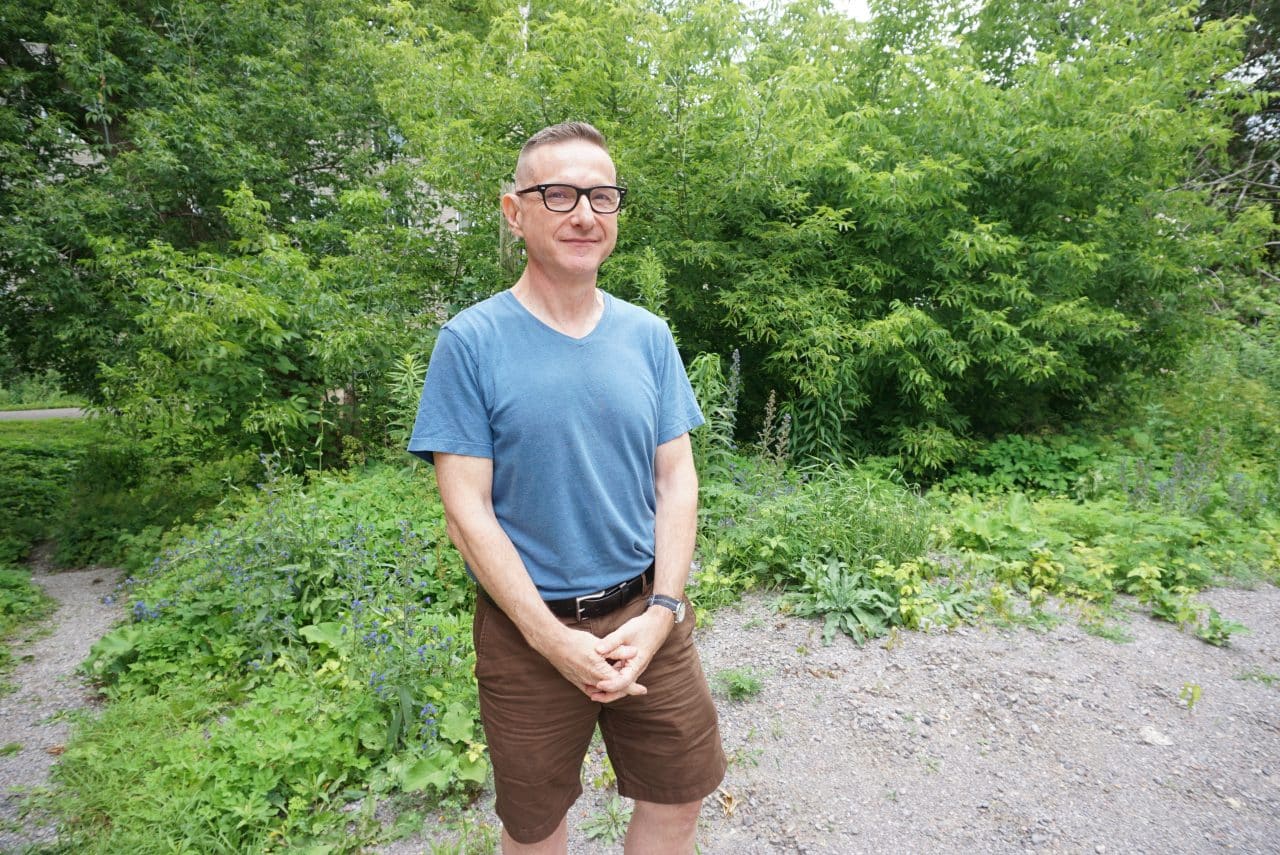
That open allyship played a big role in making Peter Boullata feel safe and cared for in Peterborough over the past several months. A Palestinian-Canadian with relatives living in occupied Palestine, Boullata serves as the minister for the Unitarian Fellowship of Peterborough.
“My sense of isolation that happened at the beginning evaporated when I realized that I was actually in a supportive workplace, then once Nogo2Palestine got up and running, realizing that there was actually a considerable community … in Peterborough that was acting in solidarity with Palestine,” he said. “It was reassuring. It showed me I’ll be okay here.”
Although Boullata has a history of more direct involvement with social justice actions, these days he focuses on bringing reflection and education to the Palestine solidarity movement here in Peterborough.
“What I’ve really appreciated is that people are holding space for me. They’re not trying to interpret my experience for me. They’re not trying to censor any part of my experience. It’s just the opposite of that. So I will say that it has been within the Palestine solidarity community here in Peterborough that I feel that the most.”
He said those who want to show their support for him and other local Palestinian families can learn about the actions and initiatives taking place here and internationally. He specifically noted the boycott, divestment, and sanctions (BDS) movement.
“Stay apprised of different things that are happening, take educational action, as well as sharing resources,” he said. “These are actions we can all take, and that are empowering, as opposed to feeling hopeless and helpless.”
Author
Related Articles
Local event organizers navigate rising costs and red tape
Local event organizers share their struggles as costs and requirements accumulate.
Newcomers to Nogojiwanong learn Lessons from the Land
New Canadians Centre and Canadian Canoe Museum partnered to bring community together for alternative July 1 celebration.
Riel commits to investing in buses
Would support Transportation Master Plan as mayor, despite uneven record as councillor
