Downtown gallery features five Indigenous artists this summer
New exhibit explores how Indigenous artists share knowledge, memories, and skills across generations

The works of five Indigenous artists are on display until August 10th as part of Artspace’s current exhibit, “Ininige.”
Ininige is an Anishinaabemowin word that means “s/he holds, handles things a certain way,” or “s/he points in a certain direction,” according to the exhibit notes. Guest curator Lori Beavis said the title was chosen to highlight the way Indigenous artists hold on to one another across generations.
“It’s about different generations of artists looking back in time at the knowledge and skills they have learned, while also looking forward beyond just the fact that we’re still here,” Beavis said. “We are also still creating powerful art and sharing that with future generations.”
She explained that the work of planning for the exhibit began just over a year ago when she learned that Artspace was preparing to celebrate its 50th anniversary.
“Artspace was the first artist-led centre I was exposed to as a kid and teenager and it has always felt like coming home,” Beavis said. “I wanted to bring in artists that I’ve done a lot of work with in the past, and display their work alongside younger artists to show cross-generational learning.”
Beavis pointed out two artworks that highlight the relationships between cultural teachings, traditional artforms, and the future of experimental Indigenous artistry.
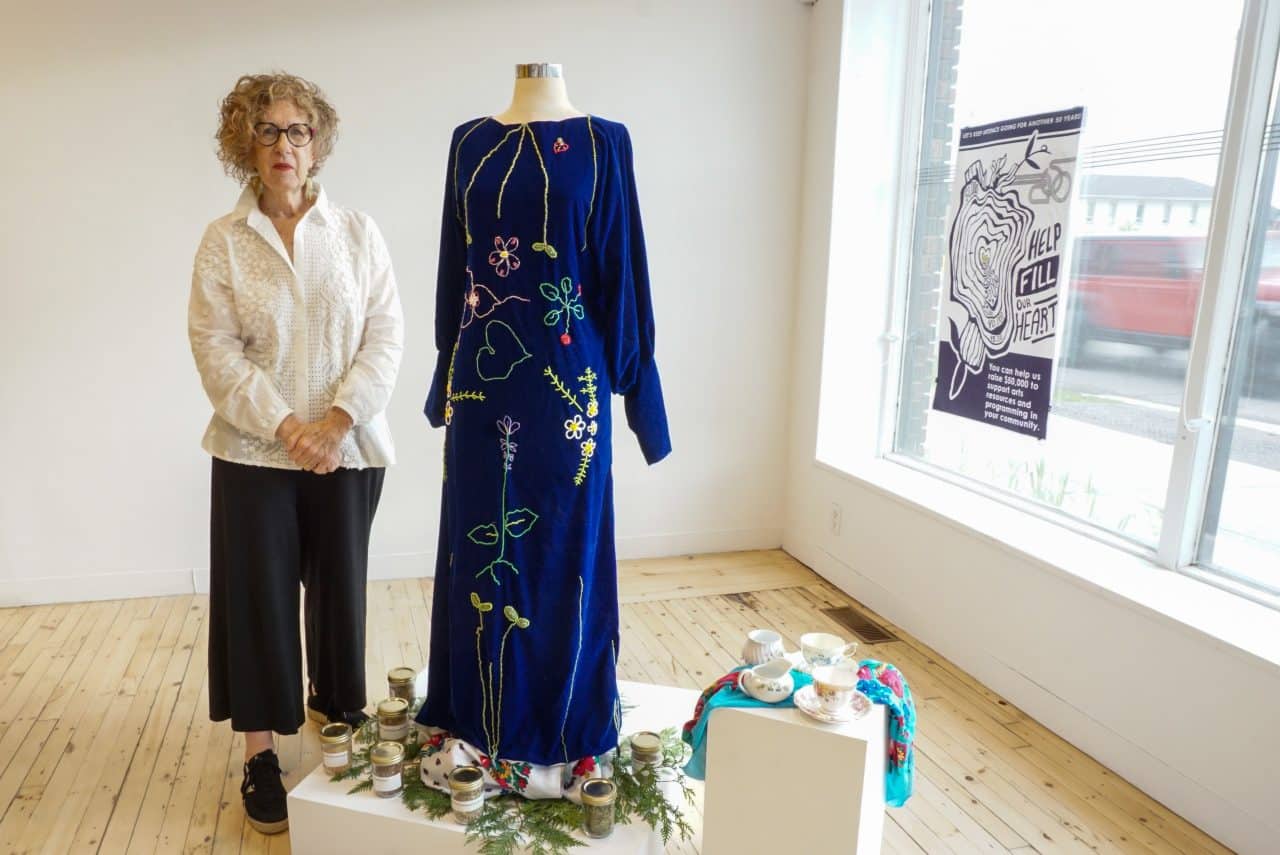
Dehmin Osawamick Cleland’s “Dress That Teaches” and Sandra Moore’s “Hide” are two handmade dresses that stand at opposite ends of Artspace’s main gallery.
“Dehmin is in her twenties, and made this beautiful dress out of blue velvet with glass beading, and Sandra Moore’s rawhide jingle dress is so striking. I just love that we ended up having the two dresses in conversation with each other,” said Beavis.
Moore is from Hiawatha First Nation, and the rawhide jingle dress is her first publicly exhibited artwork. But she has many years of experience creating traditional clothing and regalia for pow wows. She has also passed down her knowledge of porcupine quillwork, tufting, hide and fish tanning, and pine needle work to younger artists through workshops and retreats.
“She is responsible in many ways for the revitalizations of traditional arts in her home territory,” Beavis said.
Moore explained that while the jingles of jingle dresses are traditionally made using tobacco can lids, she found that only rawhide would fit with the rest of the design of her “Hide” creation.
“Rawhide is the skin on an animal that has had the flesh removed and hair removed,” said Moore. “The difference between rawhide and leather is that leather is then tanned to make it soft.” She noted that the reindeer hide which her dress was made of is quite thin, which makes it more flexible.
“The distinctive sound of the jingles is extraordinary and healing,” she said. “These caribou hide jingles don’t sound like the metal ones do, but they still do make noise when they move.”
Moore shook her dress back and forth. The rhythmic beat of the jingles sounded like autumn leaves rustling in unison.
Thinking back on a moment of surprise in her creative process, Moore remembered, “As I was working on the jingles I thought they would be really lovely but if you’re looking at them individually they are actually quite ugly. It’s like our history. All of the difficulty and ugliness came together to make something beautiful.”

Sharing the main exhibit space with Moore’s dress are five textile works by Curve Lake quilter Alice Olsen Williams, who was among the first Indigenous artists to have exhibited at Artspace back in the late 90s, according to Beavis. Her “Strawberry Fields Forever” quilt is one of the more prominent pieces, a huge blanket that occupies the entire back wall of the gallery.
Williams explained that the quilt is made of just one large sheet of fabric. However, the way she stuffed and quilted around each of the berries and flowers created the illusion of many individual pieces coming together to form a beautiful textured landscape. “I think it was a wonderful way to show off the fruit, flowers, and leaves. It took me three months to complete,” she said of the 1998 artwork.
Looking around at her pieces on the walls at Artspace, Williams described her inspiration and creative process. “Often I just do things because they’re beautiful,” she said. “I started quilting in the 1980s and also did knitting, crochet, and beadwork. I just love working with fabric. It’s so versatile and there are so many colours and patterns. It brings me a lot of joy.”
Upstairs, in gallery 2, Shelley Niro’s “It Starts with a Whisper” plays in a loop. The 27-minute 1993 film follows the internal struggle of a young Indigenous woman as she works out how to balance traditional and contemporary values.
“This video is really really early work from Shelley Niro,” Beavis said. “But it’s still relevant today and something many of us continue to think about in our own lives as we figure out how we want to move through the world.”
Artspace’s Ininige exhibit is free to visit until August 10, 2024. To learn more, visit the Artspace Peterborough website.
Author
Related Articles
Local event organizers navigate rising costs and red tape
Local event organizers share their struggles as costs and requirements accumulate.
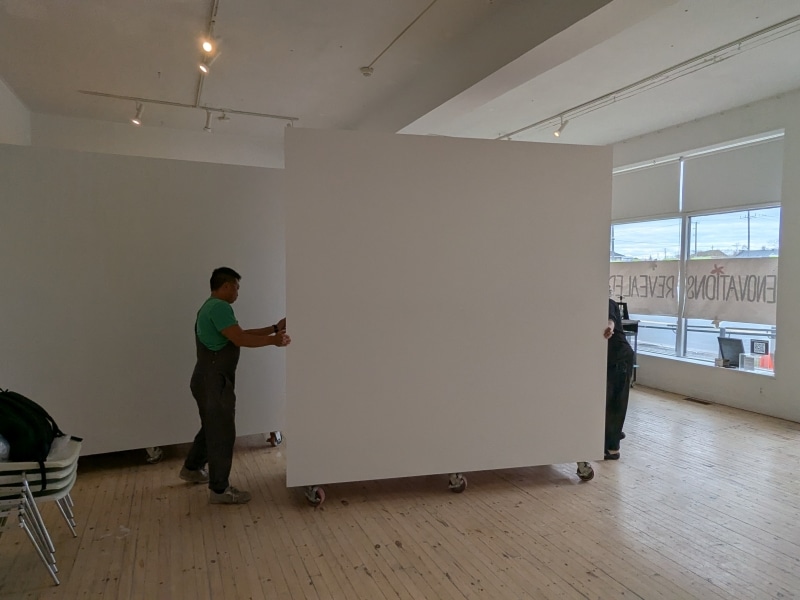
Rethinking space for artists at Artspace
Peterborough’s iconic downtown gallery re-launches with a new look and an evolving focus