
Is transit about to get a service boost? Council will decide during upcoming budget talks
City council has endorsed hiring new transit staff to improve service in 2024, at a cost of $596,000. But will the money actually make it into the city budget?

Every morning, Lerissa Stewart gets her son ready for school before they hop on a Peterborough Transit bus together to take him to Queen Mary Public School on Monaghan Road.
Stewart and her son – along with his baby sister riding in her stroller – take Route #4 (Weller), but because it only runs once an hour, their only option is to arrive 40 minutes before the school opens.
“It’s kind of difficult in the mornings,” Stewart said, adding that it will be even worse in winter. “It’s gonna suck waiting in the cold for that long.”
After school, it’s another 25 to 30 minute wait to catch the bus home, she said. The kids often get impatient. “If it’s hot, they get kind of annoyed because they’re too hot, and they just want to get home,” she said.
But the family’s commute could soon get easier. In September, city council voted to include $596,000 in the 2024 draft budget to boost transit service. The money would be used to hire four additional bus drivers and two supervisors, which would allow all bus routes that currently run hourly to start running every half hour from 8 a.m. to 5 p.m., according to a staff report.
The increased service would make a big difference for Stewart and her family. “[We could] get where we’re going quicker,” she said. “The kids wouldn’t be so impatient.”
Council to debate new transit hires during budget talks
The vote to include the new transit hires in the draft budget document was unanimous, but the decision is still not final. City council will revisit transit spending during budget talks next month – and Coun. Don Vassiliadis has suggested the $596,000 earmarked for new transit hires could be one point of contention during those deliberations.
“I know that a lot of departments in the city and other groups will be asking for new hires in the upcoming budget,” Vassiliadis said at September’s city council meeting. “So I’m looking for money that will make the largest impact to the overall community… for example, police services: they’re looking to hire some more police officers.”
He suggested the money pegged for transit hires could instead go toward tackling Peterborough’s doctor shortage. “$600,000 would go a long way to actively recruiting doctors for the city,” he said.
“Trust me, it will be a debate,” he said of the upcoming budget talks.
Getting the new transit hires approved in next year’s budget might be challenging for another reason. City council has signaled that it wants to keep the property tax increase to between 4.5 and 5.5 percent. And city staff have said that due to high inflation, even a 5.5 percent increase is only enough to avoid cuts to city services such as transit next year, leaving little room for service improvements.
Michael Papadacos, the city’s acting infrastructure commissioner, told Peterborough Currents that a 5.5 percent tax increase is the amount needed to maintain city services at a “status quo” level next year. “That was what finance staff had prepared as the amount that is required to keep business as usual, with a couple of key program changes, like for instance the green bin program and recycling changes,” he said.
Coun. Kevin Duguay told Currents it is not “a foregone conclusion” that council will approve the new transit hires in the 2024 budget. At this point, council has only agreed to “have that matter included in budget deliberations,” said Duguay, a member of the transit liaison committee.
He also said that the 4.5 to 5.5 percent tax increase guideline, which finance committee set in August, is not etched in stone. “There will likely be many asks associated with the 2024 budget, which could all collectively or individually have an impact on [the tax] increase,” he said.
Last fall, city staff tabled a draft budget for 2023 that included a four percent tax increase, but city council shaved that amount down to 3.15 percent during budget deliberations. The reduction came largely from freezing transit funding at 2022 levels for 2023. That created a budget shortfall for Peterborough Transit, which staff warned could have resulted in a total service shutdown in November. But then last month, council voted to take $941,000 from the transit reserve fund to keep buses running for the rest of the year.
Transit riders hope city follows through with transit improvements, despite budget pressures
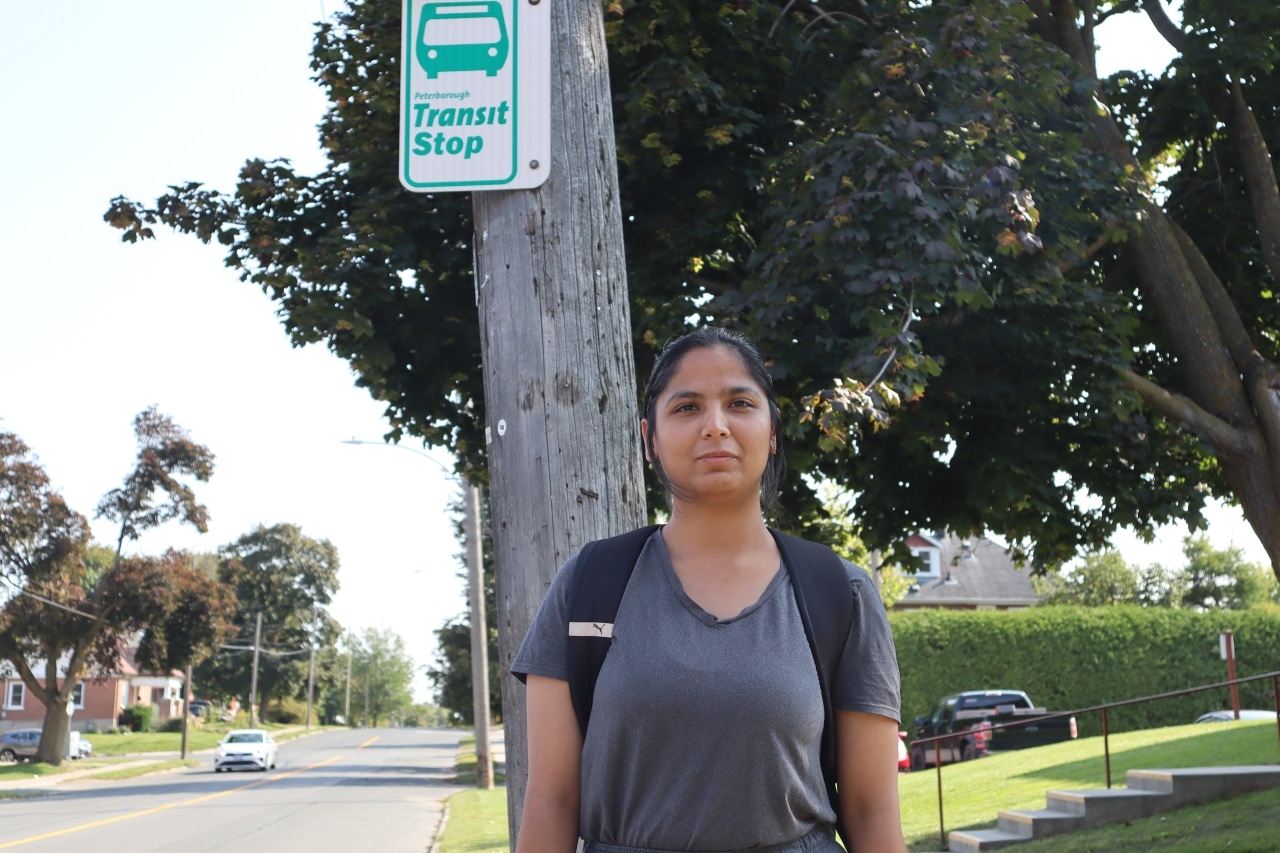
For Raavi Shergill, more frequent bus service would mean she could get to her job as a personal support worker on time every day.
She relies on Route #3 (Park), which runs on an hourly schedule for most of the day, and as a result she usually arrives at work 5 to 10 minutes late for her shift, she said.
When Shergill first came to Peterborough as an international student two years ago, riding transit to Fleming College was “hell,” she said. “You’re standing in snow shivering and no buses are coming – that was tough for me.”
There have been fewer canceled buses lately, but service improvements are still needed, Shergill said.
She used to also ride Route #6 (Sherbrooke), but said it’s become overcrowded. “I just don’t take it because there is no space,” she said. “They need more buses… more drivers.”
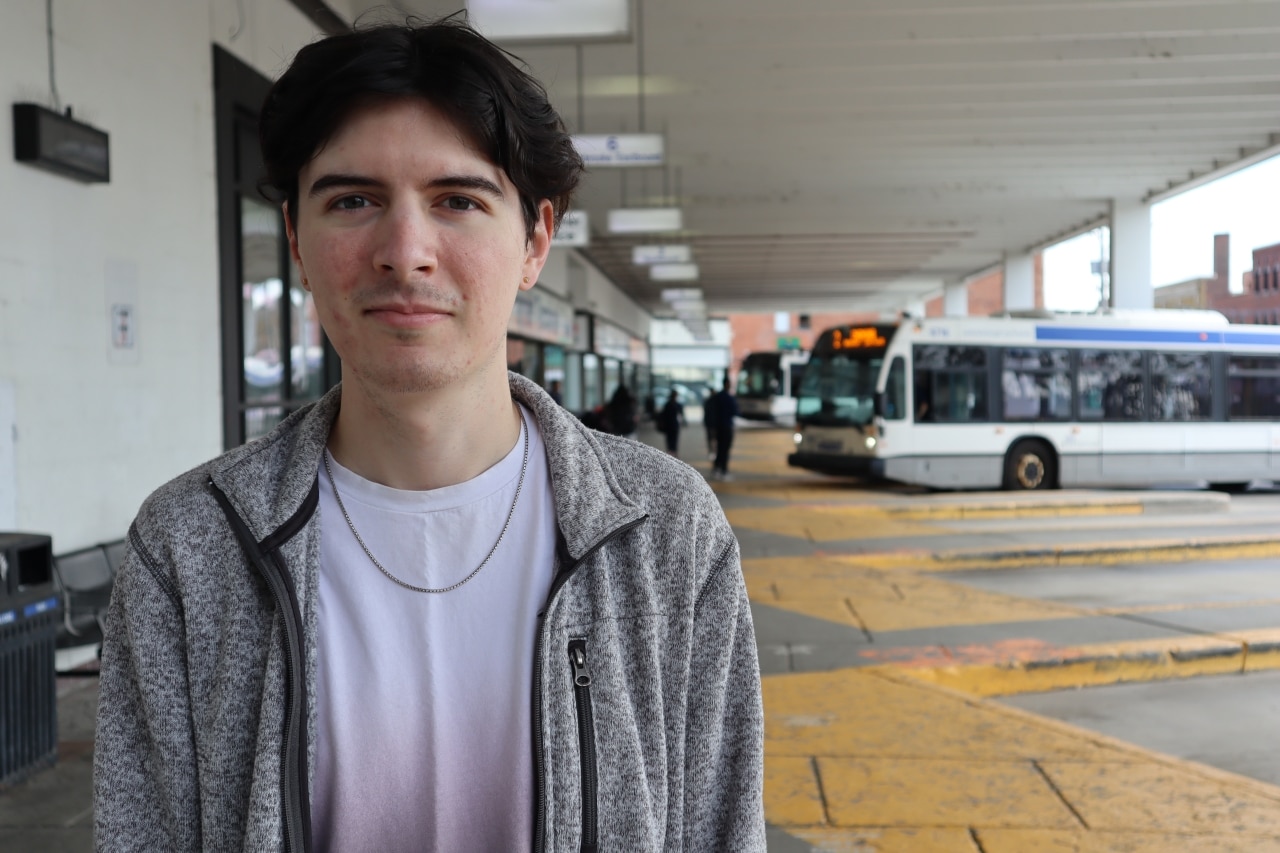
Bus rider Noah Edwards is “cautiously optimistic” that city council will follow through on enhancing transit service next year, despite the city’s budget pressures.
“Maybe council is starting to get the message that having more drivers and more frequency might bring people to ride the bus and… make it a lot better for people who are riding the bus now to get around,” he said.
“Half-hourly service really should be the baseline,” he said. “That’s like the bare minimum almost of a half-decent transit service.”
Edwards, a Trent University student, lives close to Route #3 (Park), but said the route is too infrequent to rely on. If he took it to campus, he would have to arrive 50 minutes before class.
The city has big plans to improve transit. But who will foot the bill?
Edwards pointed out that the city has ambitions to significantly ramp up transit service in future years, something that will require additional investments.
The city’s goal is for 10 percent of all trips in the city to be made by transit by 2051, which will require having buses run every 15 minutes on major corridors, according to the new transportation master plan council approved last year.
Achieving that goal will also require $112 million by 2051 for things like new buses and infrastructure improvements, such as bus by-pass lanes and transit priority signals, according to a staff report.
But making those investments in the transit system may prove challenging for the city. Papadacos has warned that Peterborough faces an almost $70 million annual funding gap “to maintain our existing infrastructure in a state of good repair and to provide the infrastructure required to meet the needs of a growing community.”
Given the city’s stretched finances, Edwards said the provincial and federal governments need to step in to help Peterborough build a better transit system. “We don’t have enough money from upper levels of government to kind of supplement what the city can provide,” he said.
Many others agree that cities need more help from Queen’s Park and Ottawa to deliver services such as transit, as Canada’s population swells and cities face growing demand for services.
With Toronto facing a massive budget shortfall, the Ontario government recently promised to strike a “new deal” with that city to protect local services and economic growth.
The Federation of Canadian Municipalities (FCM) is pushing for something similar for communities across the country.
It’s calling on provincial and federal leaders to create a new fiscal framework to ensure municipalities have enough funding to deliver services people need.
“Our country recently surpassed a population of 40 million and is preparing to welcome half a million new permanent residents every year by 2025,” FCM president Scott Pearce said in a statement last month. “Growth is good, but municipalities must be ready for it and require far more resources to meet the demands of a growing nation than they currently have.”
Duguay agreed that cities like Peterborough are having to deliver more and more services while their budgets remain constrained.
“We only have so many tax dollars,” he said. “Across Canada, municipalities would benefit from enhanced funding from upper levels of government without question.”
Mayor Jeff Leal declined to be interviewed for this story. Currents also reached out to Coun. Keith Riel, council’s transportation chair, but did not hear back by publication time.
Author

Related Articles
Riel commits to investing in buses
Would support Transportation Master Plan as mayor, despite uneven record as councillor
What do transit users think of the transit system?
Most voters in Peterborough never ride the bus

“Disappointing”: Peterborough moves away from traffic calming, despite data showing pilot projects led to reduced speeds
Councillors vote to study lowering speed limit to 40 km/hr city-wide instead
