
An uncertain path forward for Peterborough’s new arena project
What did council actually approve? Who will pay for it? And what happens next?
It was a bold pronouncement by city council, and a bold way to kick off municipal election season: last Monday, city council pre-committed $57 million towards the construction of a brand-new arena and event space, to replace Peterborough’s aging Memorial Centre, which has been around since 1956. If built, the project’s total estimated price tag would be $170 million, making it one of the biggest capital projects in the city’s history.
And Mayor Jeff Leal backed it with equally bold rhetoric. At a press conference with a podium proclaiming ‘VISON 2096,’ Mayor Leal said, “We need to think about the next 70 years of Peterborough. This is a generational opportunity for our community.”
However, a deeper look at the staff and consultant reports that council were using as the basis for the decision reveals a much less clear path forward for the arena. There are still major questions about how the project will be funded. Similarly, a look at what council actually approved last Monday reveals a significantly less bold step forward, than what might first appear.
What did council approve?
The idea of potentially replacing the Peterborough Memorial Centre has been on the books since at least 2018, and there have been a series of reports, consultation meetings, and conversations at council ever since.
The motion passed last Monday is the latest step, “pre-committing” $57 million towards the project, almost exactly one-third of the total projected cost. In essence, what this means is that council is setting an intention to spend $57 million, but whether they do so will depend on finding someone to cover the other two-thirds.
Council’s motion directs staff to explore possible funding sources, including “the Government of Canada, Province of Ontario, County of Peterborough, private sector partners, fundraising, naming rights and sponsorship opportunities, and non-debt supported sources.” After that, staff will report back and council will decide how to proceed.
As Coun. Matt Crowley clarified on social media, “Either staff will come back with confirmed outside funding and a proposed plan for how the City’s share could be raised, or they will come back and say the funding could not be secured and ask Council what it wants to do next.”
It’s also worth noting the timing of this announcement, right at the launch of municipal election season. Election season is a time for bold proclamations, and the current council may well be fully committed to the arena project, but the election takes place on October 26. It will be an entirely new council who will be receiving the staff report and setting the 2027 budget, and they will be the ones to decide what to do with the pre-committed funds.
And finally, if the $57 million is contingent on the city being able to locate partners willing to pay at least $113 million, the consultant report prepared by Sierra Planning and Management makes it clear that this is an uncertain prospect at best.
Who’s going to pay for it?
The Sierra report outlines various possible funding sources and how likely each of them is to succeed.
The first, and riskiest, option would be for the city to pay for the new arena entirely itself, by taking on a lot of debt. Servicing a loan big enough to pay for a $170-million arena would see the city paying out almost $10 million every year, for the next 30 years.
This would require Peterborough to increase the amount of debt it can take on (its ‘debt limit’) to its legal maximum, and then maxing out that loan – an expensive proposition, and one that would severely limit the city’s ability to take on any other major project or deal with any new eventualities that might come up.
Other local-only funding possibilities, including selling off city assets or digging into reserve funding, would also involve notable risk to the city’s long-term financial health.
Finding other sources of funding will be imperative.
At council, Mayor Leal noted that he had met with MP Emma Harrison and MPP Dave Smith to discuss the project, suggesting the possibility of federal or provincial funding, and he also referenced a meeting with an as-yet-unnamed “major equity partner” who he says has expressed “interest” in the project.
However, according to Sierra’s report, this type of project is generally “excluded from funding” at the federal level. The Sierra report includes a survey of 16 arenas that have recently been constructed across Canada, and only one of them, the Avenir Centre in Moncton, received any money from the feds.
8 of the 16 projects did receive some funding from their respective provincial governments, though most of the Ontario-based projects did not, and the report notes that provincial assistance is “more likely to be in the form of loans/forgivable loans rather than substantial grant funding.”
“Barring other grant opportunities that arise, or the application by the Province of special circumstances in funding the project,” the report concludes, “the City should consider upper-level government grants as unlikely.”
Following council’s motion, MPP Dave Smith told The Peterborough Examiner that the city has missed its opportunity to apply for provincial funding in the near-term, and grant programs that would cover this kind of project are unlikely to arise soon.
Private-sector funding is significantly more likely. Most major arena projects involve some kind of private money, if not only for naming rights. Public-private partnerships can mean a lot of different things and take on a variety of forms, and are highly customized to the specific situation of both parties. In general, it would mean a private partner taking on some or all of the costs associated with designing, building, maintaining, and/or operating the facility.
This relieves the city of some of the financial burden (and risk), but it also means the private partner would either take in some of the profits of the new arena, or would receive an ongoing fee from the city for their work. Either way, this will cut into the revenue that the city would get from this brand-new arena.
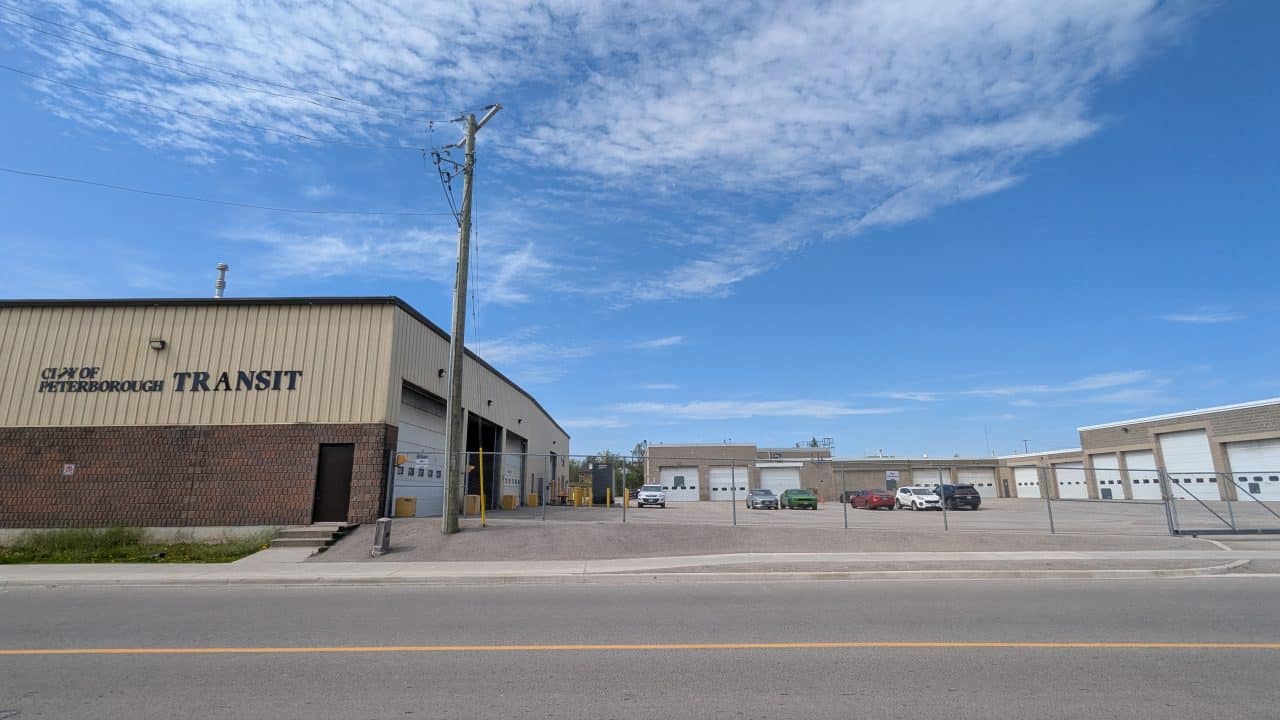
The final financial consideration explored in the report is the potential impact on the area directly around the new arena. The arena is planned for the southern edge of downtown, on Townsend Street, where there’s currently a city-owned transit garage. Part of the reason this site was picked is because it’s surrounded by relatively low-density commercial and residential space, meaning that a new arena has the possibility to increase property values in the area and spur new development.
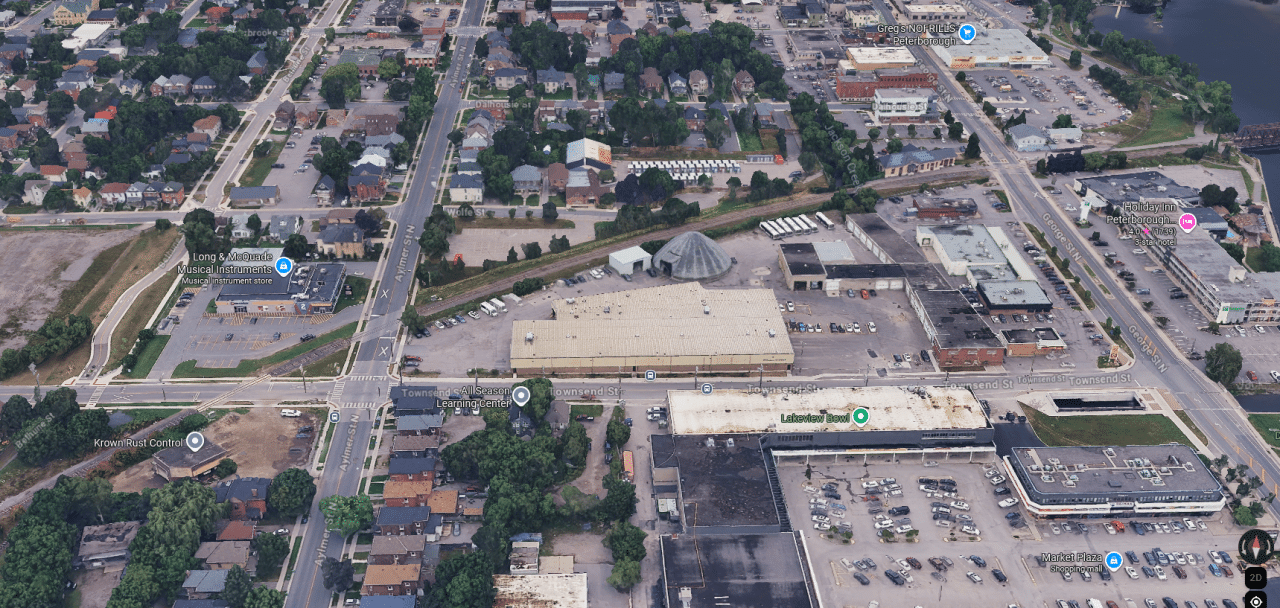
The Sierra report estimates that property assessment values would at least triple in the immediate area, resulting in significantly higher taxes and more revenue for the city. However, theses effects would only really be felt around ten years after the arena has been built, when the surrounds have had time to develop, so the city would still have to find ways to cover the upfront costs.
Discussion around the arena has proclaimed the potential of breaking ground in 2027, with pucks on the ice by 2031, but with funding still uncertain and the next council’s intentions still unknown, there is a lot of work to be done before game time.
Author

Related Articles
Tensions boil over into a strike at Community Living (and across the province)
Chronic underfunding and a wage cap lead to coordinated labour actions across the province
Rethinking space for artists at Artspace
Peterborough’s iconic downtown gallery re-launches with a new look and an evolving focus
Alderville First Nation grants legal personhood to Rice Lake
Exploring an alternate solution to climate change, and a growing international movement
