
What do transit users think of the transit system?
Most voters in Peterborough never ride the bus
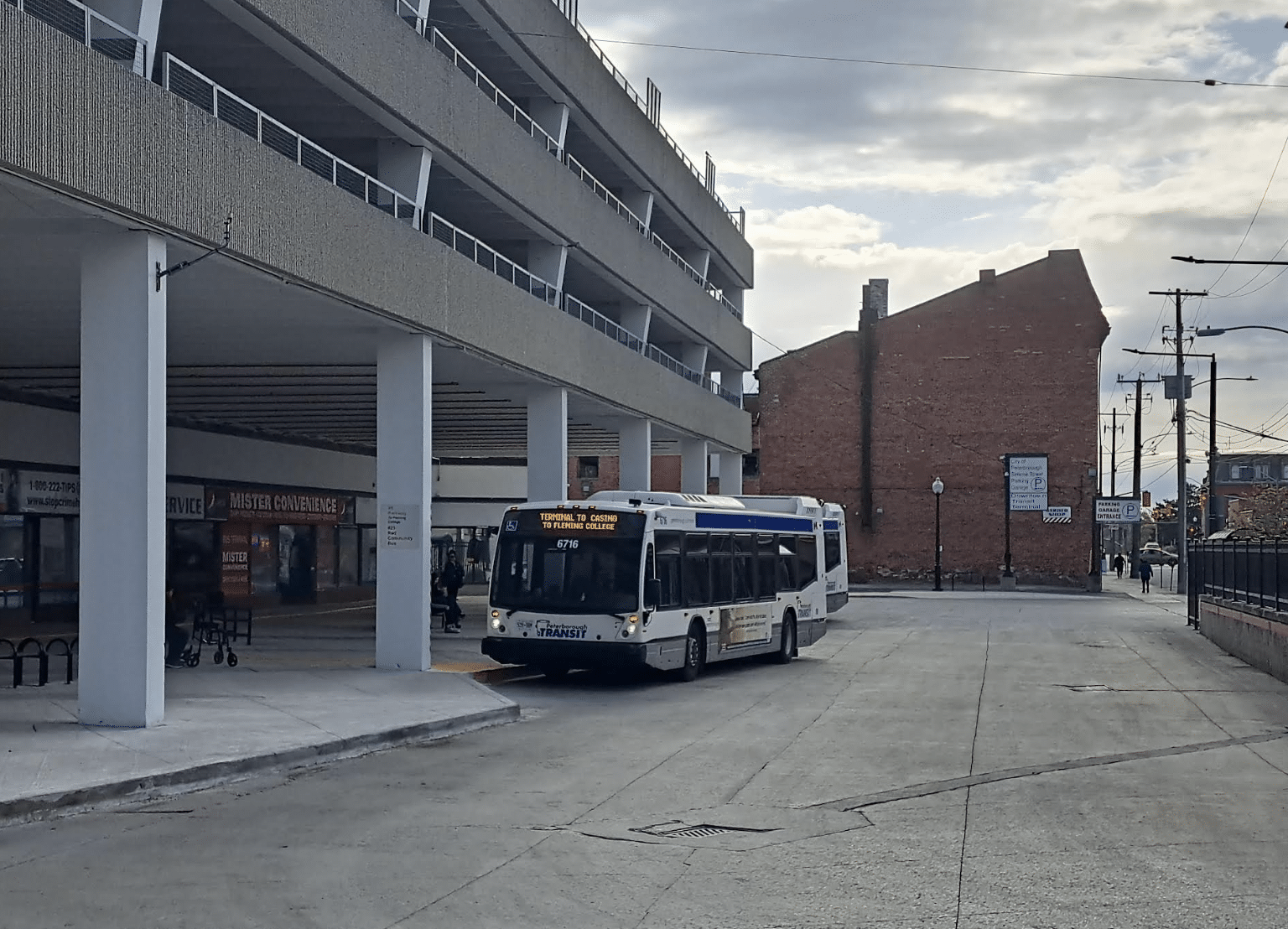
At the height of the COVID pandemic, Peterborough city council voted to change the Peterborough Transit bus system. Rather than all the buses starting and ending at the same central hub, the Simcoe Street terminal, the routes are now laid out on a grid, with routes more or less following major roads, and criss-crossing at several points. It was a change that had been planned for some time, and the pandemic lockdown, when a lot of people were social distancing and working from home, and buses were nearly empty, was a good time to put the plan into place.
What did not change, largely for cost reasons, was the basic model of service. Bus fares are high, and buses come every 30 minutes. Peterborough’s bus system is highly residualist, meaning it’s designed to be used by the minority of the city’s residents who don’t own a car – primarily students, low-income workers, seniors, and people with disabilities. While there is also a dedicated minority that believes in getting around without a car for environmental reasons, most voters in Peterborough never ride the bus, making almost any public investment in public transit redistributive.
Unlike a lot of issues the City struggles to address, the transit system is within the power of council to change. As we head into election season, we asked people who use transit how the system works for them.
It’s easier to get around
Chelsey Emerson is a student at Fleming College. She lives in the west end of the city. She is happy with the grid system. “Honestly, I find it a bit better now, just cause there’s more options to get around. The 22 is very helpful to where I live, cause otherwise I have to transfer buses. This is just a one-bus ride!”
“I used to live close to Lansdowne, so,” under the old system, “I’d transfer from the 2 to the 9 or 7.” Transferring was inconvenient: “Sometimes I’d forget to ask” for a transfer. “If I didn’t have money for the bus pass, and I had to use change, it ate up change pretty quickly.” With the new routes, “It’s easier to get around.”
Using her phone to access up to date information about the buses helps Chelsey navigate the system. “For me it was just looking it up. I usually get the map when it updates.”
I had a hard time with it
A man named Newf, who volunteers for One City at Trinity Church, has found the new system hard to navigate, and that a lot of the frustrations with the bus system have carried over.
Wait times, for example. “I used to have to take a 2, go to Lansdowne, to the Memorial Centre, and if you don’t go at the right time, you’ll be waiting for that bus for an hour.” Now, he says, though the numbers have changed, “you get on that bus, you’re not going to catch that one at the Memorial Centre, it’ll already be gone by.”
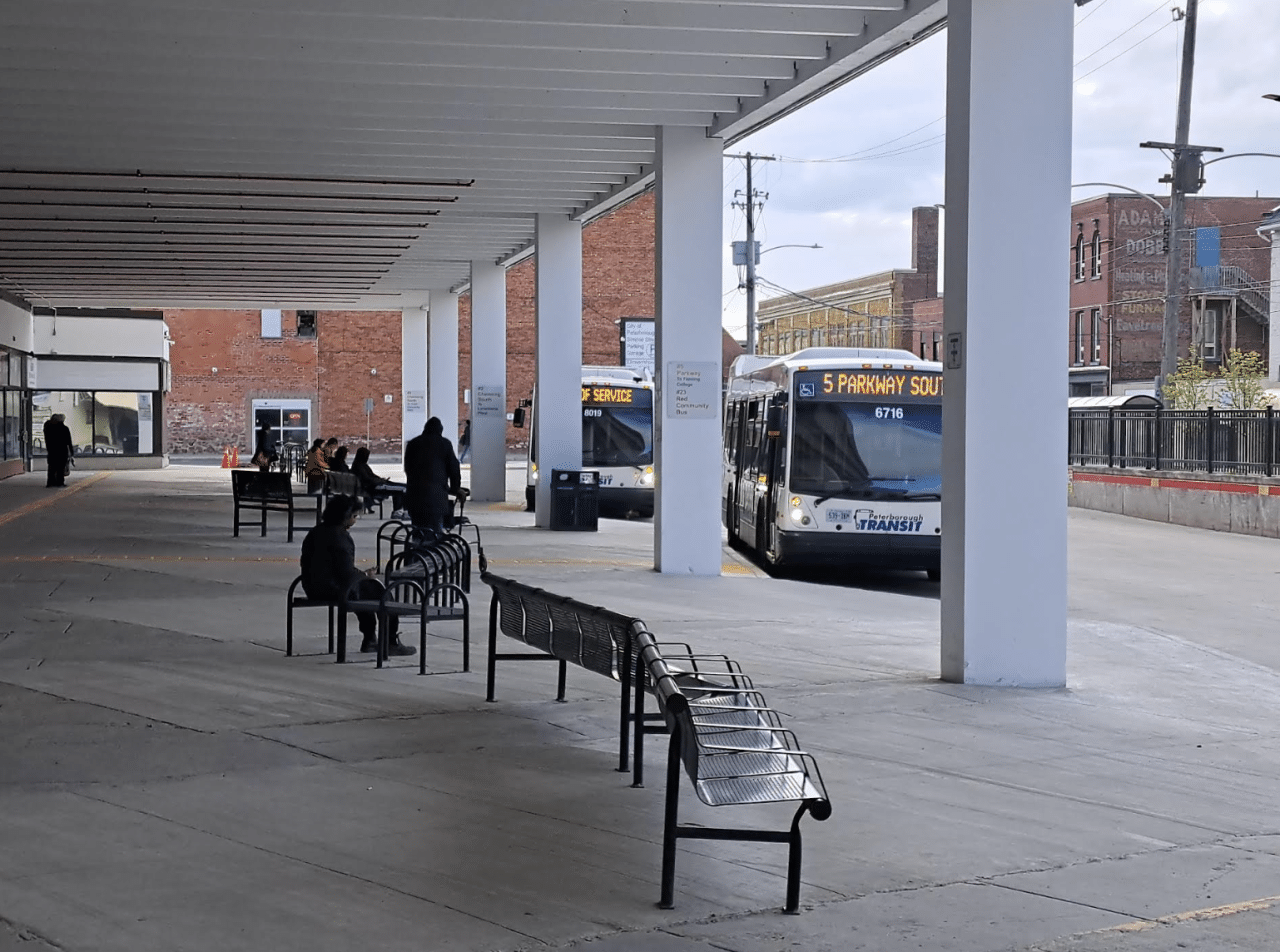
Buses don’t have numbers on the side or the back, so it’s impossible to tell if a bus is your bus until you can stand directly in front of it. This is especially a problem if you have mobility issues. “I came out here four different times,” Newf says, “and still hadn’t seen my bus, and I end up missing it anyway.”
“I had a hard time with it, put it that way,” he says, noting that seasonal changes, when routes get added for Trent students, add unnecessary complexity. “You get used to a new system, and next thing you know it’s all changed again when school starts.”
Bus service under the new system immediately improved
Margaret Slavin, a senior, emailed Currents her thoughts about the new system, saying that then-mayor Diane Therrien “likely saved serious COVID outbreaks among our most vulnerable populations (students, the elderly like me, and the disabled) because we would have congregated at the terminal … and would have passed along the virus.”
A regular user of the transit system, Margaret believes “People with cars will only start taking the bus when trips are frequent, close by, comparable in time to car trips, plus a lot cheaper.” The new grid system accomplishes some of that, ensuring “that a bus is likely to run somewhere near where you live, and that you do not need to travel downtown first in order to cross the city.”
“From my personal point of view, bus service under the new system immediately improved. Instead of 40 minutes between #2 buses at the corner of my street, it is 30 minutes. A second bus (#12) was routed that same way, so that the chance of waiting even less time shot up.”
They’ve lost me to some degree as a customer
A senior who moved from Toronto to Peterborough a decade ago, Tom Hurley is car-free by choice. This is the only ethical option, he says, “if you’re an environmentalist, and you’d rather not leave a pound of emissions for every mile you drive.”
But Peterborough’s bus system has made that decision difficult. Little things like signs at bus stops, including at the busy Simcoe Street Terminal, that just say ‘Transit Stop,’ with no indication of which route stops there. And bus passes that are only valid January to December, “so if I move here from anywhere, say in March, and I’m really keen to use the system, I buy an annual pass, and it’s only good for nine months!”
Tom also feels the hub “worked really well!” From his home north of downtown, he could take one bus straight down to the terminal, then transfer to another bus. “It was an efficient system: one hub.”
The grid system is less straightforward, requiring transfers at odd locations that aren’t as clear. For Tom, “as soon as they changed it, and all the routes changed, I scratched my head. I said, ‘This is not making sense to me.’ And I kind of just voted with my feet. I just stopped riding the bus.”
“And now I bicycle everywhere, all four seasons,” he concludes, “So they’ve lost me, to some degree, as a customer.”
Author
Related Articles

Circles of Support and Accountability – restorative justice at work in Peterborough
Local community members supporting people who have committed sexual offences to safely return to community life.
TandemEyes gives cyclists with vision loss a way back onto two wheels
Local cyclists celebrate their final group tandem ride of the season.
Queer refugees find community in Peterborough, as Canada tightens rules that helped them arrive
“My family, my government, my religion, and the whole country is against me for being gay.”
