
Two short stories about strong mayor powers in Peterborough
A legal challenge against the City of Peterborough is dropped and “the mayor’s budget” is passed

This week saw two examples of the impacts of strong mayor powers in the city of Peterborough.
First was the news that Northcrest Neighbours for Fair Process is dropping their legal challenge against the City of Peterborough, initiated over Mayor Jeff Leal’s use of strong mayor powers to expedite a transitional housing development by Brock Mission. Second was the passing of the municipal budget, in a contentious council meeting that Coun. Keith Riel called “a complete affront to democracy.”
The Ontario government granted strong mayor powers to the City of Peterborough, as well as 46 other municipalities, in 2023 (since expanded to 169 more municipalities in 2025). With the Strong Mayor, Building Homes Act, Premier Doug Ford pitched this as a way to help municipalities expedite housing projects, but it also gives mayors additional authority over matters such as hiring and firing of key city staff, committee appointments, and the budget.
Strong mayor powers are enacted through a signed letter from the mayor, called a Mayoral Decision, which is published and shared publicly. The City of Peterborough maintains a web page with an archive of Mayoral Decisions. When it comes to matters of council, the strong mayor veto means that these Decisions only require the support of one-third of council to pass.
To be clear on the veto math: the mayor also has a vote on council, so in Peterborough, which has 10 councillors and 1 mayor, the mayor only needs the support of 3 additional councillors (for a total of 4 votes out of 11) to utilize his veto.
This article takes a look at these two recent stories, how they were impacted by Mayoral Decisions and the authority of a strong mayor, and the broader shifts in the structure of municipal power that they represent.
Neighbourhood group drops court challenge to Brock Mission development
Back in February, Mayor Leal released a Mayoral Decision (MDEC25-1) proposing two new bylaws to help expedite a six-storey, 52-unit transitional housing development proposed by Brock Mission.
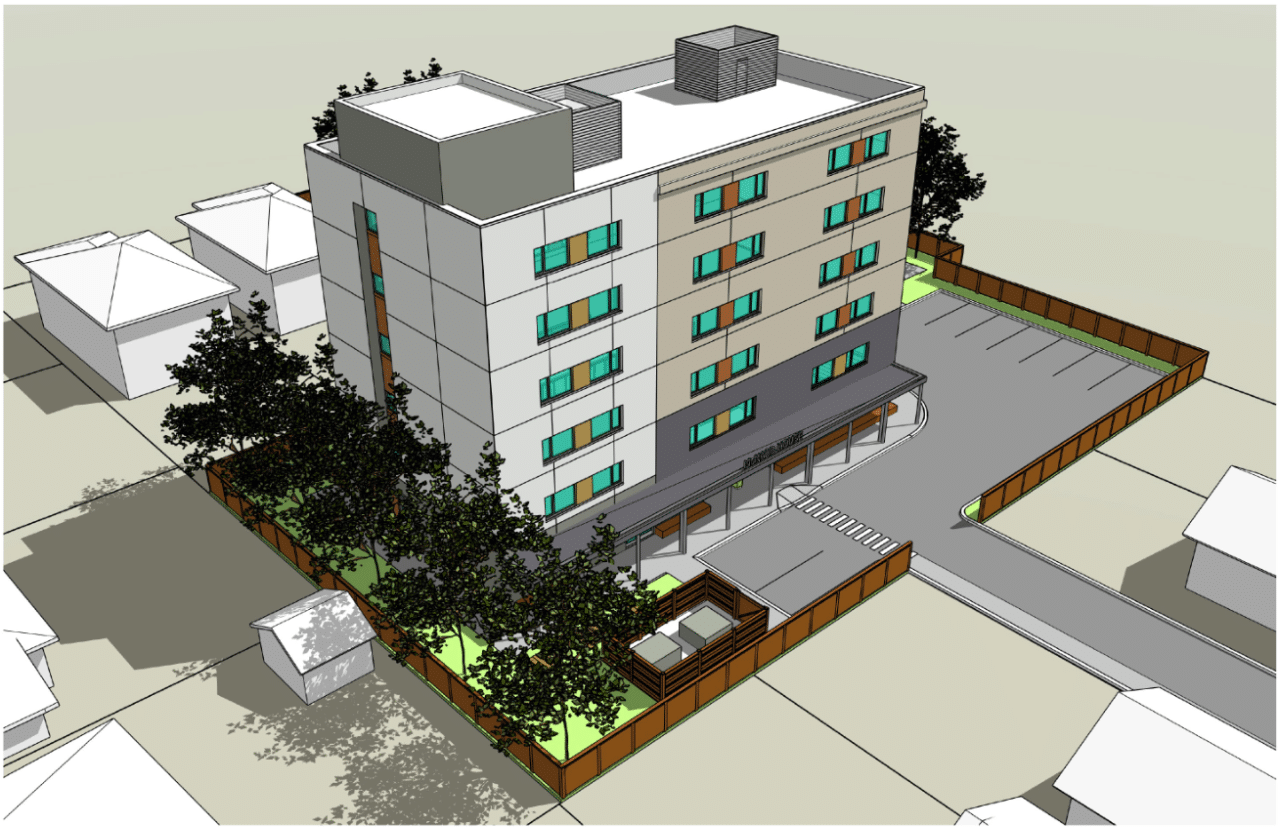
Neighbours spoke out against the development. They cited concerns about noise, safety, obstructed views, and the appropriateness of a six-storey building in a neighbourhood otherwise consisting of single-family residences; however, they were also concerned about the speed that the decision was made, the legal process behind it, and the lack of consultation.
“I guarantee you, nobody is against transitional housing,” says Sarah McNeilly, an area resident and chair of Northcrest Neighbours for Fair Process (NNFP). “We’re against the process that fast-tracked it.”
She notes that the open house where neighbours were allowed to see the development plans for the first time (a requirement under the Planning Act) occurred just four days before city council voted on it, on February 24, 2025. When McNeilly reached out to city councillors leading up to the vote, she says that “everyone replied the same thing: it’s a done deal.”
Indeed, when it came to the vote, 7 councillors voted against the bylaws, but with the strong mayor veto, the 4 votes in favour (Couns. Baldwin, Duguay, Parnell, and the mayor himself) were sufficient to pass it.
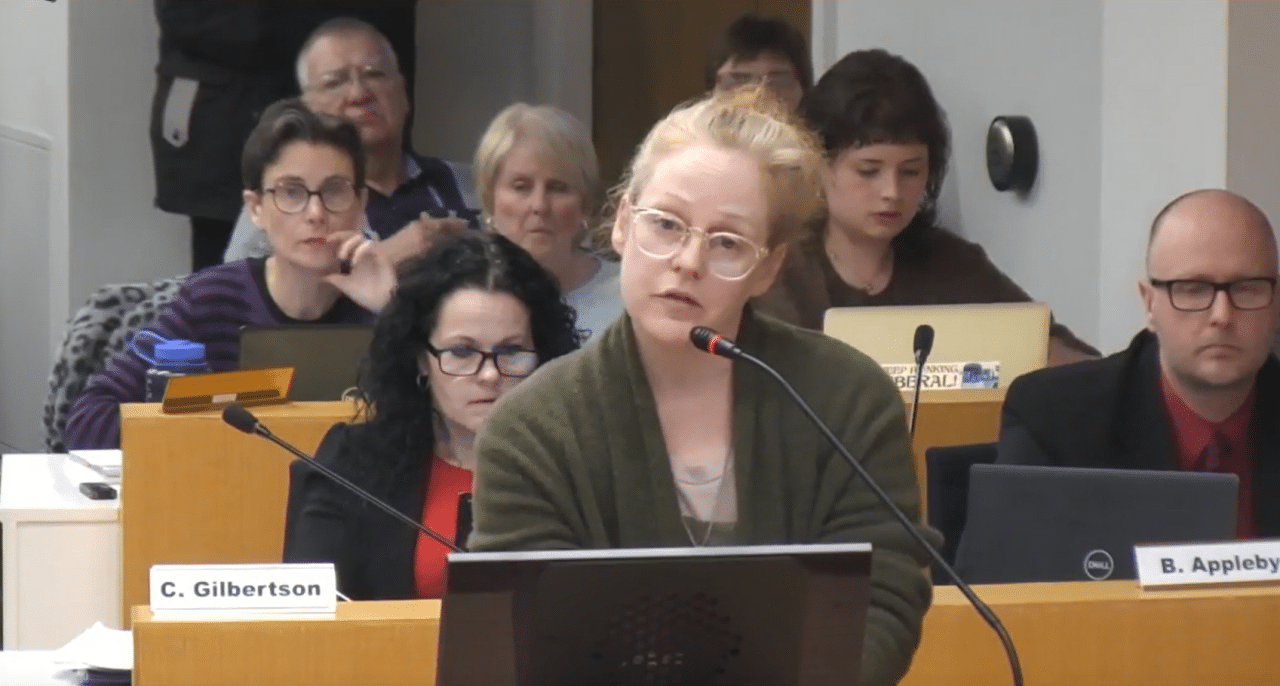
McNeilly says NNFP formed shortly after, at a neighbourhood town hall meeting attended by about 80 people, and the group decided to pursue legal action against the city. Mayor Leal responded with another Mayoral Decision (MDEC25-02), utilizing his strong mayor authority over staffing to direct the city’s legal division to “do such things considered advisable… to oppose any proceeding to challenge the validity” of the bylaws.
The case was always going to be an uphill battle. The wording of the strong mayor legislation states that a mayor can use their veto power in any situation where they are “of the opinion” that it “could potentially” advance the provincial priority of housing. This gives mayors a wide berth for subjective interpretation and gives citizens limited recourse to challenge them.
The case received another setback when the city requested that the court mandate NNFP to post a security bond, first reported at $10,000 and eventually increased to $30,000, to cover the city’s legal fees should the case fail.
McNeilly says this was far beyond the capacity of a volunteer-run organization that had already mounted a crowd-funding campaign to cover legal costs. She notes the neighbourhood is “predominantly pensioners, predominantly single women, predominantly people who have worked or continue to work in the caring profession.”
This week, NNFP were forced to drop their legal challenge before its merits were argued in court; however, McNeilly says the group will continue pushing for accountability and due process. She cites the redevelopment of Bonnerworth Park and the demolition of General Electric buildings as similar actions by the city: “No matter where it is, no matter what the issue is, we cannot let our elected officials make decisions behind closed doors and tell us there’s nothing we can do about it.”
City of Peterborough passes “the mayor’s budget”
This year’s municipal budget process started much the same way as it had in the previous years under strong mayor legislation. As with the 2024 budget (MDEC23-2) and the 2025 budget (MDEC24-6), the 2026 budget process began with a Mayoral Decision (MDEC25-03) directing staff to prepare a draft budget.
However, Mayor Leal immediately distinguished it from previous years by including specific language in his Decision about what should be included. He instructed that the budget only maintain “current service levels,” with the notable exception of “an anticipated ten per cent increase for Peterborough Police Service due to legislative requirements.”
Indeed, this is largely the shape the 2026 draft budget took, which Mayor Leal has since referred to as a “status quo budget,” providing negligible increases to city services, except for a 9.22 per cent increase for the police.
The steps after the presentation of the draft budget more closely followed a traditional Peterborough city budget process. Citizens had a chance to comment at public consultations and in delegations in front of city council, then city council held two days of deliberations to examine specific budget items. This resulted in some changes (summarized here) and several unsuccessful attempts to reign in the police budget increase.
And then came Monday’s city council meeting where, just before the final budget vote, Mayor Leal offered up another Mayoral Decision (MDEC25-04) and signed it on the spot, to officially present his final version of the 2026 budget. While Mayor Leal’s budget integrated all the changes that were proposed by council through the democratic process, that was his decision to do and not a legislative requirement. Because the mayor has this final decision, it’s officially referred to as a “mayor’s budget.”
Once a mayor’s budget is presented (before February 1), council has 30 days to propose amendments before a final vote, though these amendments can be overturned with a strong mayor veto. However, in this case, Mayor Leal avoided both the veto and the 30-day window. Immediately after he presented his budget, Coun. Haacke proposed a motion to forego the 30-day window and finalize the budget that night.
This process led to a contentious discussion in council chambers. “It’s new to me tonight that it’s going to be a mayor’s budget,” said Coun. Lachica, “because we’ve all been working really hard, line by line, to have it be a council budget.”
Coun. Keith Riel called it “a complete affront to democracy.”
Staff indicated that the same process had been followed two years ago, for the 2024 budget, and Couns. Baldwin and Duguay both said they saw nothing unusual about the process. However, speaking to Peterborough Currents, Coun. Lachica said, “This time, it feels very different. There was no preparation for this meeting on Monday, and I think that’s a disservice to the public.”
“I see this playing out whenever there’s a strong mayor thing brought forward. There’s a lack of clarity, and there’s a lack of common understanding about what it’s supposed to look like,” she said. “I think the rushed-ness of how we’ve been doing it in Peterborough is dangerous, I really do.”
In the end, Coun. Haacke’s motion to forego the 30-day window passed with 7 to 4 votes (Couns. Bierk, Crowley, Lachica, and Riel opposing), then immediately after, Council voted on the mayor’s budget, which passed 8 to 3 (Couns. Bierk, Lachica, and Riel opposing, as they stated they would earlier in the evening).
Author

Related Articles

Tensions boil over into a strike at Community Living (and across the province)
Chronic underfunding and a wage cap lead to coordinated labour actions across the province

An uncertain path forward for Peterborough’s new arena project
What did council actually approve? Who will pay for it? And what happens next?

Rethinking space for artists at Artspace
Peterborough’s iconic downtown gallery re-launches with a new look and an evolving focus
