The River magazine features low-income poets and artists
PLUS: A snapshot of homelessness in Peterborough
You’re reading the October 24, 2025 edition of the Peterborough Currents email newsletter. To receive our email newsletters straight to your inbox, sign up here.
Hello, and welcome to the Peterborough Currents email newsletter!
I’m Currents co-editor David Tough, and this week Gabe Pollock and I have stories about people living on low incomes in Peterborough.
This week I attended the launch of the ninth issue of The River, a magazine that features writing and visual art by low-income people. Peterborough Currents is a proud sponsor of The River, which is published by One City.
Gabe, meanwhile, took a look at 2024 Point in Time Report, the United Way’s new report on homelessness in Peterborough.
Let’s get started!
The River features low-income poets and artists
by David Tough
The ninth issue of The River, a print magazine that features art and writing by people living on low incomes in Peterborough, was published this week.
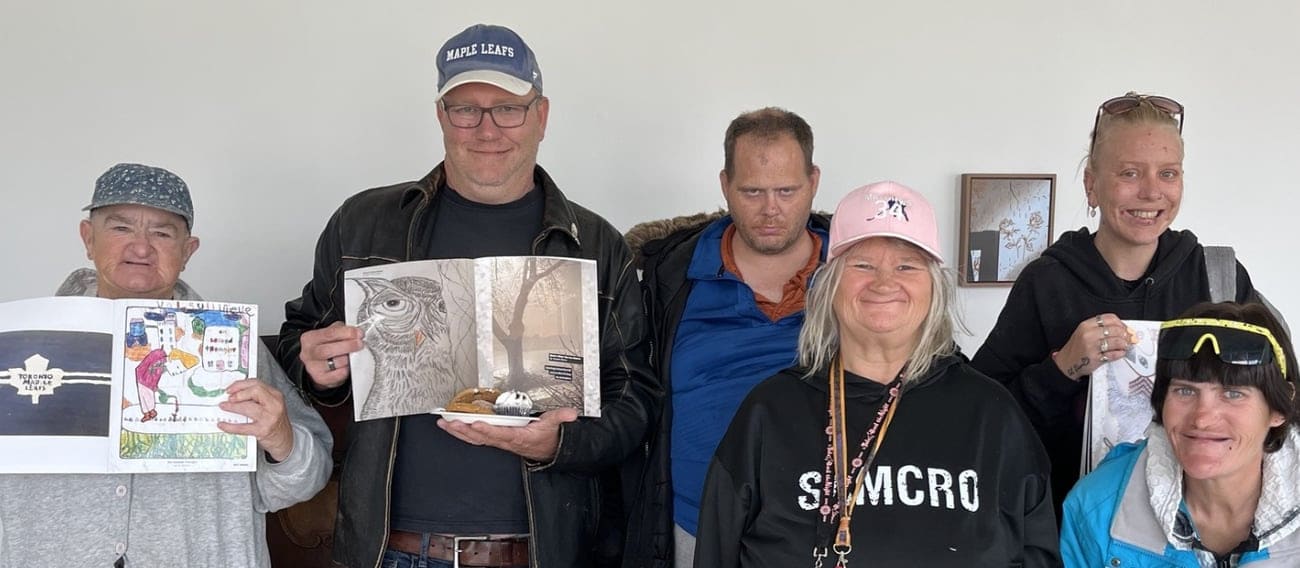
The official launch at Artspace on Wednesday provided an opportunity to get copies of the new issue, share a snack, and for contributors to receive payments of $50 for their contributions.
Originally published by volunteers with no institutional backing, The River was handed off to One City in 2023. Its first issue under the organization’s wing was published a year ago. Peterborough Currents is also a sponsor of the magazine.
The new issue has a lot of poetry, as One City’s Jenny Kennedy, a member of the editorial committee, notes in a quasi-editorial on the third page.
“When there is collective struggle, pain and grief, poets find words that resonate,” Kennedy writes. “When gratitude is overwhelming, poets help us make sense of the feeling.”
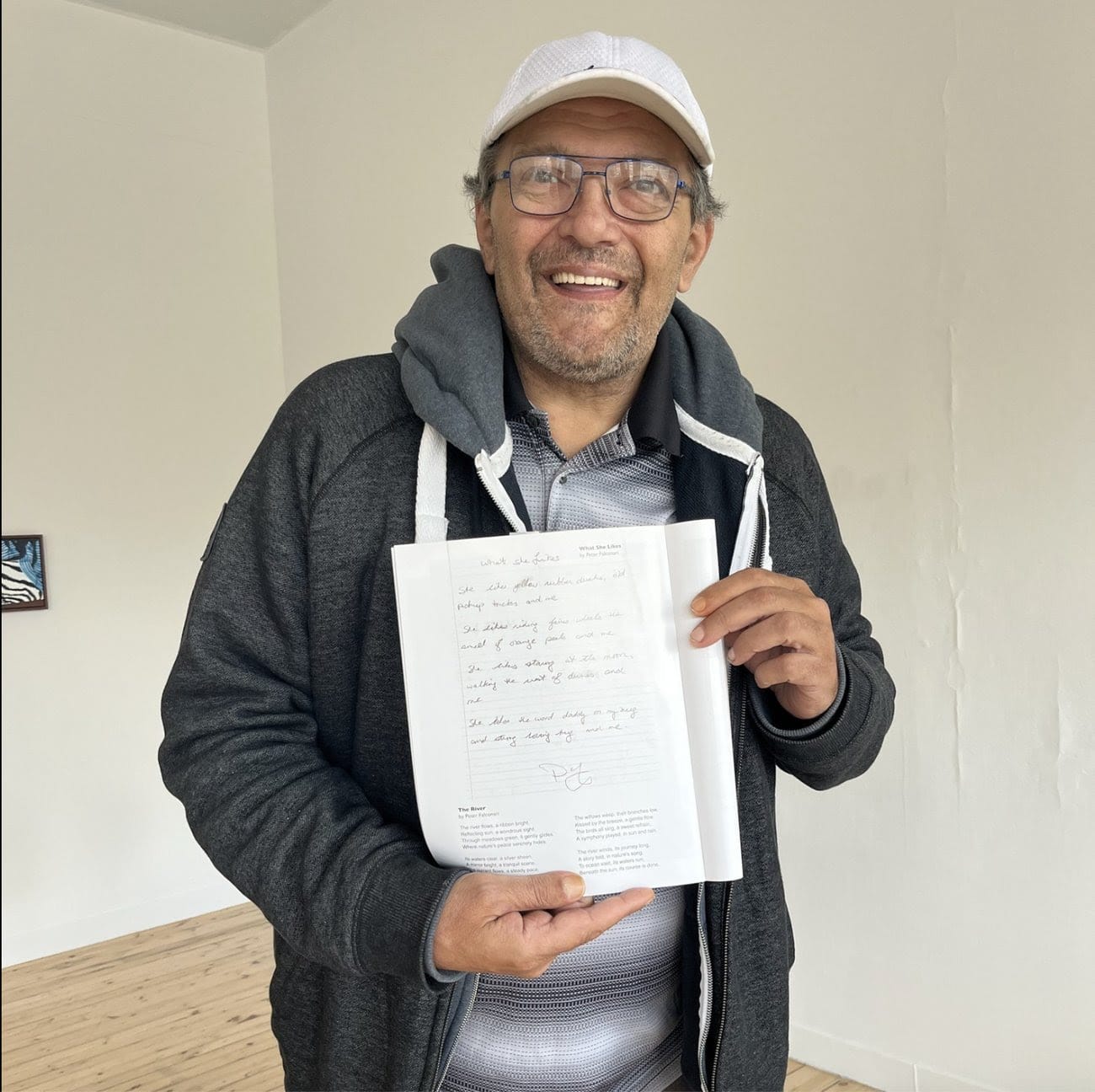
Some of the poems are typed out, but many are displayed in their authors’ handwriting, on lined paper, underscoring the feeling of something deeply personal being shared.
Many of the contributions explore themes of alienation, loss, and fear, but just as many focus on relationships and moments of connection. Nature comes up a lot, particularly the monarch butterfly, a symbol of rebirth and a highly charismatic indicator species.
The monarch plays a key role in “Feather Across the Seasons,” a long poem by Echo Lee that walks methodically through the changing year with short descriptive phrases. “This constant repeating pattern/Is merely a never-ending loop/Of changing leaves,” Lee writes.
Other pieces combine images with writing. A haiku-like poem by Gwynne Burns, laid out over a sepia-soaked photo of a tree damaged in last spring’s ice storm, reads in its entirety: “listening to branches fall/unsure when ill sleep/my mind whirrs.”
“When there is collective struggle, pain and grief, poets find words that resonate,” Kennedy writes. “When gratitude is overwhelming, poets help us make sense of the feeling.”
Some of the poems are typed out, but many are displayed in their authors’ handwriting, on lined paper, underscoring the feeling of something deeply personal being shared.
Many of the contributions explore themes of alienation, loss, and fear, but just as many focus on relationships and moments of connection. Nature comes up a lot, particularly the monarch butterfly, a symbol of rebirth and a highly charismatic indicator species.
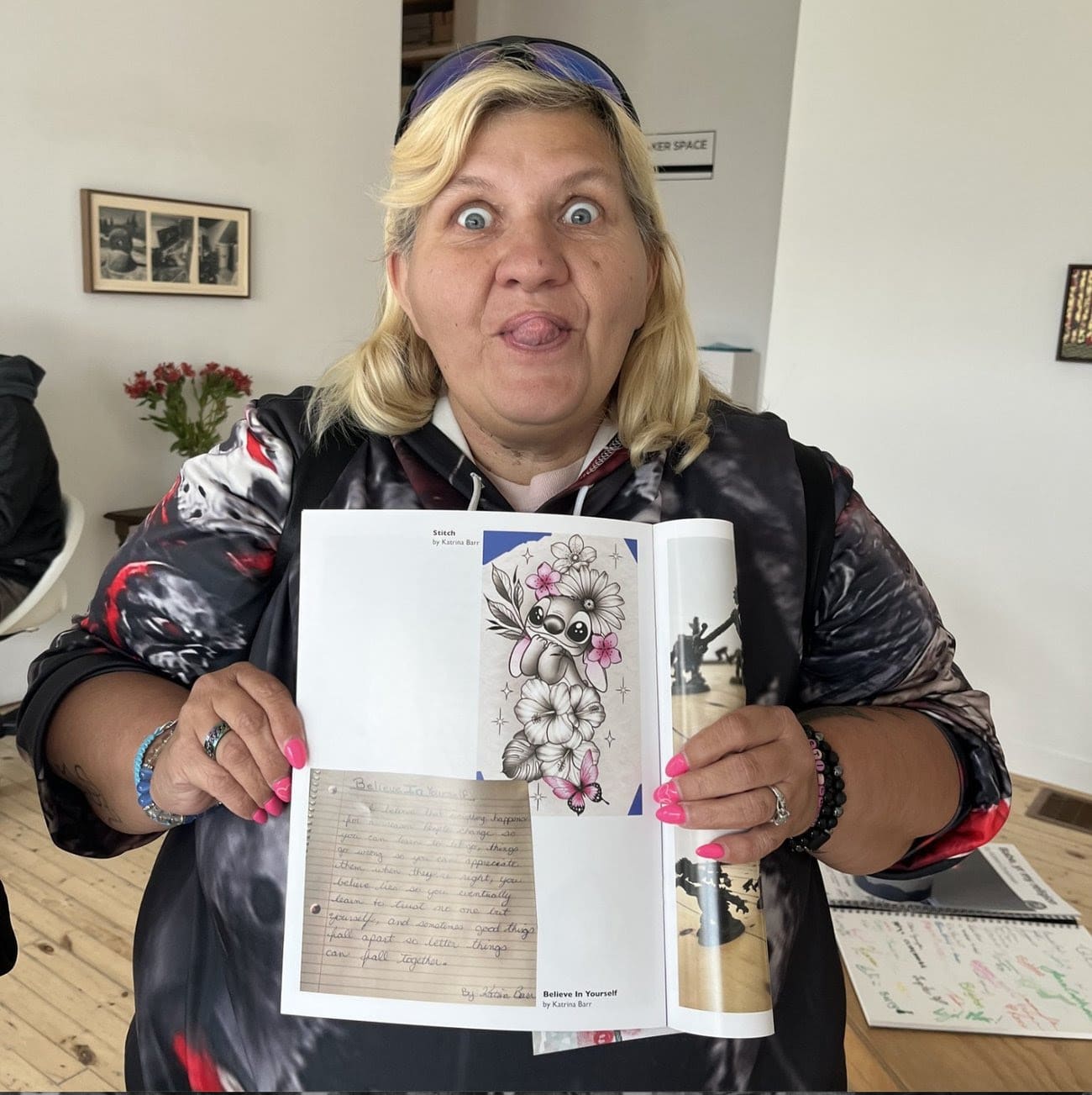
The monarch plays a key role in “Feather Across the Seasons,” a long poem by Echo Lee that walks methodically through the changing year with short descriptive phrases. “This constant repeating pattern/Is merely a never-ending loop/Of changing leaves,” Lee writes.
Other pieces combine images with writing. A haiku-like poem by Gwynne Burns, laid out over a sepia-soaked photo of a tree damaged in last spring’s ice storm, reads in its entirety: “listening to branches fall/unsure when ill sleep/my mind whirrs.”
The River took its initial inspiration, as founding volunteer Steven Henry Martin noted in an editorial in last year’s issue, from The Slice, a publication from Vancouver’s downtown Eastside, that served as “a bullhorn” for the voices of low income people.
Kennedy noted that The River is part of One City’s community development work. While the editorial committee includes low-income people along with other volunteers and staff, the ultimate goal is for it to be led by the contributors.
Print copies of the new issue are available at Trinity Community Centre and at the Peterborough Public Library, while the content can be viewed online at rivermagazine.ca.
A snapshot of homelessness in Peterborough
A new report by the United Way provides insights into who becomes homeless in Peterborough and why
by Gabe Pollock
A new study from the United Way Peterborough & District is providing a clearer picture of what homelessness looks like in Peterborough and who is most affected.
The 2024 Point in Time report, released last week, is based on work done over a 24-hour period last November. A fleet of researchers canvassed Peterborough’s streets, as well as shelters, encampments, and transitional housing, creating a “snapshot” of who was living unhoused in Peterborough, on one particular day.
The report serves as an imperfect census of who is (or was) homeless in Peterborough, as well as providing insights into the risk factors that cause and perpetuate homelessness. “What are those conditions that are in place that cause people to lose their housing?” asks Jim Russell, United Way CEO. “That’s why the report is important: to ask, how has that happened to people?”
Common responses as to why people lost their housing included: conflicts with partners and spouses, conflicts with landlords, evictions and ‘reno-victions,’ unsafe housing conditions, and substance use. However, the most common response was a lack of income.
This is unsurprising on its own, but the survey also found that over 85% of respondents were accessing some form of government social assistance (Ontario Works, Ontario Disability Support Benefit). Russell calls these programs “woefully insufficient,” noting Peterborough’s low vacancy rates and rising rents.
Particularly striking in the report data is that 27% of those experiencing homelessness were Indigenous, more than five times the representation in the general population. The report also indicates a rise in senior homelessness, with 8% of respondents 65 years old or over.
The authors also note the problem of “hidden homelessness” – people without permanent housing but who, on the particular night of the survey, happened to find accommodation, like staying with friends or family, in a motel room, or in a car. While the survey found that only 4% of respondents were under the age of 25, youth often fall into the “hidden homeless” category and so this may be an underrepresentation.
This type of survey can help guide future social services, says Russell. For instance, asked about medical conditions, nearly half of survey respondents reported some kind of physical ailment, 72% reported mental health conditions, and 82% reported substance use conditions. Russell notes this has “brought to light the need for low-barrier shelters,” as an interim solution.
Indeed, the most common overnight place respondents were staying was at shelters, closely followed by sleeping in a public space. The report notes that, on the night of the survey, nearly all shelters and transitional housing spaces were at or near maximum capacity.
And with the United Way carrying out a Point in Time survey every two years, they can also point to wider trends, indicating successes or failures within the system. Across four surveys since 2016, the data at present shows a worsening situation, with more chronic homelessness and greater instances of substance use issues.

Thanks for reading!
If you value our journalism and want to see it continue, please sign up to support us here.
Thanks and take care,
David Tough
Co-Editor
Peterborough Currents
Thanks for reading the Peterborough Currents email newsletter! Here’s where you can sign up to have these sent straight to your inbox.
Authors